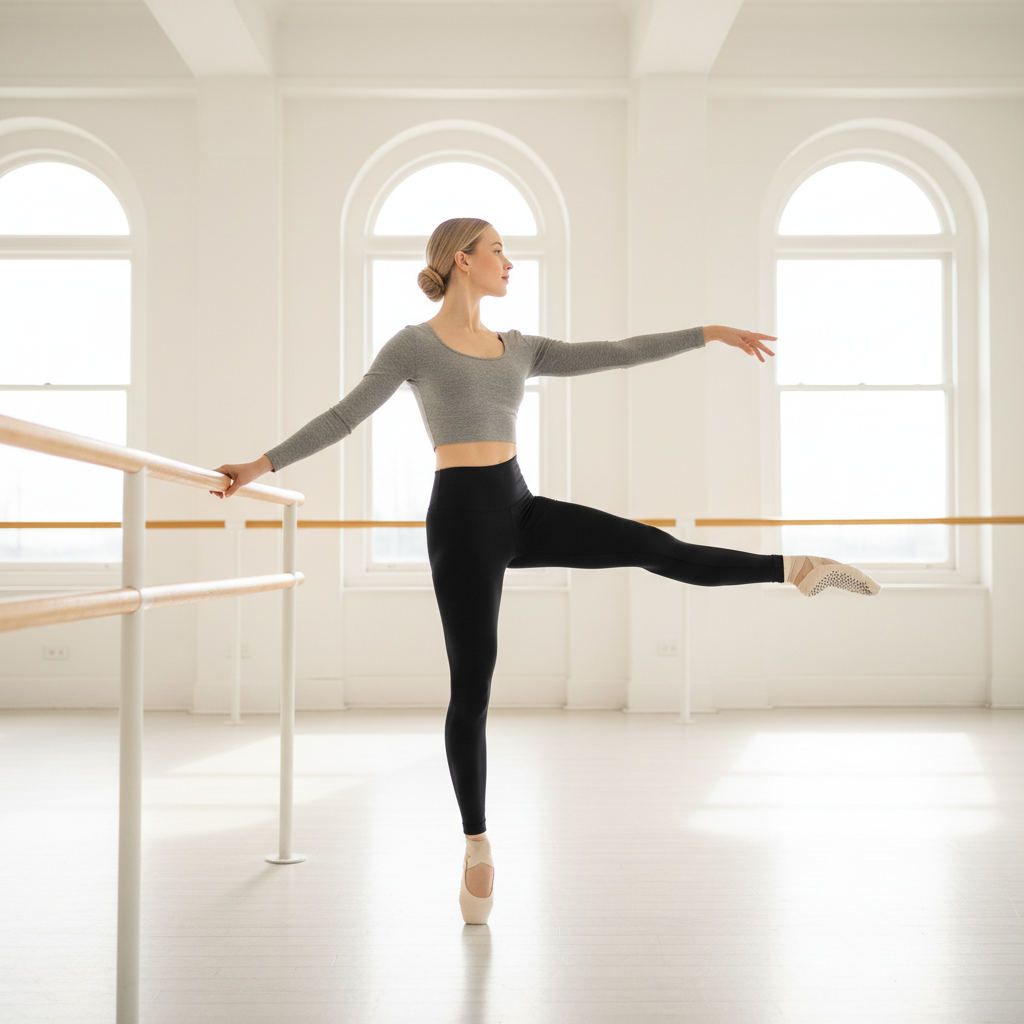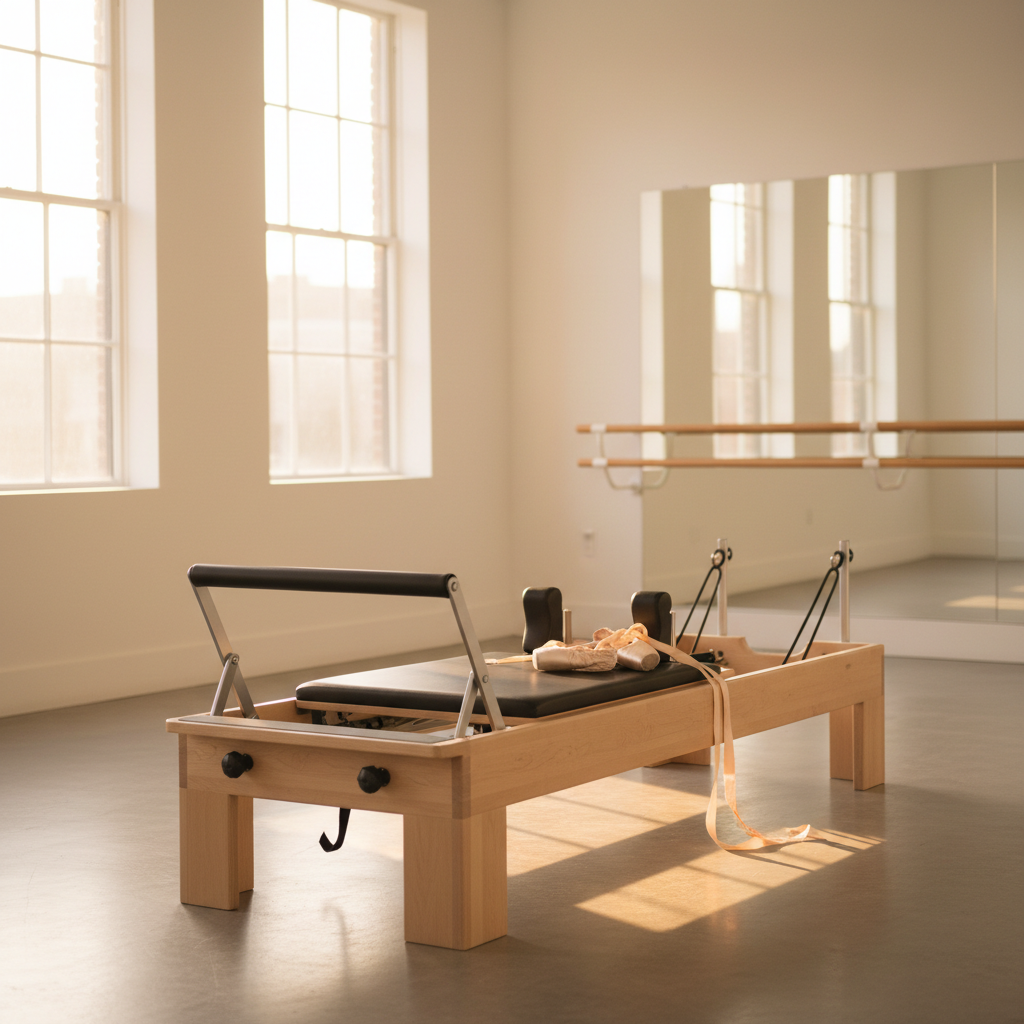
If you have just started ballet or barre classes, someone has almost certainly already told you to try Pilates. What they may not have told you is that the advice goes back almost a century, and that before Pilates became a fixture of every gym, wellness studio, and morning routine podcast, it belonged almost entirely to the dance world.
This is its story, and why it still matters for anyone beginning to move seriously.
Joseph Pilates and the Dancers of New York
Joseph Pilates was a German-born physical trainer who developed his method, which he called Contrology, over decades of working with injured bodies and athletes. He believed that most physical problems stemmed from poor posture, shallow breathing, and the failure to engage the deep stabilizing muscles of the torso. The method he built was designed to correct all three simultaneously.
In 1926, he opened a studio at 939 Eighth Avenue in Manhattan. The building happened to share an address with several New York City dance studios and rehearsal spaces. What followed was less coincidence than inevitability.
Dancers discovered Pilates immediately, and Pilates discovered dancers. Here were people whose bodies were already highly trained but who regularly suffered the injuries that come from pushing those bodies to extremes: hip flexor problems, lower back strain, knee issues from repeated landing, the chronic tension that builds up in the shoulders and neck from years of port de bras. Pilates's method addressed every one of these. Word spread through the New York dance community the way important things always do: quietly, between people who trusted each other, in studios and changing rooms and after-class conversations.
George Balanchine sent his New York City Ballet dancers to Pilates. Martha Graham's company worked with him. Jerome Robbins was a devotee. For several decades, the Pilates studio on Eighth Avenue functioned almost as an annex to the city's professional dance world, a place where dancers went to recover from injury, to maintain condition between seasons, and to develop the kind of deep physical intelligence that formal dance training alone did not always provide.
At the time, almost nobody outside the dance world had heard of Pilates. It would remain that way for another four decades.
What Pilates Actually Develops
Before it went mainstream, Pilates spread through the dance world for specific, practical reasons. Understanding those reasons tells you exactly what it can do for you.
Deep core engagement. Ballet and barre both require you to hold your centre, to stabilize the pelvis and lumbar spine while your limbs move freely around it. This is harder than it sounds, and most beginners achieve it incompletely or by bracing the wrong muscles (the superficial ones, which fatigue quickly and tend to create compensations elsewhere). Pilates trains the transversus abdominis, the pelvic floor, and the deep spinal stabilizers, the muscles that should be doing the work. Once you have learned to engage them, everything in your ballet or barre class starts to feel more organised.
Pelvic and spinal alignment. The neutral pelvis, neither tucked under nor tipped forward, is foundational to both Pilates and ballet. Many beginners arrive with a habitual anterior tilt (common if you sit at a desk for most of the day) that throws off their port de bras, limits their arabesque, and puts strain on the lower back. Pilates work makes you viscerally aware of where your pelvis actually is, which is the first step to being able to place it where it should be.
Hip flexor length and hip stability. Tight hip flexors are endemic among people who spend long hours sitting. In ballet and barre, they limit the range of motion in extensions and create the kind of tension in the front of the hip that beginners often mistake for a flexibility problem. Pilates mat and reformer work addresses both the length and the strength side of the hip flexor equation, lengthening what is short, strengthening what is inhibited.
Shoulder and thoracic mobility. Port de bras, the carriage and movement of the arms, depends heavily on the thoracic spine (the middle back) being mobile and the shoulders being set correctly. Both are areas where most adults are habitually tight. Pilates work, particularly on the reformer, systematically opens the thoracic spine and trains the scapular stabilisers that allow the arms to move freely without the shoulders rising.
Body awareness. This may be the most important thing Pilates gives beginners. The method demands that you pay attention to exactly what your body is doing, which part of the foot is in contact with the ground, where your breath is going, whether your ribs are lifting or anchored, how your weight is distributed. This quality of attention is identical to what your ballet or barre teacher is trying to develop in you. Pilates trains it in a slower, more controlled environment where the movements are simpler and the feedback is clearer.
Gyrotonics: The Other Thing Dancers Do
Anyone spending time in the professional dance world will eventually encounter a second method that rarely makes it into mainstream wellness conversations: Gyrotonics, or more precisely, the Gyrotonic Expansion System.
Developed by Juliu Horvath, a Romanian-born ballet dancer who suffered a serious injury and spent years developing a movement system for his own rehabilitation, Gyrotonics uses a specialized pulley tower with rotating handles and foot plates to move the spine and limbs through three-dimensional arcs. Where Pilates tends toward linear movement and stability, Gyrotonics is circular, expansive, and concerned with the kinds of spiralling, curved pathways that dancers use constantly but that most other fitness methods ignore entirely.
Professional dancers tend to use Gyrotonics as a complement to Pilates rather than a replacement for it, the two methods address different things and work well together. For a beginning ballet or barre student, Gyrotonics is less immediately applicable than Pilates (the equipment is specialized and sessions require a trained instructor), but it is worth knowing it exists. If you ever find yourself plateauing in your ballet practice and looking for something to open up your movement quality, it may be exactly what you need.
Mat vs. Reformer: Where to Start
For ballet and barre students, the reformer is ultimately the more powerful tool, its spring resistance makes the feedback more immediate and the range of work much more broad. But mat Pilates is a completely legitimate starting point, especially if you are building your practice incrementally or working at home.
Mat Pilates costs nothing beyond instruction. The classical mat sequence, the hundred, the roll-up, single leg circles, double leg stretch, develops the same core engagement and body awareness as the reformer, in a format that requires no equipment and can be done in any room with enough floor space.
Once you have the fundamentals of the method (ideally from six to twelve sessions with a qualified instructor, not a video), the reformer opens up considerably more. The spring resistance teaches your muscles to work eccentrically, lengthening under load, which is exactly the quality that gives trained dancers their characteristic muscle tone. It also allows for standing work, footwork, and long-stretch variations that have direct and visible carryover into ballet and barre technique.
How Often, and When
For a beginning ballet or barre student, one Pilates session per week alongside your dance classes is enough to produce noticeable results within six to eight weeks. Two sessions per week will accelerate the process.
Many students find it helpful to take Pilates on the days between dance classes, as it maintains the physical awareness built in class without adding the fatigue of a full ballet session. Others prefer to do a short mat sequence before class as a warm-up, using it to activate the deep stabilizers before asking them to work in the studio context.
The single most important thing is consistency over intensity. Pilates done twice a week for three months will change your ballet practice more than an intensive course done for two weeks and then abandoned.
The Gear Section
You do not need equipment to start Pilates. A mat and a qualified instructor are enough for the first several months. But if you want to build a home practice, either to supplement studio sessions or to replace them, here is what is worth knowing.
The Edit's reformer recommendations below cover three distinct categories: a serious investment piece for the dancer who is committed and has the space, a professional-quality mid-range option, and a version for those working in smaller rooms.
The Edit's Selection
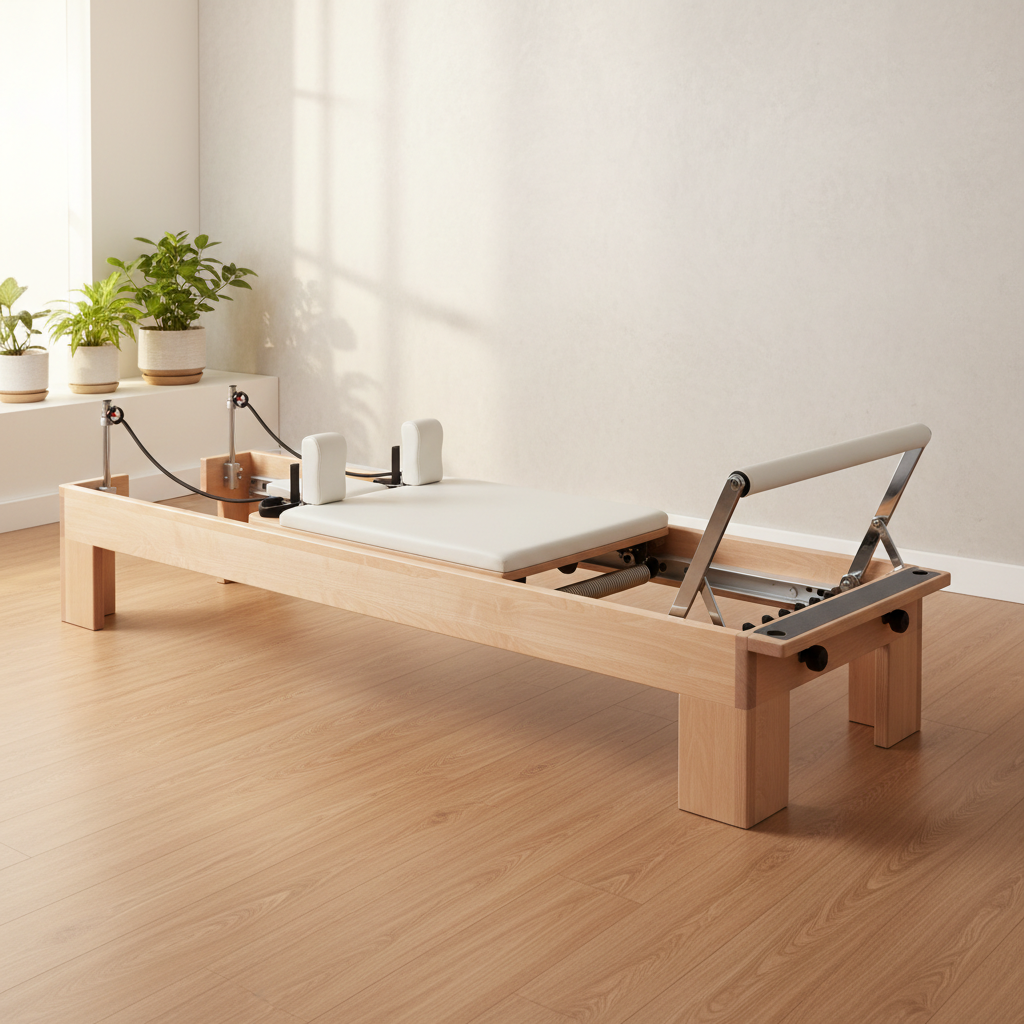
Balanced Body
Allegro 2 Reformer
The serious investment piece. Balanced Body's Allegro 2 is a professional-grade reformer built to the same specification used in studios worldwide. The wood-and-steel frame is rock solid, the carriage glides on sealed ball bearings, and the spring system is infinitely adjustable. This is the reformer that will still be in your home in twenty years. It does not fold away — you need a dedicated space — but for a dancer who is committed to building a long-term home practice, nothing at this price point comes close.
- Professional studio specification
- Sealed ball-bearing carriage for smooth, consistent glide
- Built to last decades
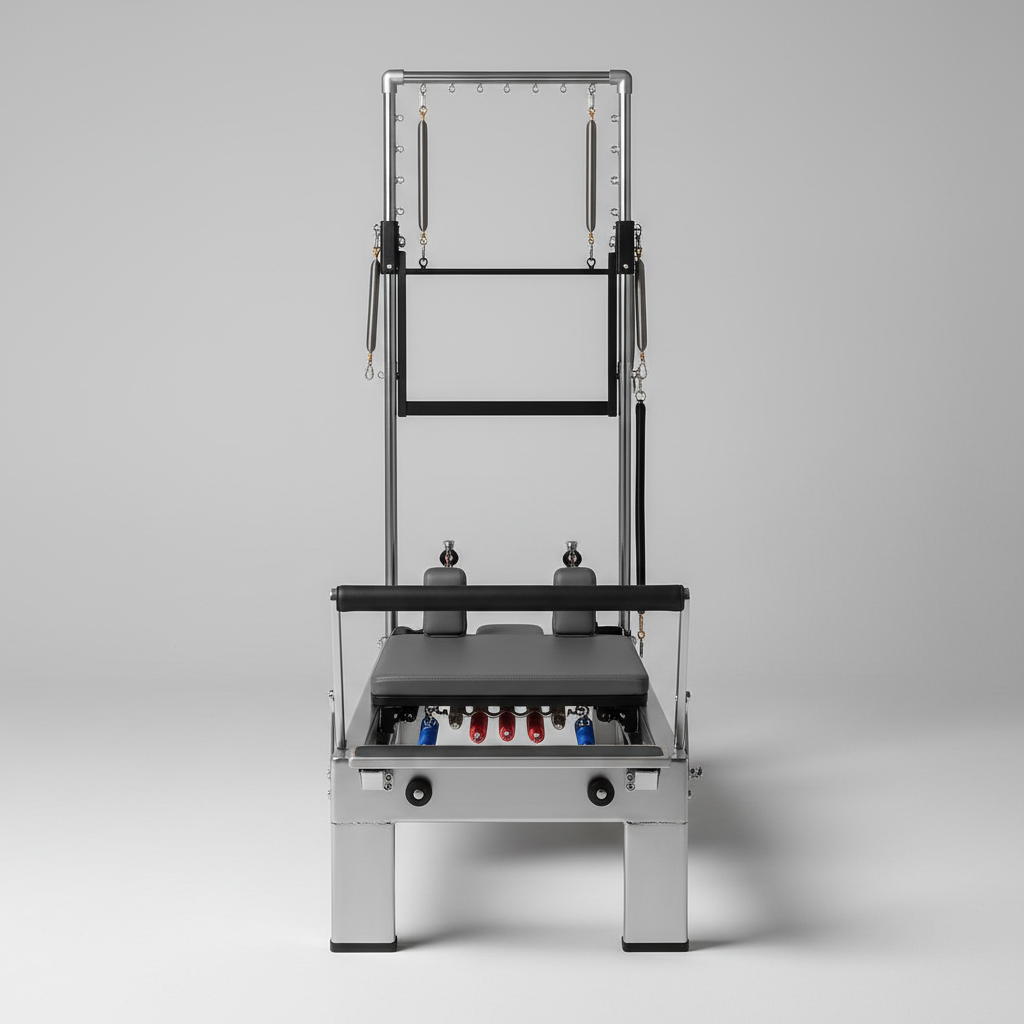
Merrithew / STOTT Pilates
SPX Max Plus Reformer
The mid-range benchmark. Merrithew's STOTT Pilates line is what most serious Pilates instructors train on, and the SPX Max Plus is their most versatile home reformer. It is heavier and more stable than cheaper alternatives, the footbar adjusts to five positions, and the padded carriage is genuinely comfortable for the longer sessions you will want to do as your practice develops. A proper piece of equipment at a price that, while significant, is not prohibitive.
- Instructor-grade construction
- Five-position adjustable footbar
- Comfortable padded carriage for longer sessions
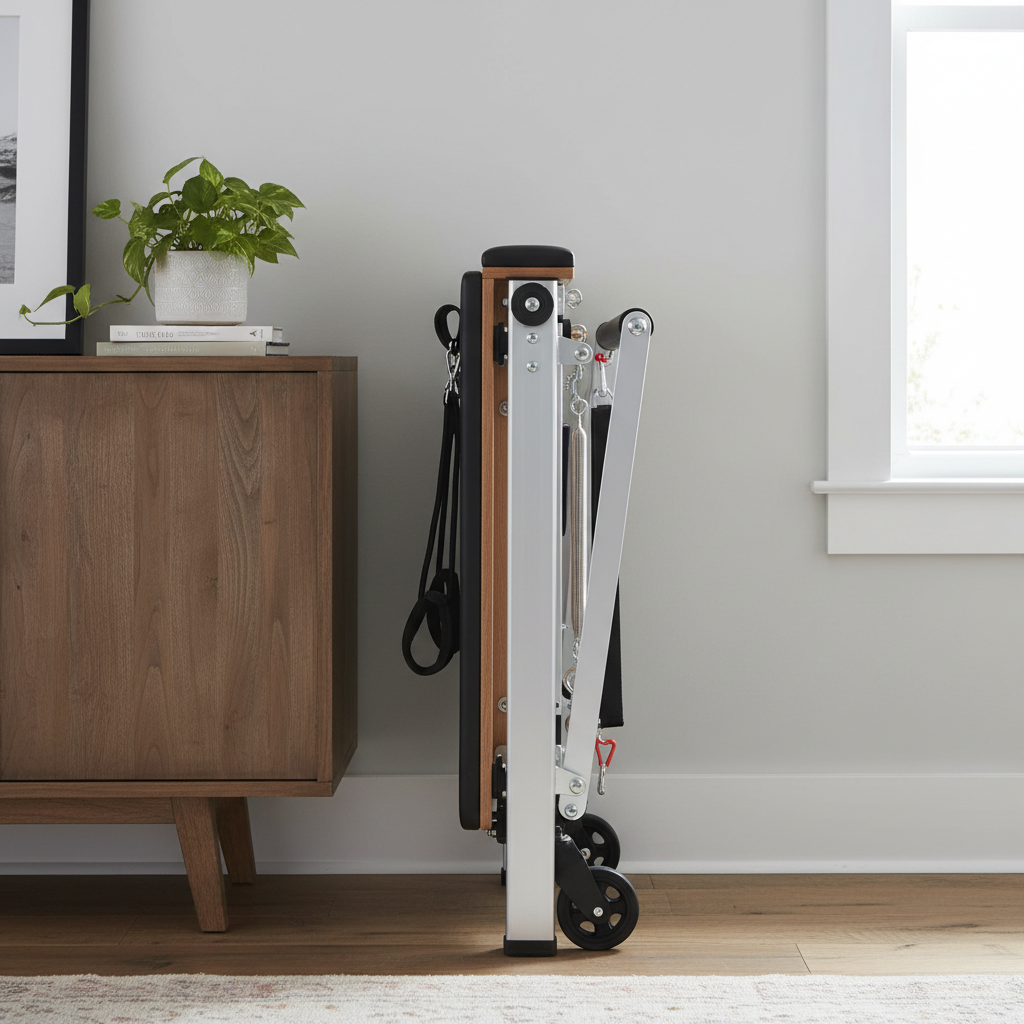
Merrithew / STOTT Pilates
At Home SPX Reformer
For those looking to replicate the studio-quality workout experience at home. What’s more, you can fully customize your Reformer’s upholstery making this our most versatile and durable home Reformer
- High Precision Spring package
- fully customize Reformer’s upholstery
- Merrithew build quality
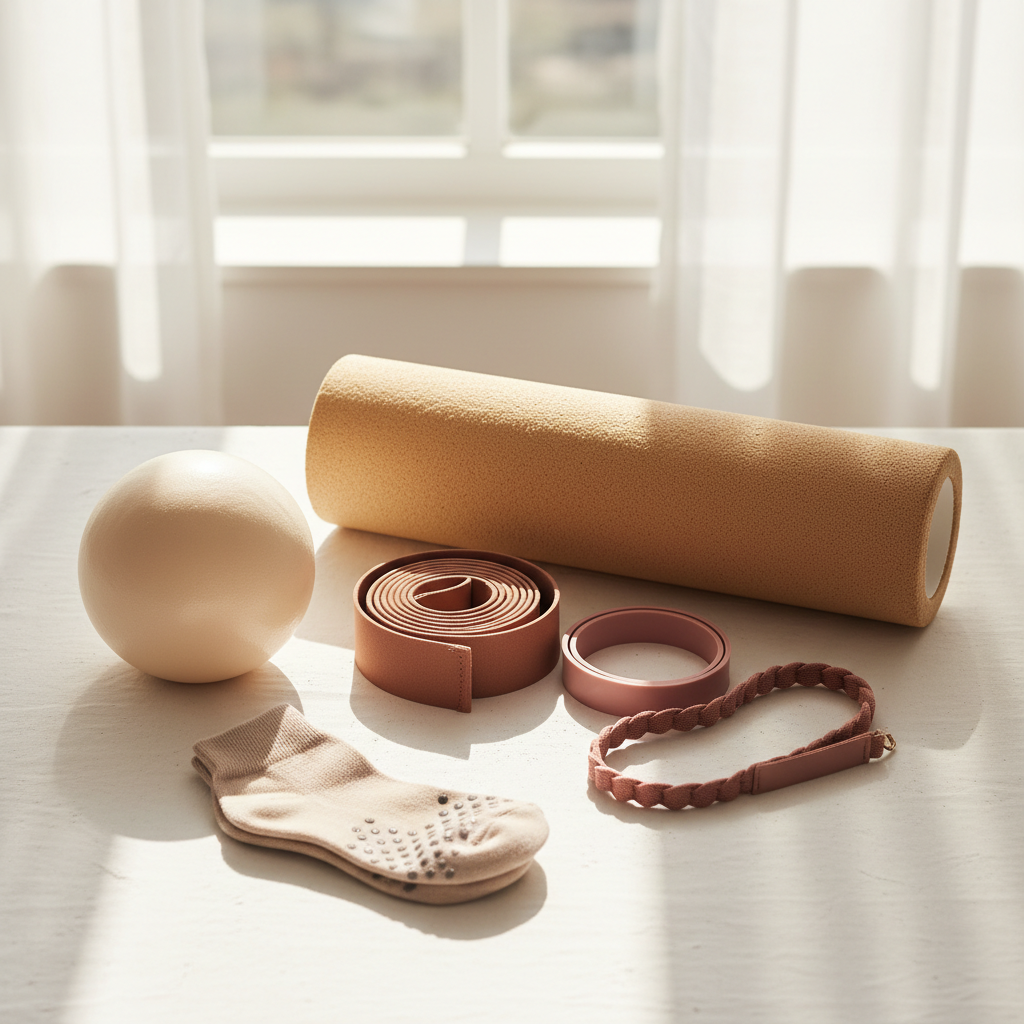
Tavi Noir
Pilates Grip Socks
The detail that makes reformer work both safer and more effective. Tavi Noir's grip socks give you the traction you need on the carriage during footwork and standing exercises, while the low profile and soft construction mean they do not interfere with pointing or flexing. They double as excellent barre socks. Buy two pairs — one will always be in the wash.
- Full-coverage grip sole for reformer safety
- Low profile that doesn't restrict foot articulation
- Works equally well for barre class
Balanced Body
Contrology Mat
If you are starting with mat Pilates before investing in a reformer — which is a completely sensible approach — the mat matters more than most people expect. Pilates mat work requires more cushioning than yoga, because much of it is performed lying on the spine and rolling through the vertebrae. Balanced Body's mat is 15mm thick, dense enough to protect the spine without being so soft that you lose proprioceptive feedback through the floor.
- 15mm density protects spine during rolling exercises
- Non-slip surface
- Sized for the full Pilates mat sequence
Ad Space
About
The Ballet Edit
The Ballet Edit is a publication dedicated to ballet culture, adult beginner dance education, movement, alignment, and the enduring style of the ballet world.
Written and edited by practitioners with professional dance experience on stage, film, and television, The Ballet Edit exists to inform, inspire, and welcome adults into the art form at every stage of their journey.