You've found your barre class. You're showing up, you're working hard, and somewhere between the plié series and the ab work, you catch yourself in the mirror and wonder why it doesn't quite look the way you imagined.
It isn't fitness you're lacking. It's ballet quality. And that is something you can learn.
These principles won't cover every exercise, ballet positions are detailed, and much of the specifics will live outside this list. But if something looks off, come back here first. These are the foundations that everything else is built on.
Reach Beyond Where You Think You Are
This is the single most important shift in thinking for anyone coming from a fitness background.
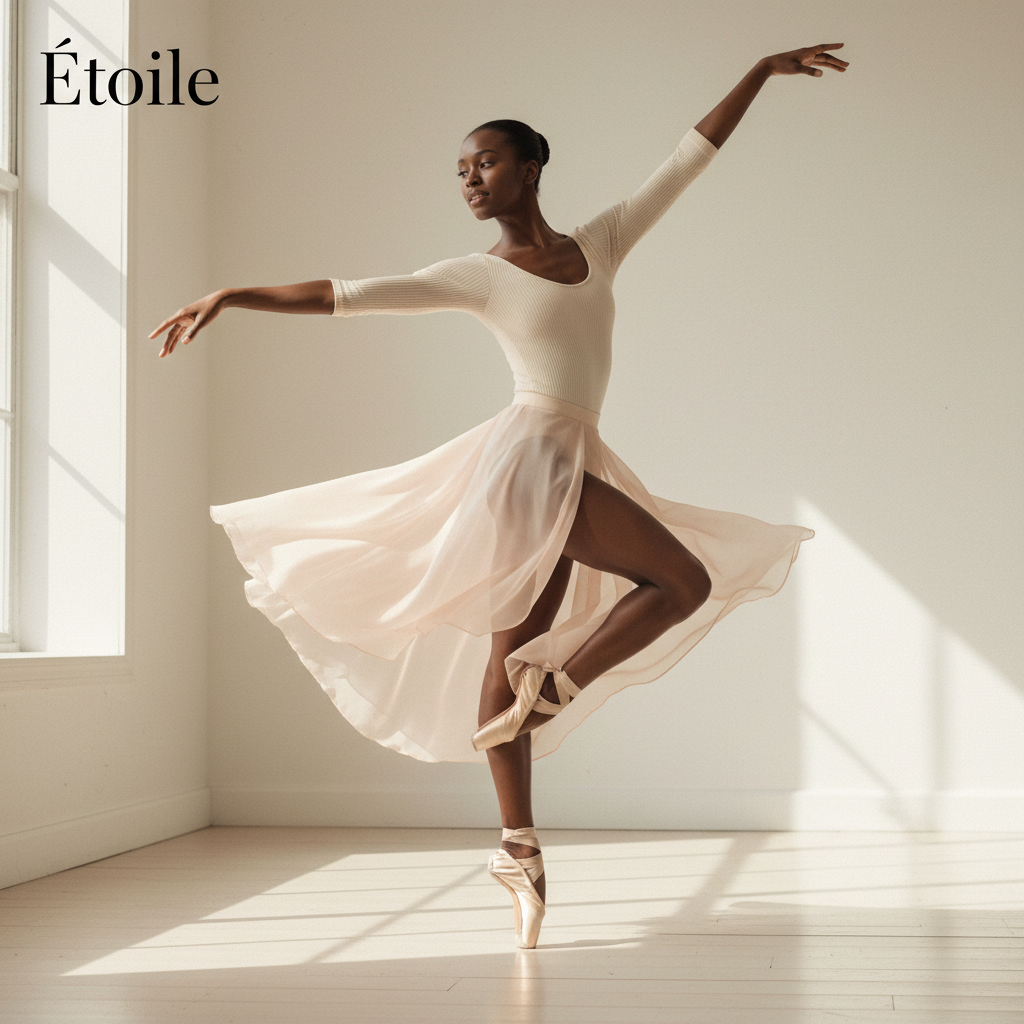
In ballet, a straight limb is not a finished limb. The arm, leg, or foot that merely reaches straight has stopped halfway. A dancer is always extending through the limb and beyond it, the feeling of reaching past your own fingertips, past your own pointed toe, past the wall across the room.
Practice this: extend your arm to the side until it feels straight, then actively imagine it growing two inches longer. You will feel your whole posture respond. That quality of continuous reach is what separates movement that looks balletic from movement that looks like exercise.
The same principle applies to the legs, the spine, the crown of the head. Nothing arrives. Everything is always just about to arrive.
Keep the Hips Square
As you reach and extend, the temptation is to let the body follow the limb, rotating the hip forward as the leg goes back, or hiking a hip as the leg goes to the side. Resist this entirely.
Think of it as a productive opposition: you are pulling away from the hip with the leg, while the hip itself stays exactly where it is. The hip is an anchor. The leg reaches away from it.
The same logic applies to the shoulders. You can reach through the arm and extend through the fingertips without lifting the shoulder toward the ear or letting the shoulder blade wing back. The shoulder stays down and wide; the arm grows long from it. Two separate things, moving in opposition.
This opposition, reaching out while staying grounded, is the defining physical sensation of ballet technique.
Don't Sink Into the Standing Hip
Whenever you are standing on one leg, in a balance, a tendu, a dégagé, or any single-leg exercise, there is a strong instinct to let the body drop into the standing hip, allowing it to jut out to the side. This is called "sitting into" the hip, and it is one of the most common things that makes barre work look loose and uncontrolled.
Keep the hips level. Both hip bones should stay at the same height regardless of what the working leg is doing. Think of actively lifting up and out of the standing hip, pressing the floor away rather than collapsing into it. The supporting side of the waist stays long.
This takes real muscular effort, especially when you're tired. But it is precisely this effort, invisible from the outside, that gives the standing leg its quality and keeps the whole picture clean.
Lift Through the Crown of Your Head
Imagine a thread attached to the very top of your skull, pulling gently upward toward the ceiling. Not your chin, not your forehead, the crown.
This single image organizes most of the upper body at once. The spine lengthens. The chest opens slightly. The shoulders drop away from the ears. The neck finds its natural length.
Keep the chin level with the floor, not tucked down, not lifted toward the ceiling, just level. Your neck is a continuation of your spine, not a separate structure sitting on top of it. Where the spine goes, the neck follows. Where the neck goes, the head follows.
If your teacher asks you to lengthen your back, this is where to start: crown to ceiling, chin level, neck long.
Point Through the Whole Foot, Without Curling the Toes
A pointed foot in ballet is not a curled foot. Curling the toes is what the foot does when it's gripping. Pointing is what the foot does when it's reaching.
When you point, think of reaching through the ball of the foot and extending through the toes as if they are trying to touch something just beyond them. The toes should be long and relatively flat, not scrunched, not splayed, just extended.
Use the floor to help you. Before you lift a pointed foot into the air, brush it along the floor first. The resistance of the floor teaches the foot how to articulate fully, heel, arch, ball, toes, in the right sequence. Even in a barre or Pilates class that doesn't involve footwork, this principle of pressing through rather than just pointing applies.
Keep the Heel in Line With the Leg
When the foot is pointed or the leg is extended, the heel should be in line with the rest of the leg, not dropped inward toward the floor, and not rolled outward either.
Dropping the heel inward is called sickling, and it is one of the most common habits to develop and one of the most important to correct. It makes the ankle look weak and disrupts the clean line of the whole leg.
The fix is simple in theory: when you point, think about pushing the heel away from you, as if you're trying to lengthen the back of the leg at the same time as the front. This keeps the heel tracking correctly and gives the whole leg a longer, cleaner appearance.
Pull Up Through the Core
In ballet, "pulling up" doesn't mean sucking in. It means lifting, a sense of drawing the body upward from the inside, as if the torso is being gently elevated away from the hips.
The core is engaged not by bracing against effort, but by this continuous upward lift. The lower back stays long rather than arched. The pelvis is neutral, not tucked under, not tipped forward.
This quality of lift affects everything. It makes the limbs look longer. It makes the posture look effortless. It gives the impression of dancing even when the movement is slow and controlled.
When the exercise gets hard and the first instinct is to let something go, the core is usually what goes first. Practise keeping it. That is where the balletic quality lives.
Find Your Focus Point
In yoga, this is called drishti, a fixed gaze point that anchors the body and quiets the mind. Ballet uses the same principle, though it rarely gets named.
When you are balancing or working through a sustained exercise, find one still spot in front of you at roughly eye level and hold your gaze there. Don't let the eyes wander. The moment the gaze drifts, the head shifts, the neck adjusts, and the whole balance begins to unravel.
A soft, steady focus does more than just help with balance. It gives the face, and therefore the whole presence, a quality of calm intention rather than effortful concentration. It's a small thing that changes everything about how the movement reads.
How to Hold the Barre
This is one of the most overlooked details in a barre class, and one of the most telling.
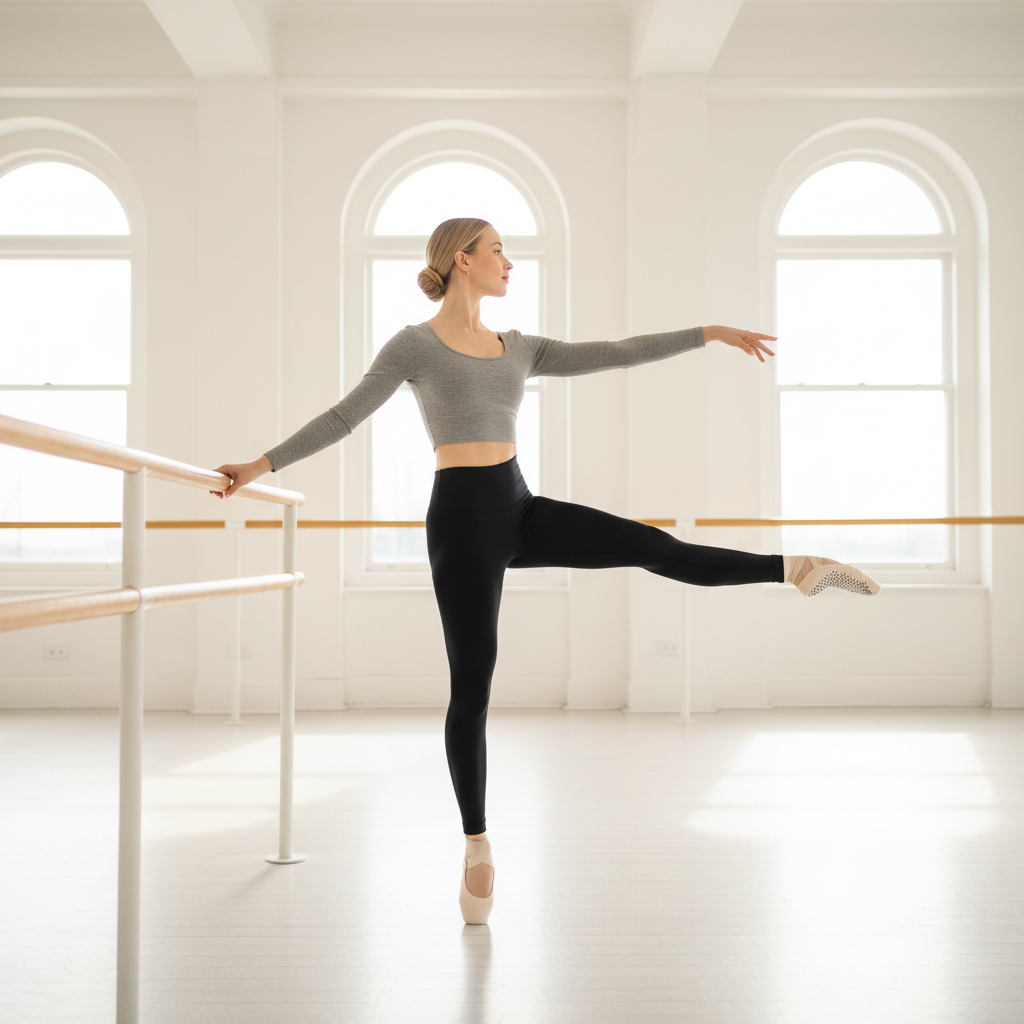
In ballet, you do not grip the barre. The barre is there for the lightest possible reference point, not for support or balance. The moment you grip it, you shift weight into the arm, the shoulder rises, the posture collapses slightly, and the whole line is lost.
The correct hold: rest your hand lightly on top of the barre with a soft, open palm. Keep the thumb on top of the barre alongside the fingers, never wrapped underneath or around it. The wrist should be long and relaxed, the elbow slightly soft, the shoulder down.
Where you stand matters too. Position yourself just under an arm's length from the barre, close enough to rest your hand on it without reaching, but far enough that your elbow remains slightly soft rather than locked. Standing too close encourages leaning; too far encourages reaching and pulling.
And while you're finding your spot: check your pelvis. The derrière should be neither sticking out behind you nor tucked tightly under. Both are common compensations, and both disrupt the neutral spine that good barre work depends on. Think of the tailbone dropping gently toward the floor, not jutting back, not tucked forward.
If you find yourself gripping, it usually means something else has switched off, the core, the standing leg, the sense of lift through the crown. Use the grip as a signal: something has gone, find it and restore it. The lighter the touch on the barre, the more honest your balance.
For the Arms
Arm positioning in ballet has its own language and its own set of principles. We've covered it in full in our arms positions article, if you haven't read it yet, that's the natural companion to this one.
A Note on Everything Else
Ballet is a detailed form. Many positions, the exact angle of a tendu, the rotation of an arabesque, the placement of the working arm, fall outside what any single article can cover. Your teacher is your best resource for the specifics of each exercise.
But when something looks off and you're not sure why, come back to this list. Most problems in barre and Pilates, the things that make movement look effortful, heavy, or slightly wrong, trace back to one of these principles.
Extend through the limbs. Keep the hips level. Lift through the crown. Point without curling. Keep the heel in line. Pull up. Find your focus. And keep the lightest possible touch on the barre.
Get those right, and everything else starts to look more balletic.
The Edit's Selection
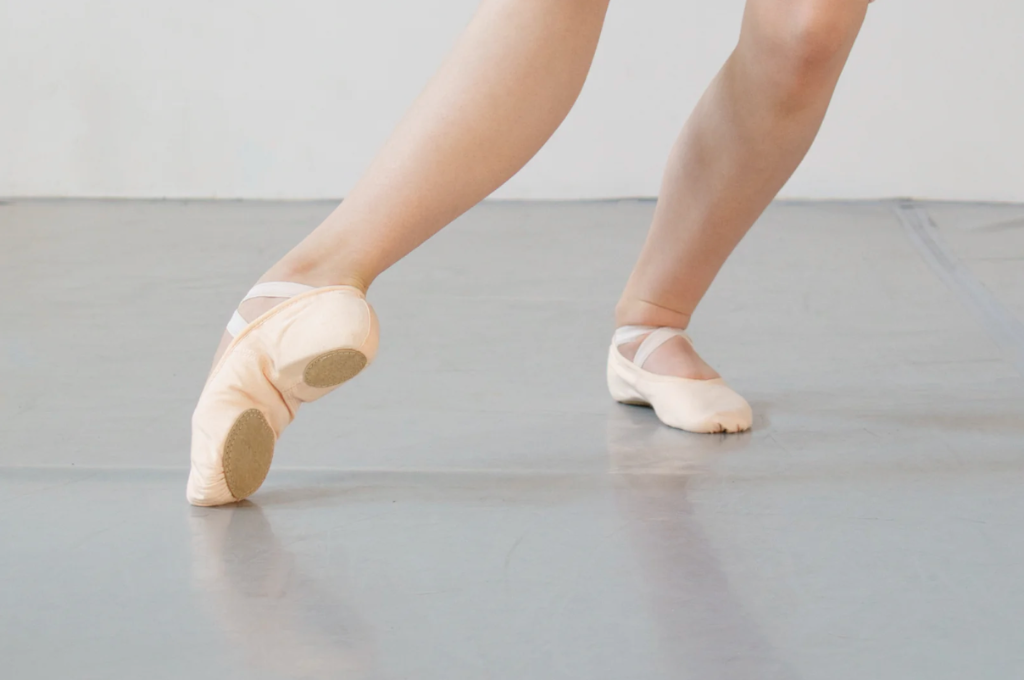
ORZA
Orza Pro® 2.0 Ballet Shoe
The Orza Pro® 2.0 is one of the few genuinely modern redesigns of the traditional ballet slipper. Created by former New York City Ballet dancer Seth Orza after recovering from a serious foot injury, it retains the classic look while incorporating substantially more cushioning and support than conventional ballet shoes. For adult beginners dealing with sensitive feet, plantar discomfort, or long class days, it's one of the most interesting premium options currently available.
- Designed by an NYCB dancer after a career-threatening injury
- Looks traditional, performs differently
- Free returns
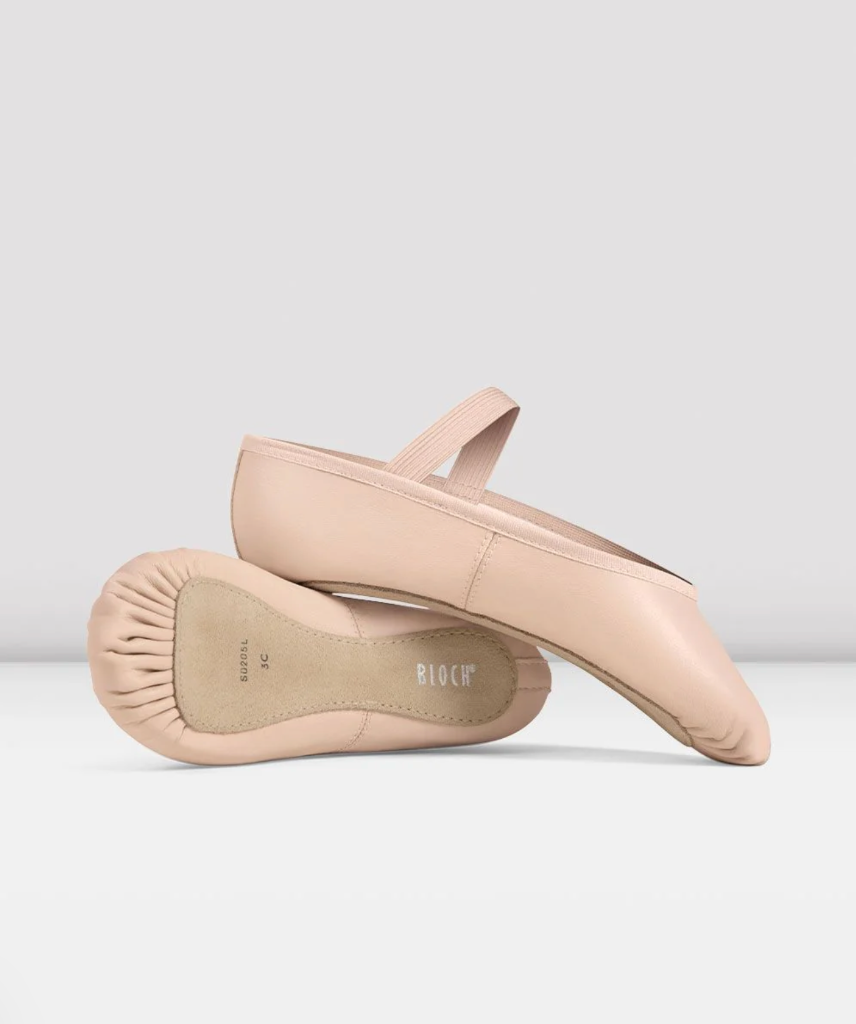
Bloch
Dansoft Full-Sole Ballet Slipper
A studio classic. The Dansoft's leather upper and full sole offer a forgiving fit and reliable support, ideal for the dancer still building foot strength.
- Soft leather molds quickly
- Full sole for honest feedback
- Classic aesthetic
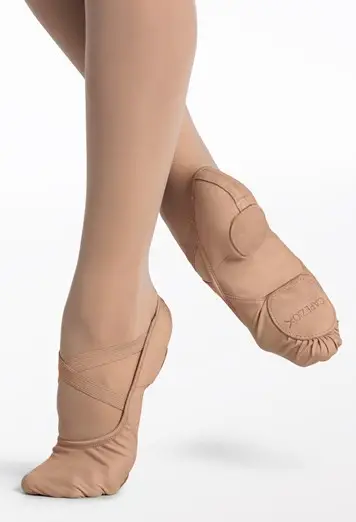
Capezio
Hanami Canvas Split-Sole
Lightweight and beautifully constructed, the Hanami is the split-sole shoe that consistently earns praise from adult beginners and their teachers alike.
- Feather-light canvas
- Flattering pointed arch
- Breathable for long classes
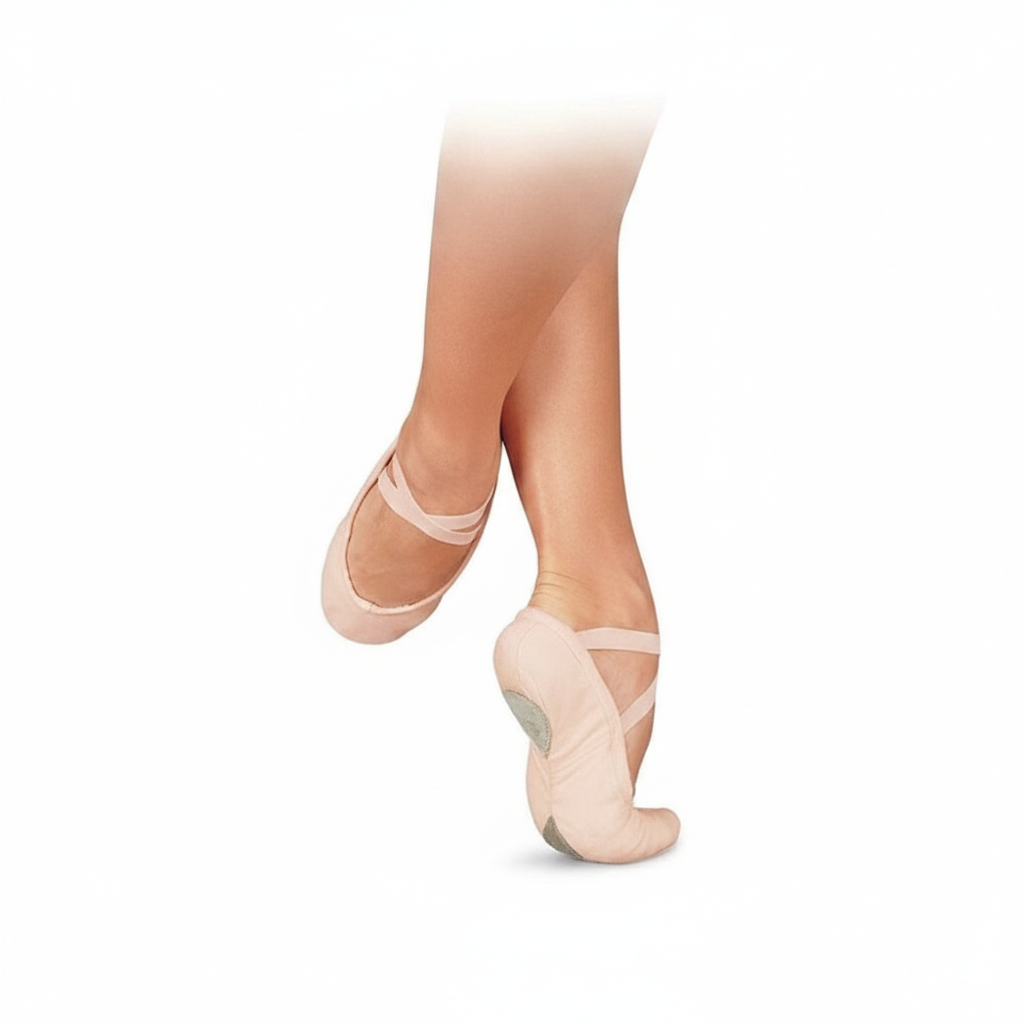
Sansha
Pro 1 Canvas Split-Sole
Sansha's entry-level slipper punches well above its price. Consistently recommended for beginners who want quality without the premium outlay.
- Exceptional value
- Durable canvas construction
- Available in multiple widths
Bloch
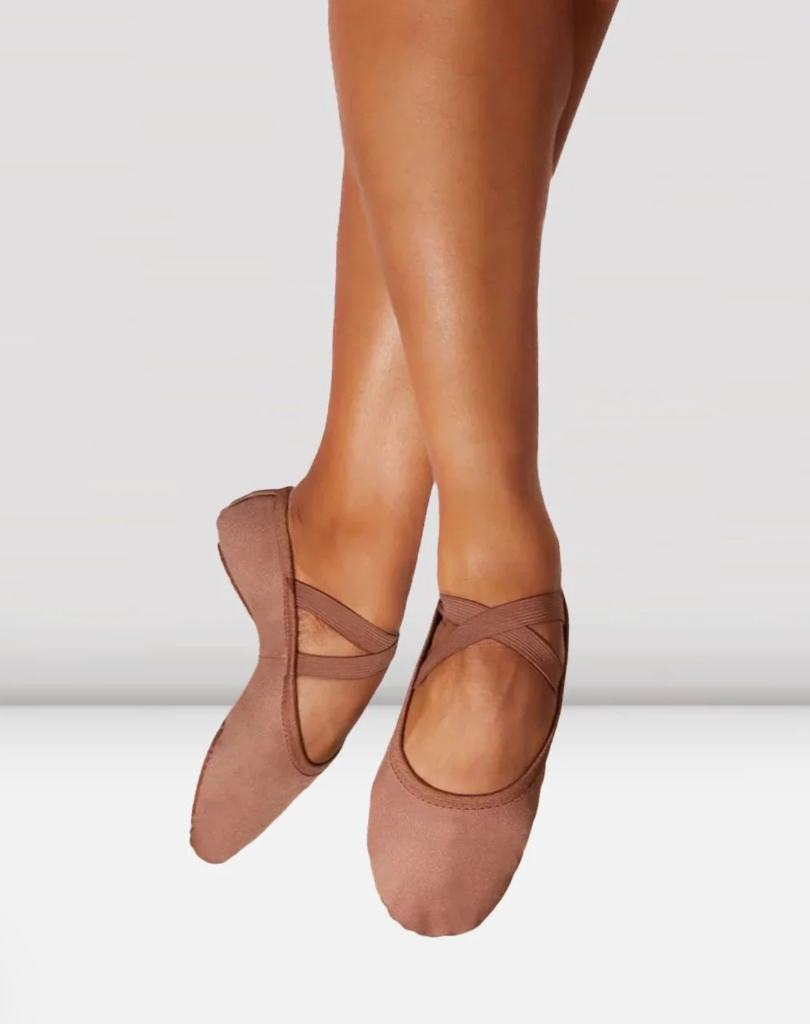
Ladies Performa Stretch Canvas Ballet Shoes
Bloch's answer to the canvas split-sole market. The Arise features a microfiber insole and a particularly secure heel that stays put through barre work.
- Secure heel fit
- Microfiber insole
- Great arch definition
Capezio
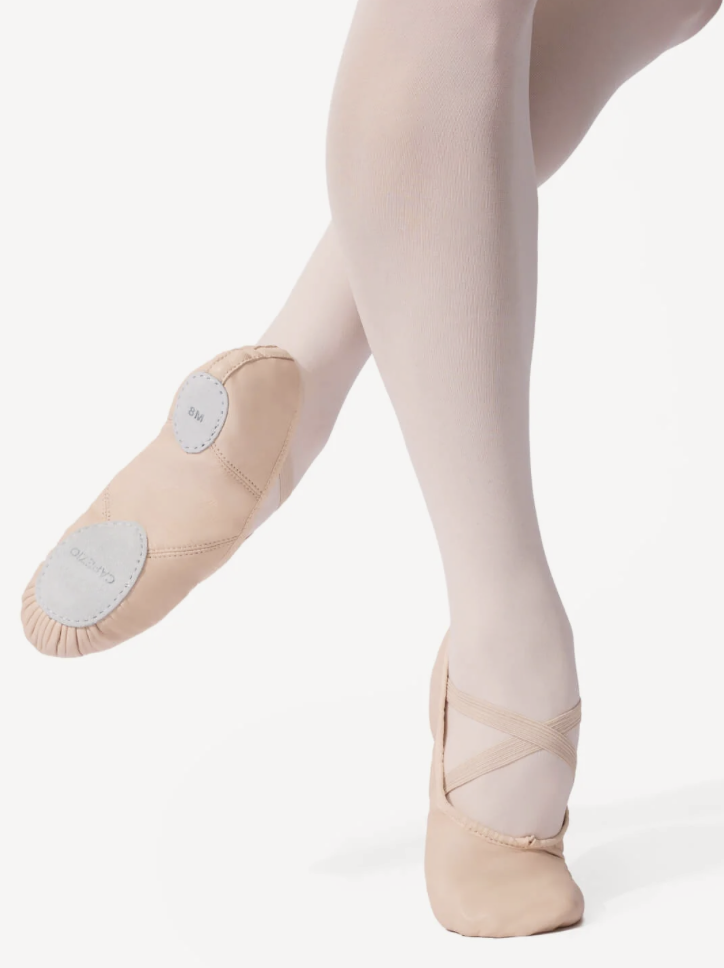
Leather Juliet Ballet Shoe
A first-rate choice for dancers with narrow feet. The Juliet's sculpted arch improves pointing and flexing with ease, while pre-attached criss-cross elastics deliver a secure, snug fit. Durable leather construction gives extra control on the barre and beyond.
- Sculpted arch for better point
- Pre-attached criss-cross elastics
- Ideal for narrow feet
Ad Space
About
The Ballet Edit
The Ballet Edit is a publication dedicated to ballet culture, adult beginner dance education, movement, alignment, and the enduring style of the ballet world.
Written and edited by practitioners with professional dance experience on stage, film, and television, The Ballet Edit exists to inform, inspire, and welcome adults into the art form at every stage of their journey.