Walk into any ballet class - in Tokyo, in Toronto, in São Paulo - and you will hear the same words. Plié. Tendu. Pirouette. The teacher might speak English, or Japanese, or Portuguese. But the ballet is conducted in French.
It is one of the strangest continuities in the performing arts. A dancer in Seoul learns the same vocabulary as a dancer at the Paris Opera Ballet. A child in her first class in Brooklyn uses the same terms as a principal dancer at the Royal Ballet. The language has not evolved. It has not been translated. It has simply endured.
Why does ballet still speak French? The answer lies in where ballet came from, who codified it, and what that language carries with it.
The Court of Louis XIV
Ballet did not begin in France - its earliest roots are in the Italian Renaissance courts of the 15th century. But it was in France that ballet became a formal discipline.
Louis XIV, the Sun King, was a dancer himself. He performed in court ballets - elaborate spectacles that combined dance, music, and theater to glorify the monarchy. In 1661, he founded the Académie Royale de Danse, the first institution dedicated to the professional training of dancers.
This is where the vocabulary was born.
The masters who wrote down the steps - Pierre Beauchamp, Jean-Georges Noverre, later August Bournonville - were French or trained in the French system. They named what they codified. Plié (bent). Tendu (stretched). Relevé (raised). Arabesque (in the style of the Arabs). Chassé (chased). The words are descriptions of the movement itself, rendered in the language of the court that formalized it.
The Imperial Export
By the 18th and 19th centuries, French had become the lingua franca of European aristocracy - the language of diplomacy, of culture, of refinement. Ballet, as an art form tied to royal courts, traveled with that prestige.
When ballet spread to Russia, it did not shed its French vocabulary. The Imperial Ballet School in St. Petersburg - now the Vaganova Academy - trained dancers using French terminology, even though the instruction was in Russian. Marius Petipa, the French choreographer who created The Sleeping Beauty, The Nutcracker, and La Bayadère, worked in St. Petersburg and insisted on the French terms.
The same happened in Denmark, where Bournonville's school preserved the French vocabulary alongside its own stylistic innovations. In England, when the Royal Ballet was founded in the 20th century, it adopted the French terminology that had already become standard.
Precision, Not Pretension
There is a practical reason the language has persisted: it is precise.
French ballet terms are not arbitrary. They describe exactly what the body should do. Battement tendu means "beating movement stretched" - the foot brushes along the floor until the leg is fully extended. Grand jeté en avant means "large thrown forward" - a big leap traveling in a forward direction.
Translating these terms into other languages often loses that specificity. "Stretch" does not capture tendu. "Throw" does not capture jeté. The French word carries the technique inside it.
There is also the matter of rhythm. Ballet terms fit the music. Plié is two syllables, soft and rounded, like the movement itself. Pirouette spins on the tongue the way the body spins in space. The sound of the word reinforces the quality of the step.
A Shared Language
Perhaps the most important reason ballet still speaks French is that it gives dancers a common vocabulary.
A dancer who trains in New York can walk into a class in Paris, in London, in Melbourne, and understand what is being asked of her. She does not need to wait for translation. She does not need to guess whether "bend your knee" means demi-plié or fondu. The French term is universal.
This is not elitism. It is practicality.
The Terms That Travel
Some of the most common ballet terms, and what they mean:
At the barre:
- Plié - bent (knee bend)
- Tendu - stretched (foot brushes to point)
- Jeté - thrown (leg throws to position)
- Rond de jambe - circle of the leg
- Fondu - melted (both knees bend together)
- Frappe - struck (foot strikes the floor)
In the center:
- Pirouette - turn (spin on one leg)
- Arabesque - in the style of the Arabs (extended leg behind)
- Chassé - chased (gliding step)
- Glissade - glide (small traveling step)
- Sissonne - named for the Comte de Sissonne (jump from two feet to one)
Jumps:
- Sauté - jumped
- Échappé - escaped (jump from closed to open position)
- Assemblé - assembled (jump landing on two feet)
- Grand jeté - large thrown (big leap)
These words are not decoration. They are instruction. They are history. They are the language of the form.
What Is Lost in Translation
Some teachers do translate. In recreational classes, especially, you might hear "point your foot" instead of tendu, or "turn" instead of pirouette.
But something is lost.
The French term carries the quality of the movement. Tendu is not just "point" - it is stretch, tension, reaching. Fondu is not just "bend" - it is melt, sink, surrender to gravity. Frappe is not just "strike" - it is attack, energy, precision.
The word teaches you how to move.
The Future of the Language
Will ballet always speak French? Probably.
The form is conservative by nature. It preserves. It honors lineage. It respects the masters who came before.
As ballet spreads to new countries, as it evolves, as it incorporates new influences, the French vocabulary remains. It is the one constant.
A child in her first class in Mumbai learns plié. A principal dancer at the Paris Opera Ballet warms up with tendus. They are speaking the same language.
That is not nothing.
The Real Lesson
Ballet speaks French not because it is pretentious, but because it is precise.
Not because it is elitist, but because it is universal.
Not because it refuses to change, but because some things are worth preserving.
Learn the terms. Understand them. Say them correctly.
They are not barriers. They are bridges.
They connect you to every dancer who has ever stood at a barre, in every country, in every century.
They connect you to the form itself.
And when you walk into a class anywhere in the world, and the teacher calls out "En place!" - you will know exactly where to be.
The Edit's Selection
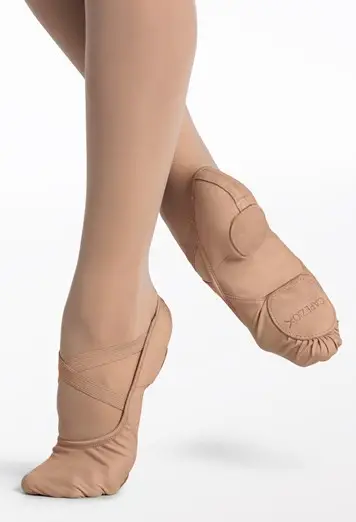
Capezio
Hanami Canvas Split-Sole
A perennial favourite among adult beginners and intermediate dancers for its lightness and beautiful arch profile.
- Lightweight
- Flattering line
- Breathable
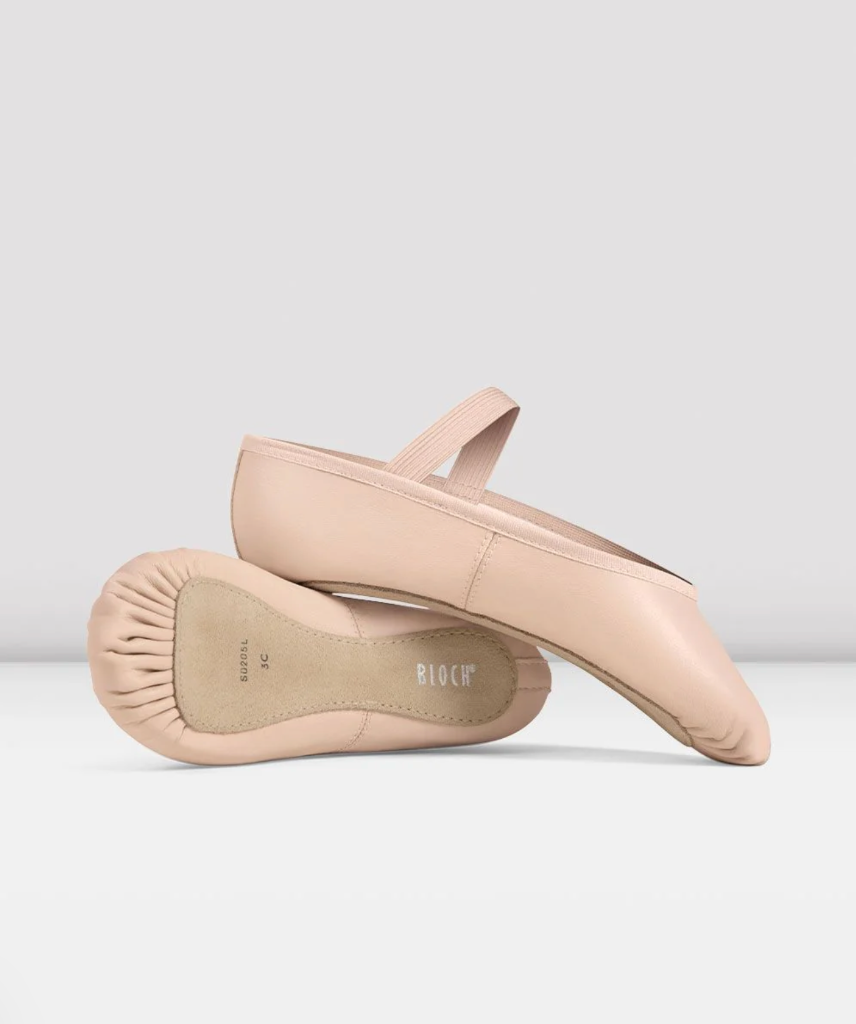
Bloch
Dansoft Full-Sole Ballet Slipper
The go-to recommendation for first-time ballet shoe buyers: forgiving, classic, and built to last a solid first year of classes.
- Supportive full sole
- Molds to the foot
- Classic leather
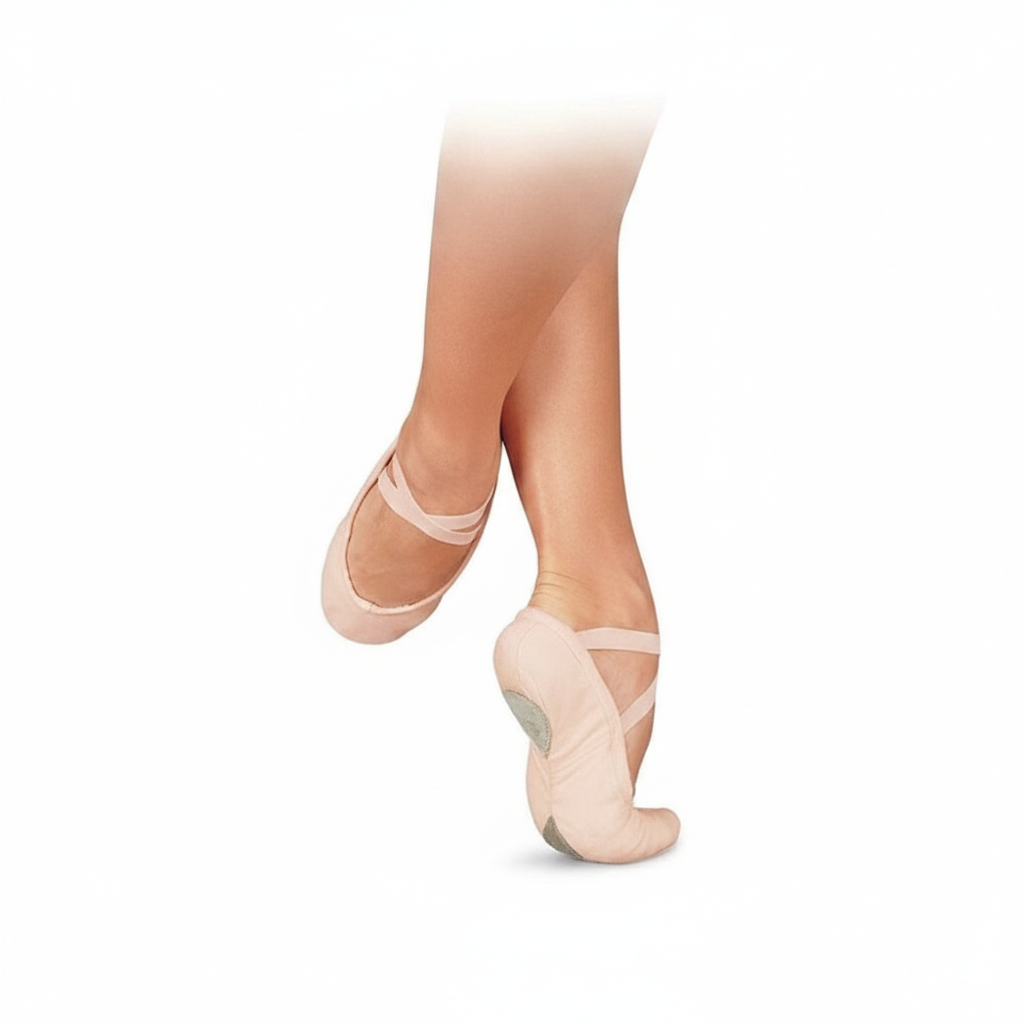
Sansha
Pro 1 Canvas Split-Sole
Quality at an honest price. Sansha's Pro 1 is a reliable first slipper that won't punish you for not yet knowing your preferences.
- Excellent value
- Durable
- Wide size range
Ad Space
About
The Ballet Edit
The Ballet Edit is a publication dedicated to ballet culture, adult beginner dance education, movement, alignment, and the enduring style of the ballet world.
Written and edited by practitioners with professional dance experience on stage, film, and television, The Ballet Edit exists to inform, inspire, and welcome adults into the art form at every stage of their journey.