Planning a popcorn night? Good. These are the ones worth clearing your evening for. Ballet and cinema make a surprisingly electric combination. The camera can do things the theatre cannot. It gets close. It catches sweat, strain, the cruelty beneath the grace. The best ballet films know this. They are not recruitment videos for the art form. They are honest examinations of what it demands, and what it takes from the people who give themselves to it.
These are the ten that did it best.
The Red Shoes (1948)
Nothing made before or since has captured what it feels like to be consumed by dance the way Powell and Pressburger's masterpiece does. Moira Shearer plays Victoria Page, a young dancer torn between her love for a composer and the all-consuming demands of the impresario Boris Lermontov, who insists that a true dancer must choose the art above all else.
The film was made on Technicolor film stock at enormous expense and it shows. Every frame is saturated with colour so vivid it feels feverish. The 17-minute ballet sequence at its centre remains one of the most extraordinary pieces of filmmaking ever committed to celluloid. Shearer was a principal dancer with the Sadler's Wells Ballet and performs her own choreography throughout; the dancing is the real thing.
The final scene is one of cinema's great tragic endings. If you have never seen it, clear an evening and watch it properly.
Director: Michael Powell & Emeric Pressburger
Year: 1948
Black Swan (2010)
Darren Aronofsky's psychological horror film is the most talked-about ballet movie of the modern era, and for good reason. Natalie Portman won the Academy Award for Best Actress for her portrayal of Nina Sayers, a technically flawless but emotionally repressed dancer at a New York City ballet company who is cast as the Swan Queen in Swan Lake and begins to disintegrate under the pressure.
Aronofsky was not interested in making a documentary about ballet. He was interested in obsession, perfectionism, and the specific horror of a body that will not do what the mind demands. Ballet is the perfect vehicle for that story. The film's depictions of studio life, the politics, the hierarchy, the physical cost, are uncomfortably accurate. The dancing, with Portman coached extensively by dancer and choreographer Benjamin Millepied, is convincing enough to serve the story.
If The Red Shoes is about the art consuming the artist, Black Swan is about the artist consuming herself.
Director: Darren Aronofsky
Year: 2010
Suspiria (1977) and Suspiria (2018)
Two films about the same premise, an American dancer arrives at a prestigious European dance academy and discovers something sinister at its core, made forty years apart, and radically different from each other. Both are essential.
Suspiria (1977)
Dario Argento's original is a sensory experience first and a horror film second. Filmed in supersaturated primary colours, deep reds, acid greens, cobalt blues, with a relentless, pounding score by the rock band Goblin, it is less interested in plot logic than in atmosphere and dread. Jessica Harper plays Suzy Bannion, arriving at the Freiburg dance academy as strange deaths begin to multiply. What Argento understood was that a ballet school is already a place of controlled suffering and rigid hierarchy, the horror is not far beneath the surface.
Director: Dario Argento
Year: 1977
Suspiria (2018)
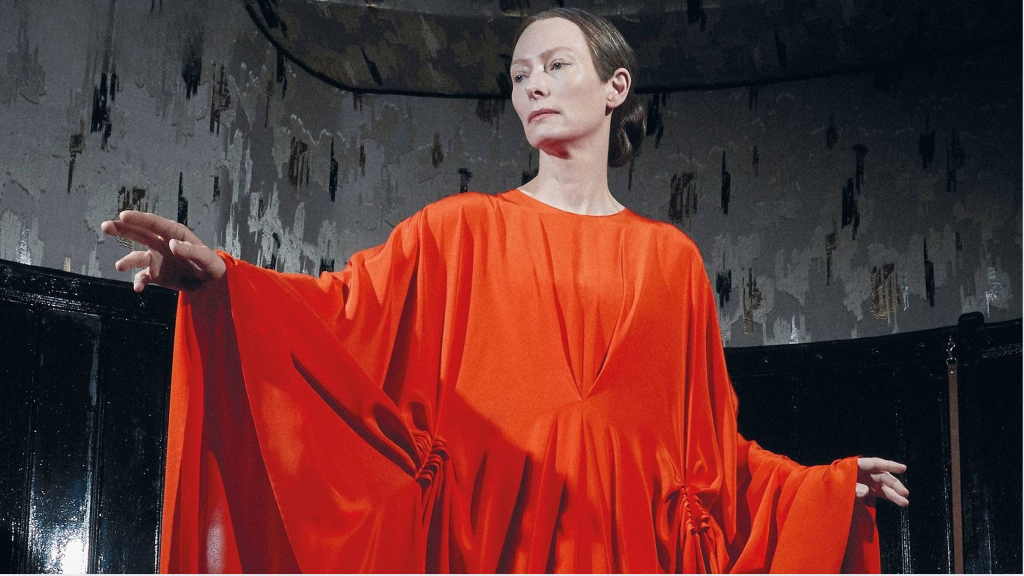
Luca Guadagnino's reimagining is a different kind of film entirely, longer, more deliberate, more politically charged, and formally more ambitious. Set in 1977 Berlin against the backdrop of the German Autumn, it places the dance academy within a real moment of historical terror. Dakota Johnson plays Susie Bannion; Tilda Swinton plays not one but three roles, including the dance company's formidable director Madame Blanc and, under heavy prosthetics, the elderly psychiatrist Dr Klemperer.
Guadagnino worked closely with the Berlin-based choreographer Damiano Ottavio Bigi to create movement sequences that are genuinely unsettling, the dancing here is used as a weapon. More cerebral and less viscerally frightening than the original, the 2018 Suspiria rewards patience and a second viewing.
Director: Luca Guadagnino
Year: 2018
The Turning Point (1977)
The most emotionally honest film ever made about the specific grief of a dancer who left the stage. Shirley MacLaine plays Deedee, a former ballerina who gave up her career for marriage and children; Anne Bancroft plays Emma, the friend who stayed and became a star. When Deedee's daughter joins Emma's company, the two women are forced to confront everything they gave up and everything they resent.
Mikhail Baryshnikov appears as Yuri, the young star dancer, and performs some of the most spectacular dancing ever captured on film, in an era before CGI, what you see is exactly what he did. The film received eleven Academy Award nominations. It lost all eleven, making it one of the most nominated films never to win, which feels appropriately tragic for its subject matter.
(If you're thinking of the film where Baryshnikov dances opposite Gregory Hines, that's White Nights (1985). It's in the Bonus section below.)
Director: Herbert Ross
Year: 1977
Billy Elliot (2000)
The most beloved ballet film that is not, strictly speaking, about ballet. It is about a boy in a County Durham mining town who wants to dance, a world that tells him he cannot, and his absolute refusal to accept that. The ballet sequences, choreographed by Peter Darling, are joyful, technically strong, and completely in service of character. Jamie Bell was eleven when he filmed it and already a serious dancer.
What makes Billy Elliot work where lesser films about dance aspiration fall flat is that it never sentimentalises the cost. Billy's father and brother are not villains; they are men shaped by their circumstances. The film understands class and masculinity with the same precision it understands dance.
Director: Stephen Daldry
Year: 2000
Center Stage (2000)
The guilty pleasure on this list, and entirely unashamed of it. Center Stage follows a group of first-year students at a fictional American Ballet Academy through auditions, heartbreak, politics, and the moment each dancer confronts the gap between their talent and their ambition. The cast includes several real professional dancers, including Ethan Stiefel of ABT, which gives the company scenes an authenticity that comparable films rarely achieve.
The final performance sequence, set to driving rock and performed in red pointe shoes, is deliriously entertaining. Critics were largely unkind to it in 2000. Dancers loved it. Dancers were right.
Director: Nicholas Hytner
Year: 2000
Mao's Last Dancer (2009)
Based on Li Cunxin's extraordinary memoir, this Australian film tells the story of a boy selected at age ten from a peasant village in rural China to train at Madame Mao's Beijing Dance Academy, and his eventual defection to the West when, on a cultural exchange visit to Houston, he experienced what life outside Maoism could offer.
The film is less interested in ballet as art than in ballet as a vehicle for freedom, the body's capacity to become something that transcends the political circumstances of its birth. Chi Cao, a principal dancer with the Birmingham Royal Ballet, performs Li Cunxin's adult dancing, and the performance sequences are exceptional.
Director: Bruce Beresford
Year: 2009
Polina (2016)
A French film, based on Bastien Vivès's graphic novel, that traces a Russian ballet dancer from her rigid classical training at the Bolshoi school through her encounter with contemporary dance and the identity crisis that follows. What distinguishes Polina from most ballet films is its willingness to treat the tension between classical and contemporary dance as a genuinely serious artistic question, not merely a generational conflict.
Anais Demoustier plays Polina as an adult; the choreography, by Angelin Preljocaj, is some of the most beautiful dance on film in recent memory.
Director: Valerie Muller & Angelin Preljocaj
Year: 2016
The Company (2003)
Robert Altman's most underrated film is also one of the most accurate portraits of life inside a major ballet company ever put on screen. Filmed with the Joffrey Ballet of Chicago, it follows a season in the company's life without a conventional plot, there is no crisis, no villain, no transformation arc. There are only dancers, rehearsing and performing and managing their bodies and their anxieties.
Neve Campbell, who trained seriously as a dancer before acting, stars as a company member. The camera watches. It is a film that trusts its audience to find meaning in observation.
Director: Robert Altman
Year: 2003
A Ballerina's Tale (2015)
The only documentary in the top ten, and it earns its place. Director Nelson George spent three years filming Misty Copeland during the period leading to her appointment as the first African American female principal dancer at American Ballet Theatre. The film is not a hagiography; it interrogates the structures of classical ballet with care and asks why the art form looks the way it does, and whose bodies it has historically chosen to celebrate.
Copeland is a compelling and generous subject. The film is essential viewing for anyone who cares about what ballet is, and what it could be.
Director: Nelson George
Year: 2015
Bonus: Worth Your Time
White Nights (1985)
Mikhail Baryshnikov and Gregory Hines. That is the pitch, and it is enough. Baryshnikov plays a Soviet ballet dancer who defects to the West, is forced back to the USSR after a plane crash, and is placed under the supervision of an American tap dancer who defected in the other direction. The plot is Cold War thriller; the dance sequences are extraordinary. The collaboration between Baryshnikov's classical technique and Hines's tap is one of cinema's most unlikely and compelling pairings.
Director: Taylor Hackford
Year: 1985
Pina (2011)
Wim Wenders's documentary about Pina Bausch, the choreographer who remade what dance theatre could be, was filmed in 3D and remains one of the most visually ambitious dance films ever made. Bausch died two weeks before filming was due to begin; Wenders made the film anyway, with her company, as an act of tribute. The result is something rare: a documentary that genuinely captures not just what a choreographer made, but how it felt to be inside it.
Director: Wim Wenders
Year: 2011
Limelight (1952)
Charlie Chaplin's most personal film pairs him with Claire Bloom, who plays a young ballet dancer he saves from suicide. The film is elegiac, slow, and deeply felt. Bloom's dancing is the real thing - she was a trained dancer before she became an actress - and Chaplin's late-career meditation on age, failure, and the relationship between performer and audience gives the ballet sequences a weight they would not otherwise carry.
Director: Charlie Chaplin
Year: 1952
Grand Hotel (1932)
Not a ballet film in the conventional sense, but essential viewing for anyone who loves the art form. Greta Garbo plays Grusinskaya, a fading prima ballerina staying at the grand hotel of the title, and her performance is one of the most beautiful portrayals of a dancer ever committed to film. Garbo brings to the role everything a ballerina carries offstage: the exhaustion, the loneliness, the discipline worn into the body like a second skin. She is luminous and heartbreaking in equal measure.
The ballet sequences are brief, but Garbo's physical presence throughout carries the memory of the studio in every gesture. For a film made in 1932, the sensitivity with which it renders a woman whose entire identity is bound up in her art is extraordinary.
Director: Edmund Goulding
Year: 1932
The Edit's Selection
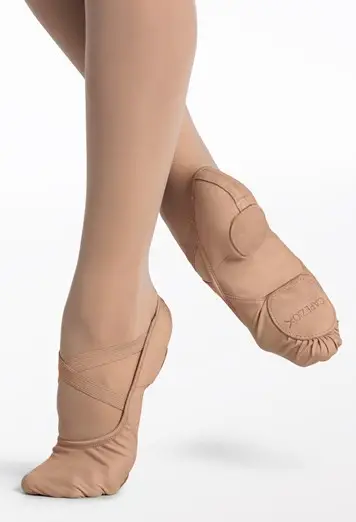
Capezio
Hanami Canvas Split-Sole
A perennial favourite among adult beginners and intermediate dancers for its lightness and beautiful arch profile.
- Lightweight
- Flattering line
- Breathable
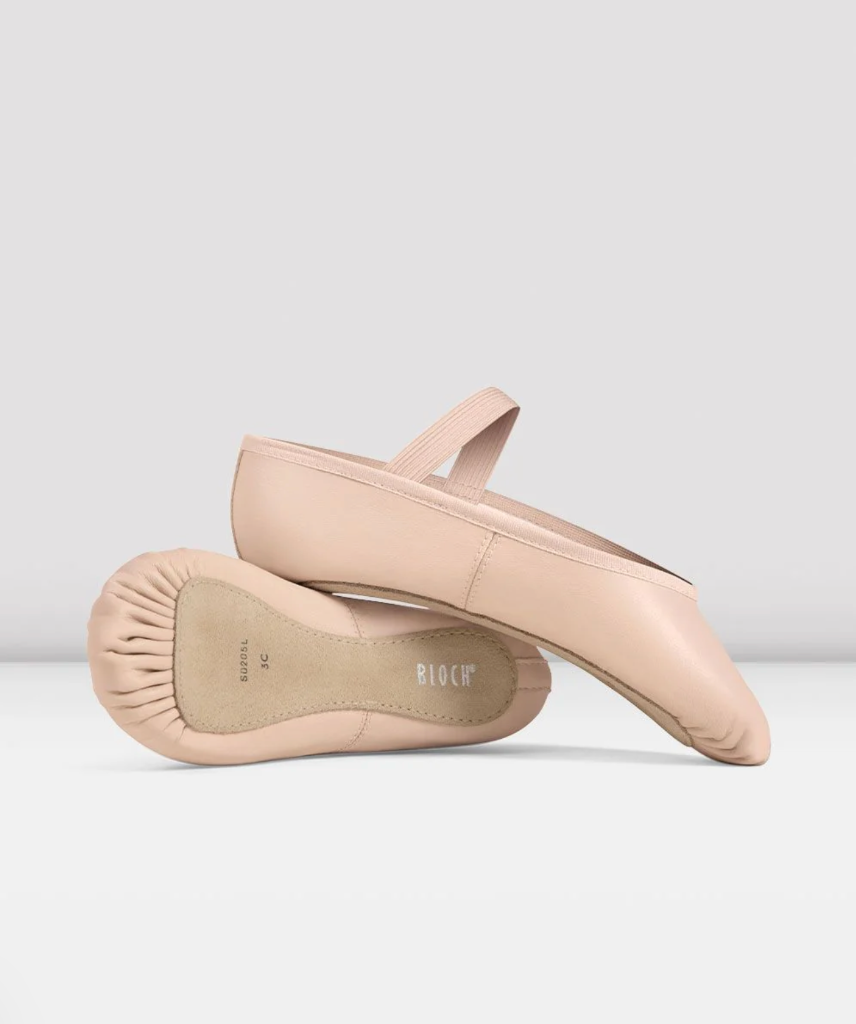
Bloch
Dansoft Full-Sole Ballet Slipper
The go-to recommendation for first-time ballet shoe buyers: forgiving, classic, and built to last a solid first year of classes.
- Supportive full sole
- Molds to the foot
- Classic leather
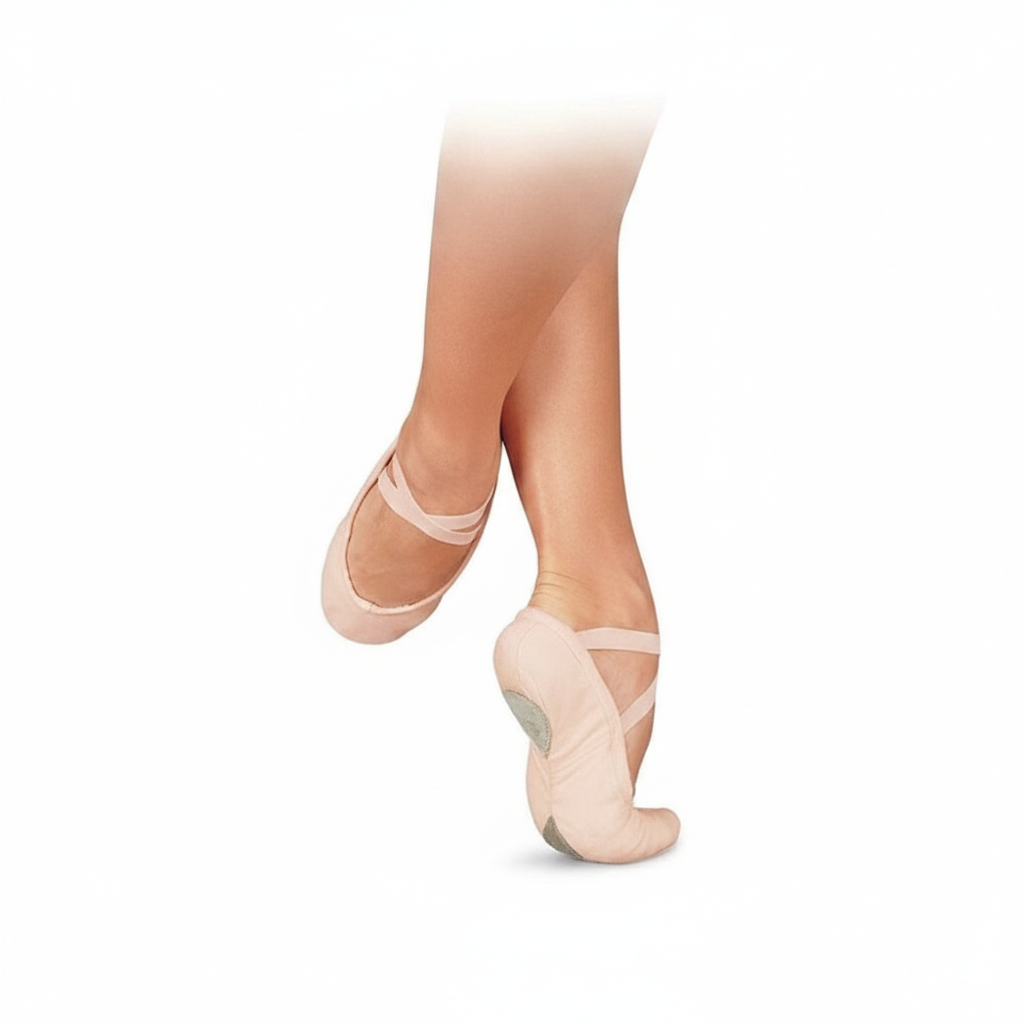
Sansha
Pro 1 Canvas Split-Sole
Quality at an honest price. Sansha's Pro 1 is a reliable first slipper that won't punish you for not yet knowing your preferences.
- Excellent value
- Durable
- Wide size range
Ad Space
About
The Ballet Edit
The Ballet Edit is a publication dedicated to ballet culture, adult beginner dance education, movement, alignment, and the enduring style of the ballet world.
Written and edited by practitioners with professional dance experience on stage, film, and television, The Ballet Edit exists to inform, inspire, and welcome adults into the art form at every stage of their journey.