Ballet Wasn't Born in a Dance Studio
Ballet emerged from the courts of Renaissance Italy and France. It absorbed influences from court dances, fencing, military drills, theatrical spectacle, acrobatics, and pageantry. Long before ballet became associated with pink slippers and tutus, it was a display of power, status, and refinement.
The earliest ballets were not performed in theaters but in palace halls, where the architecture itself shaped the choreography. Dancers moved through spaces designed for ceremony, not art. The steps were not yet codified into the system we recognize today - they were social gestures elevated to spectacle, movements borrowed from the rituals of court life itself.
The Sun King Changed Everything
King Louis XIV of France, often called the Sun King, was an enthusiastic dancer who performed in court ballets himself. At a time when monarchs were believed to rule by divine right, Louis used dance to reinforce his image as the center of the kingdom.
His most famous role was as Apollo, the sun god, in the Ballet de la Nuit of 1653. The image of the king as the sun - radiant, central, indispensable - was not merely poetic. It was political theology expressed through movement.
His support led to the professionalization of ballet and the founding of institutions that would eventually become the basis of classical ballet training. In 1661, he established the Académie Royale de Danse, the first official institution dedicated to the art. What began as court entertainment became a discipline with rules, terminology, and a vocabulary that persists to this day. The five positions of the feet, the turnout of the legs, the French terminology still used in studios worldwide - all of it flows from that moment.
Ballet Is Built on Geometry
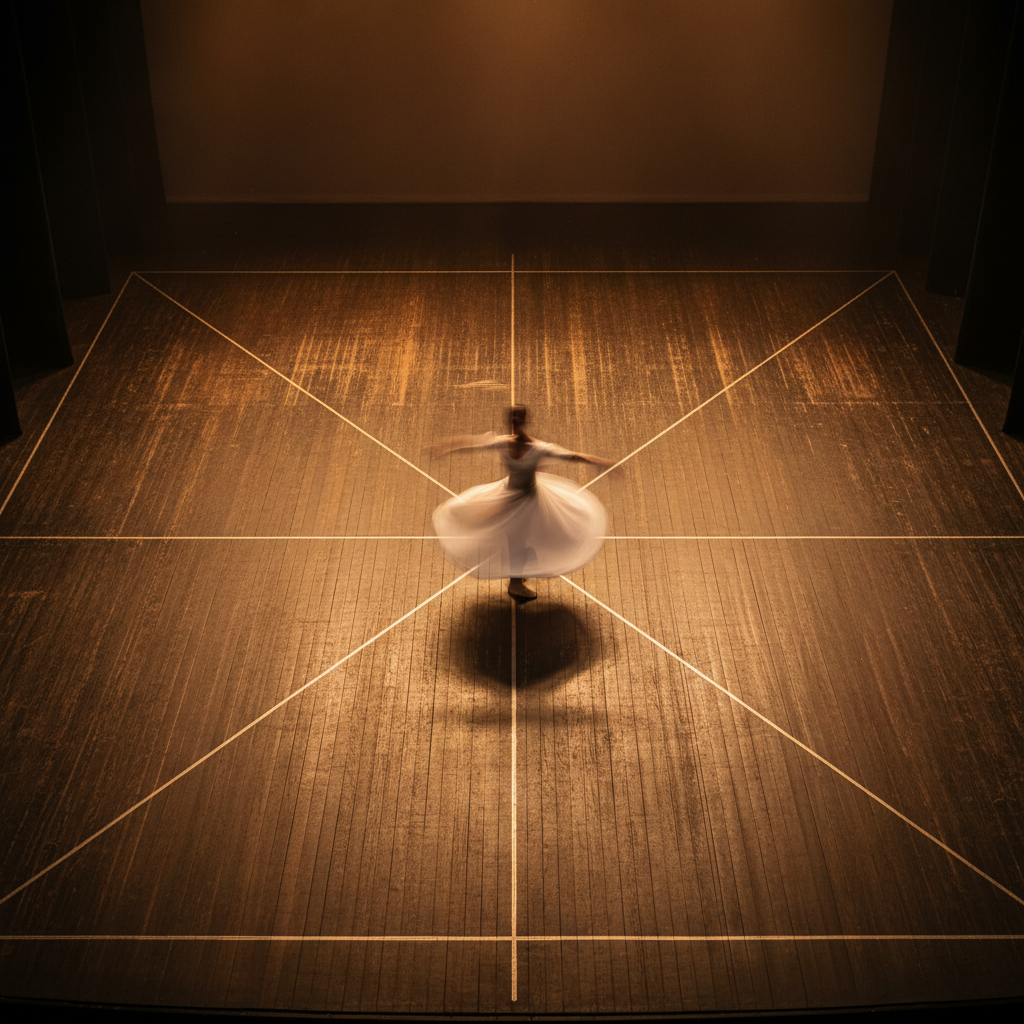
Every classical dancer learns to move within an invisible geometric map of the stage.
The stage is divided into zones and directions that allow dancers to orient themselves regardless of the theater. A dancer knows whether they are facing downstage, upstage, stage right, stage left, or one of the corner diagonals. These terms are not arbitrary - they derive from the historical rake of the stage, which sloped downward toward the audience. "Down" stage was literally lower; "up" stage was higher.
This shared spatial language allows large groups of dancers to move together with remarkable precision. In a corps de ballet of twenty-four dancers, each person must know not only their own position but their relationship to every other dancer on stage. The result is the illusion of a single organism - swans moving as one, shades descending in unison, spirits rising together from the grave.
Every Dancer Is Dancing Inside a Square or Personal Cube
Although audiences see sweeping movement, dancers are constantly aware of their position within an invisible Cube. It has four corners above them and below them - flat planes behind, in front and on the sides. As well as above and below. These are the reference points for "lines" of the arms, legs and where the dancer faces in space. These references to the invisible cube each ballerina dances inside of, are easier to spot with positions such as Effacé, Écarté and Croisé.
Teachers often describe the stage as a series of squares and pathways. This mental map helps maintain spacing, formations, and symmetry. A soloist traveling diagonally from stage right upstage to stage left downstage is not simply crossing the stage - they are tracing one of the fundamental axes of ballet choreography, a line that has been danced for centuries.
The audience experiences beauty. The dancers experience geometry.
This is not a contradiction. The geometry creates the beauty. The precision is what allows the emotion to land. When a ballerina holds an arabesque at the exact center of the stage, perfectly aligned with the proscenium arch, the effect is not merely technical - it is architectural, almost spiritual. The human body has become a column in a cathedral of movement.
The Stage Is Tilted
Many historic theaters used a raked stage, meaning the stage sloped downward toward the audience.
Originally borrowed from earlier theatrical traditions, the rake improved sightlines and made performers appear larger and more prominent. From the perspective of the audience, every gesture was amplified. A raised arm reached higher. A leap seemed to soar further. The dancer was elevated - literally and metaphorically - above the ordinary world.
Imagine balancing on pointe shoes while dancing on a floor that is not entirely level. The ankles must compensate. The balance must adjust. The entire technique of classical ballet was shaped, in part, by this architectural quirk. Even in modern theaters with flat stages, the terminology persists - downstage, upstage - a ghost of the raked floor that helped create the art form.
Sacred Geometry and Classical Ballet
Whether intentional or not, ballet frequently creates patterns that resemble geometric forms found throughout art, architecture, and nature.
Circles, diagonals, triangles, symmetry, proportion, and repeated patterns are woven throughout classical choreography. Much of ballet's visual power comes from these geometric relationships.
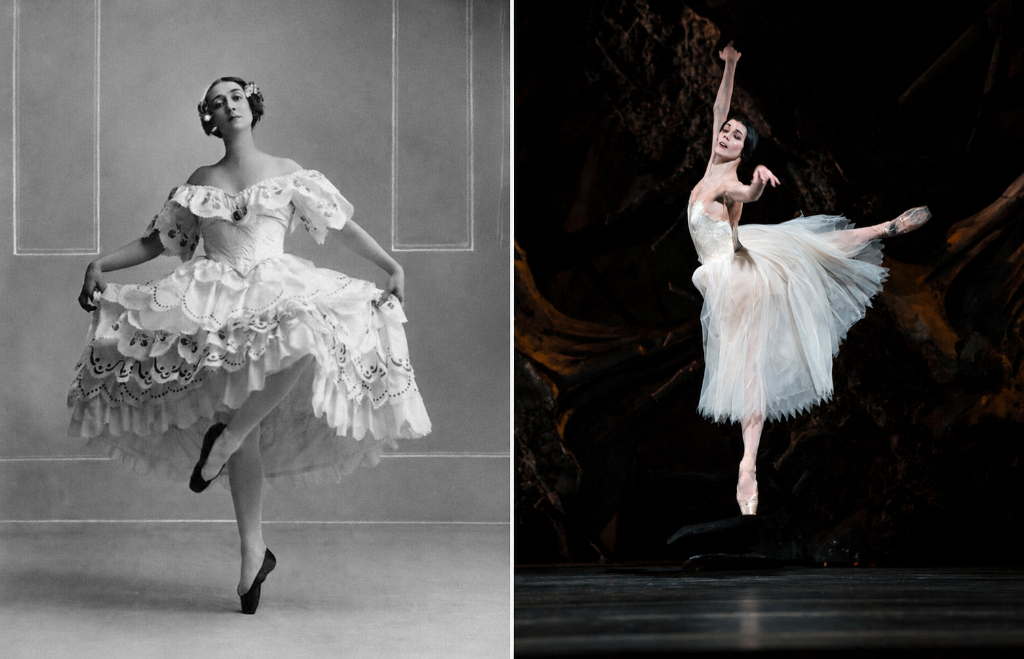
Consider the corps de ballet in Swan Lake, arranged in perfect symmetry around the stage. Or the circular formations in La Bayadère's Kingdom of the Shades, where dancers descend one by one in an unbroken chain. Or the triangular compositions that Petipa favored - a principal dancer at the apex, supported by a base of corps dancers.
These are not accidents. They are the inheritance of a culture that saw mathematics as divine, proportion as sacred, and symmetry as the highest expression of beauty. The choreographers who built the classical repertoire were not merely arranging bodies in space - they were drawing on traditions that stretch back through the Renaissance, through the Gothic cathedrals, through the classical world itself.
The result is an art form that feels, to audiences, both human and transcendent. The dancer is flesh and blood. The pattern is eternal.
Never Say "Break a Leg"
Dancers traditionally avoid saying "break a leg" before a performance.
Instead, many dancers use the French expression:
Merde.
The tradition dates back to the era of horse-drawn carriages. A successful performance attracted large audiences, which meant many horses waiting outside the theater. More horses meant more manure in the streets.
In other words:
More merde = bigger audience = successful performance.
Not the most glamorous tradition, but one of ballet's most enduring. Say it in any studio, any theater, any country where ballet is danced, and you will be understood. It is a small act of superstition, a shared secret, a way of acknowledging the vulnerability of performance - the knowledge that no matter how much you prepare, success is never guaranteed.
The Architecture Endures
Ballet has changed enormously since Louis XIV first stepped onto the court stage. The costumes are lighter. The technique is more demanding. The stages are larger. The audiences are global.
But the invisible architecture remains.
The geometry. The spatial language. The traditions. The superstitions. The sense that dance is not merely movement but structure - a building made of bodies, a cathedral of motion.
Next time you watch a ballet, look for it. Watch how the dancers trace diagonals across the stage. Notice how the corps de ballet forms perfect symmetries. Listen for the silence before the first note - the moment when the architecture is complete, and the dance is about to begin.
The Edit's Selection
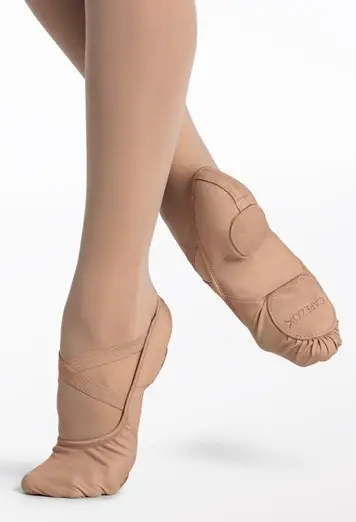
Capezio
Hanami Canvas Split-Sole
A perennial favourite among adult beginners and intermediate dancers for its lightness and beautiful arch profile.
- Lightweight
- Flattering line
- Breathable
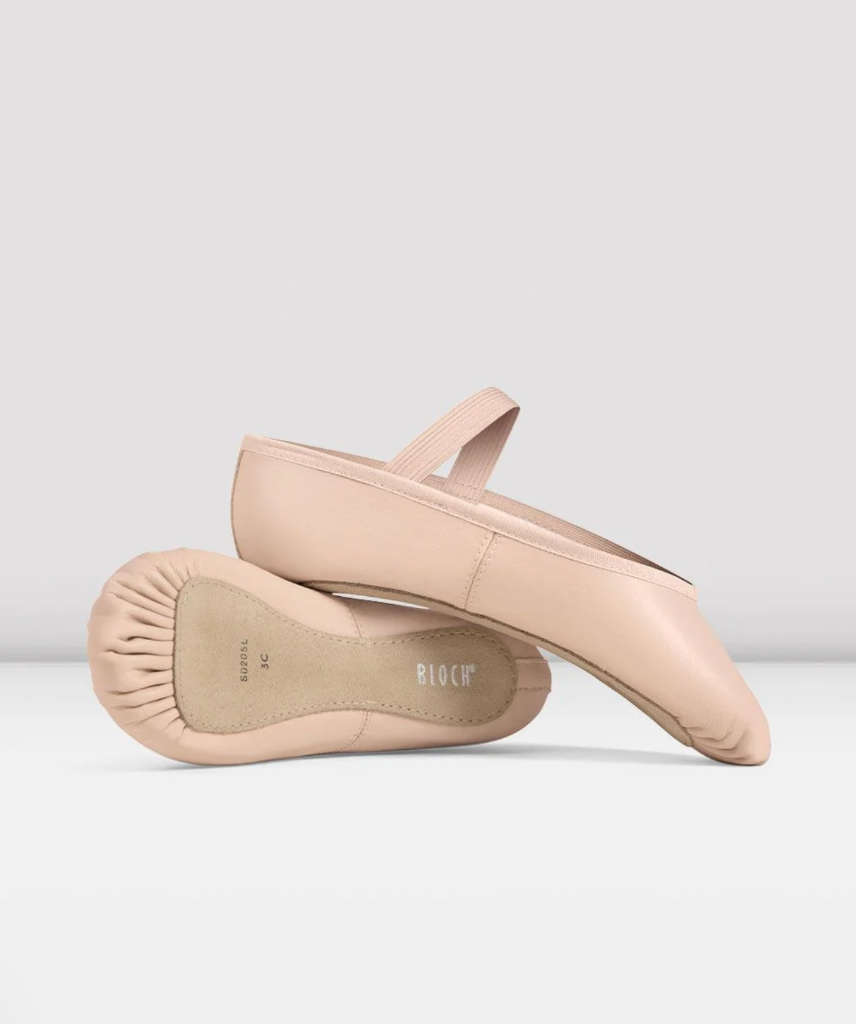
Bloch
Dansoft Full-Sole Ballet Slipper
The go-to recommendation for first-time ballet shoe buyers: forgiving, classic, and built to last a solid first year of classes.
- Supportive full sole
- Molds to the foot
- Classic leather
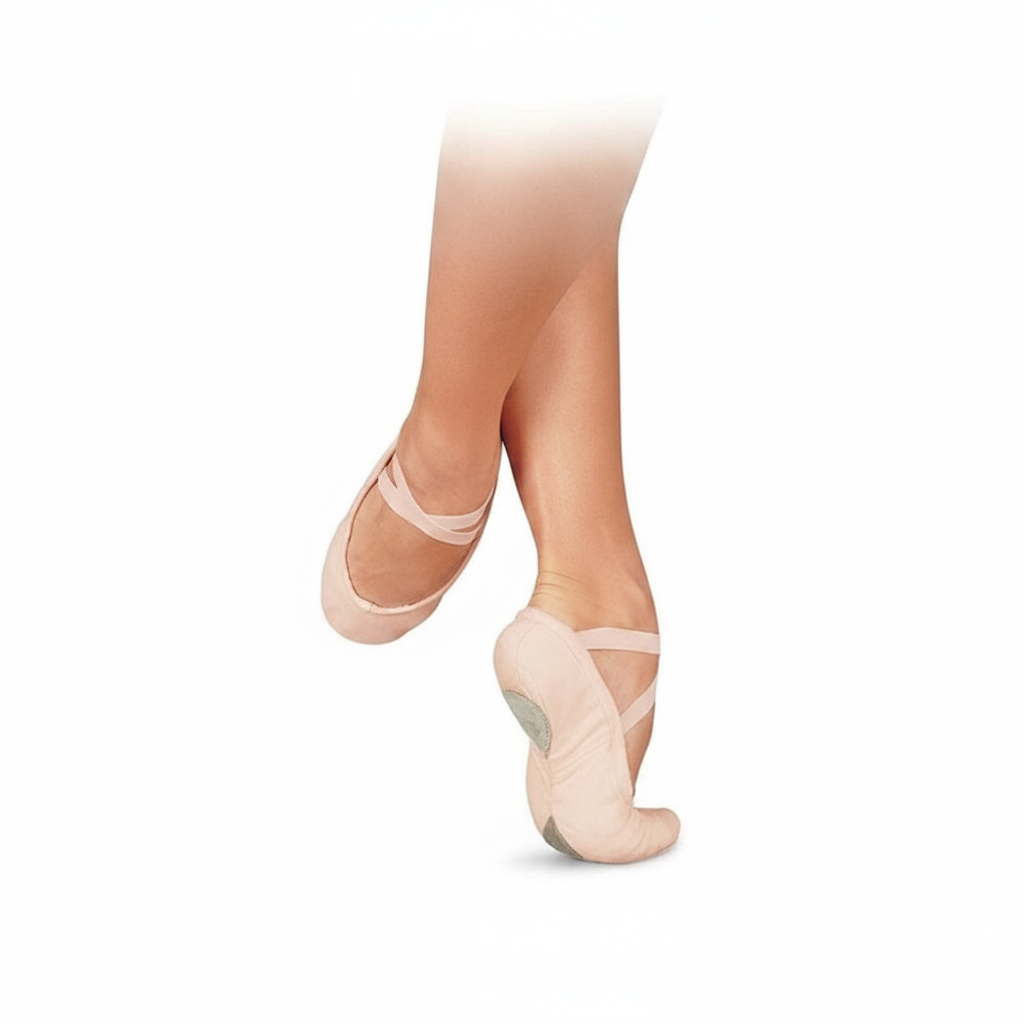
Sansha
Pro 1 Canvas Split-Sole
Quality at an honest price. Sansha's Pro 1 is a reliable first slipper that won't punish you for not yet knowing your preferences.
- Excellent value
- Durable
- Wide size range
Ad Space
About
The Ballet Edit
The Ballet Edit is a publication dedicated to ballet culture, adult beginner dance education, movement, alignment, and the enduring style of the ballet world.
Written and edited by practitioners with professional dance experience on stage, film, and television, The Ballet Edit exists to inform, inspire, and welcome adults into the art form at every stage of their journey.