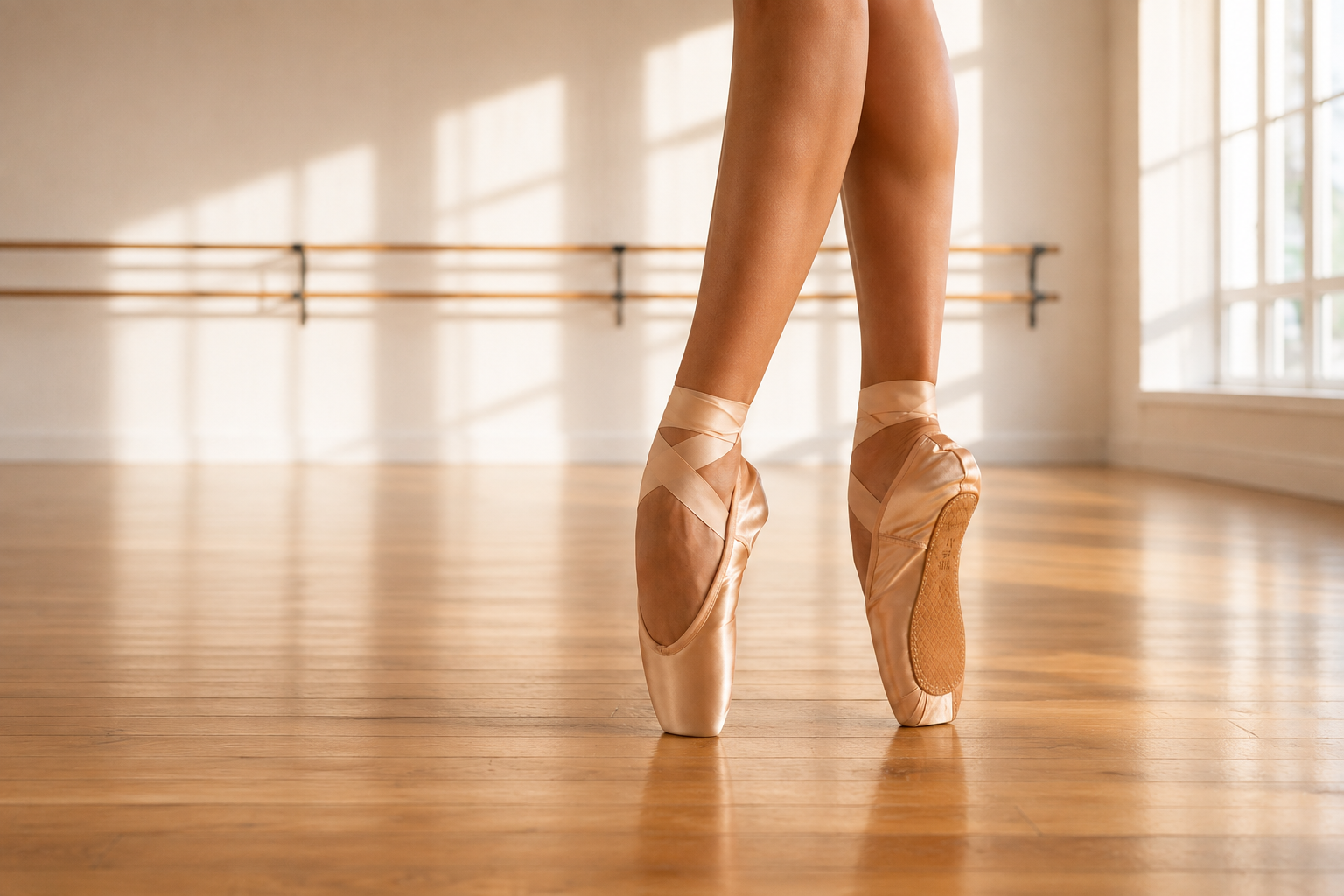
Pointe shoe ribbons are functional, not decorative. They exist to hold the shoe securely on your foot through the extreme flexion and weight of pointe work. Everything about how you tie them follows from that one job.
Step by Step: Tying the Ribbons
- Start with your foot flat on the floor, not pointed. This matters more than anything else. If you tie the ribbons while your foot is pointed, they will be too tight the moment you come down from pointe. A flat foot gives you the slack you will need when the ankle flexes.
- Take the inside ribbon first, the longer of the two. Wind it clockwise around the ankle, one and a half times, so it comes back to the inside where it started.
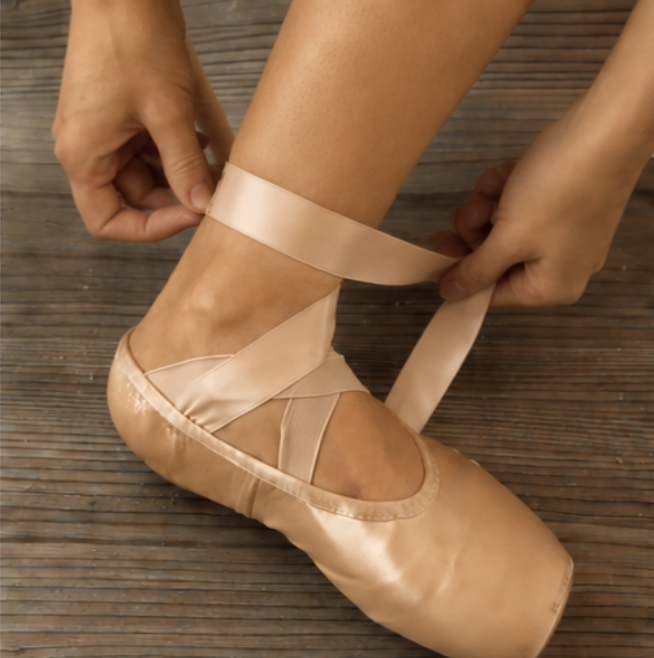
The inside ribbon wrapped, ready for the second ribbon.
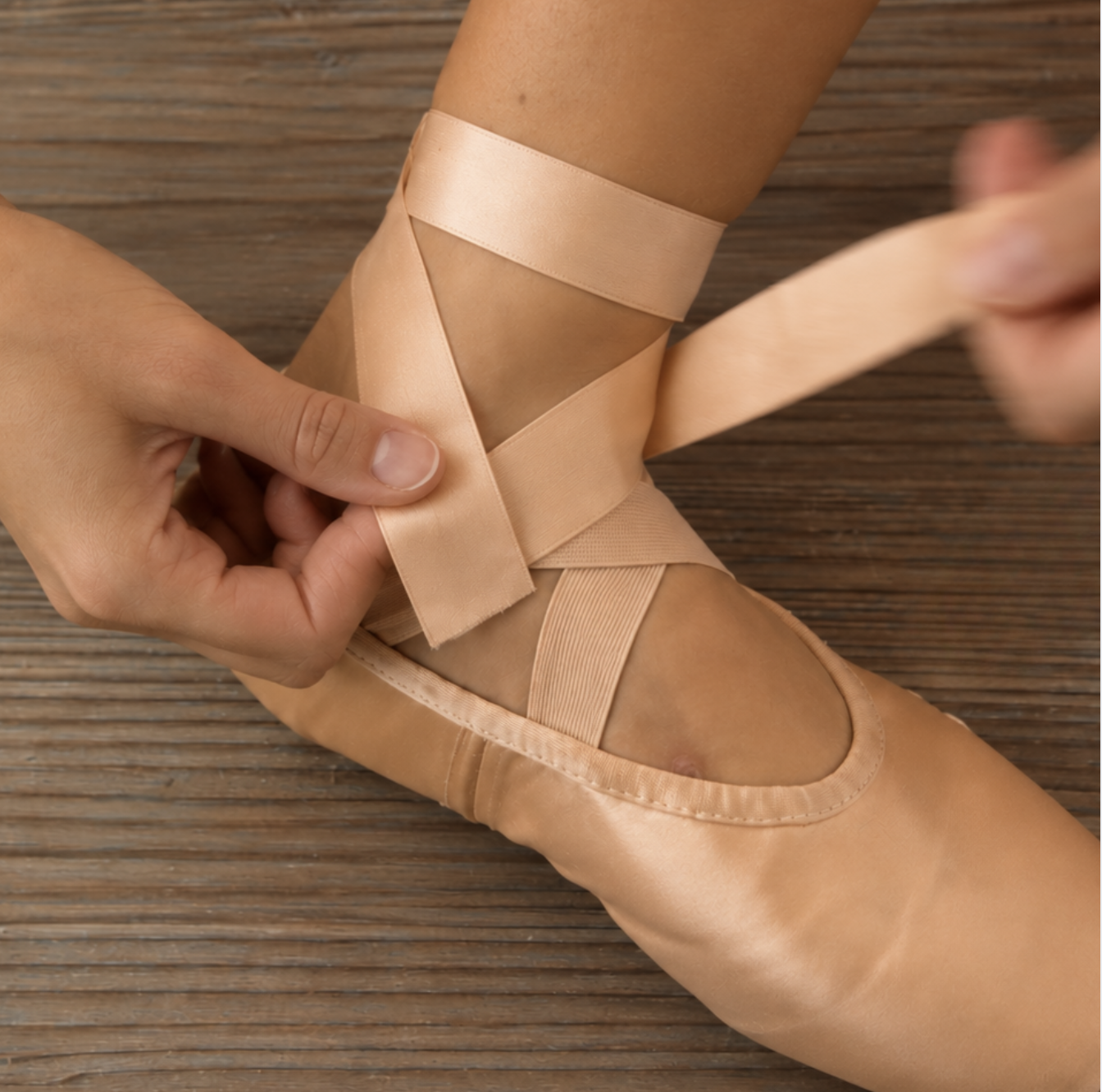
Just before the outside ribbon is wrapped across to meet the first.
- Take the outside ribbon and wrap it counterclockwise, stopping on the inside of the ankle so the two ribbons meet.
- Tie a knot, not a bow. A bow will come undone.
- Tuck the knot securely from the top, flat against the inner ankle, so it disappears under the ribbons.
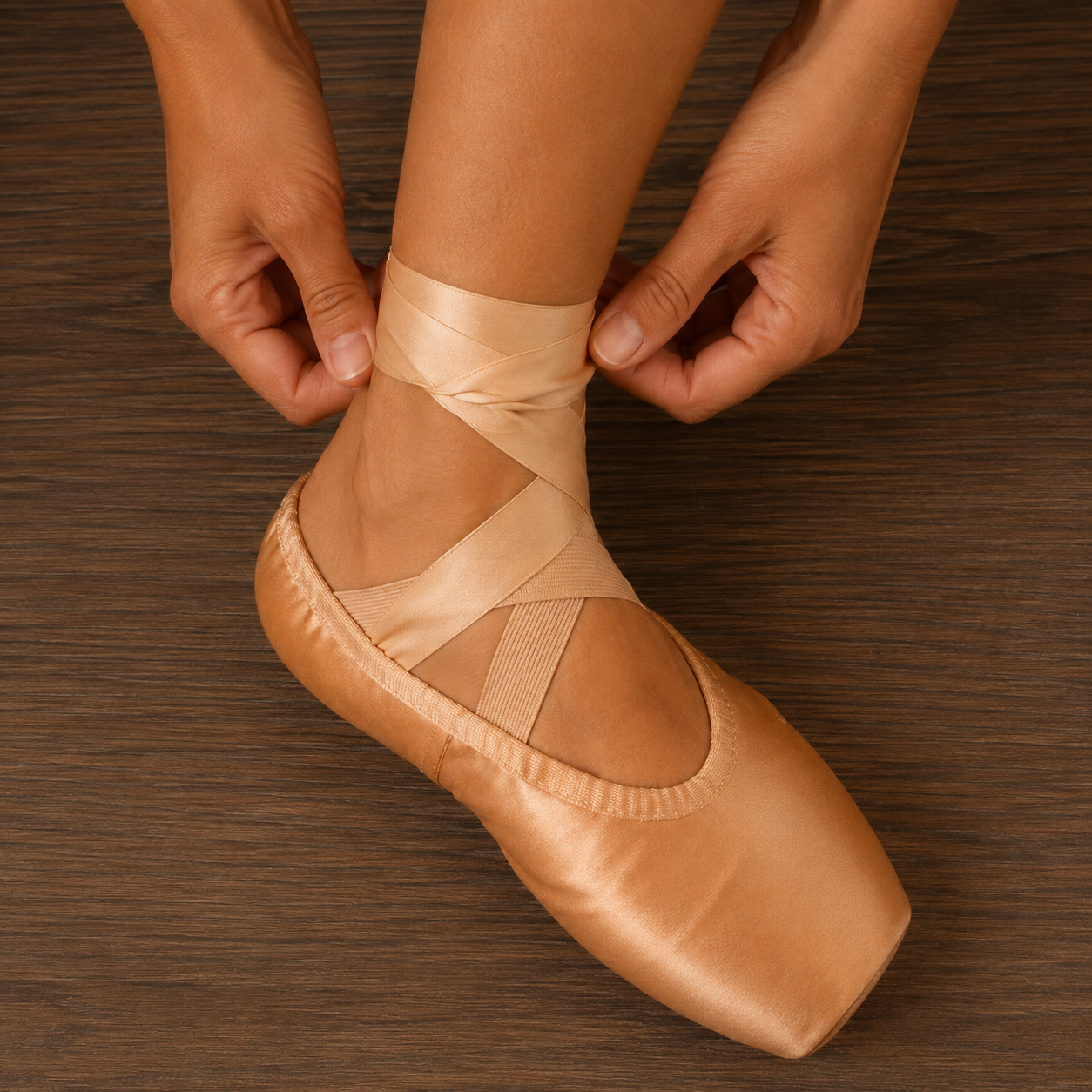
The finished knot, tucked flat and out of sight.
- Done correctly, one ribbon will end up shorter than the other. That asymmetry is a sign you wrapped in the right direction, not a mistake.
How High Should the Ribbons Sit?
Low. The ribbons should wrap once around the ankle at roughly the level of the ankle bone, not climbing up the calf. A single, clean wrap is all you need.
Why You Don't Wrap Them Up the Leg
Ribbons laced halfway up the calf look striking in photographs, but they serve no function and create real problems. High wrapping restricts the calf, changes how the ankle flexes, and shifts the shoe's anchor point away from where it is designed to hold. The shoe is meant to be secured at the ankle, not strapped to the leg.
The Knot: Tucked, Not Visible
The knot should never stick out from the ankle. A protruding knot is both untidy and a sign the ribbons were not brought back to the inside before tying. Tuck it from the top, pressing it flat under the crossed ribbons. When you are done, you should see clean ribbon wraps, not a lump.
How Tight Is Too Tight?
The ribbons should hold the shoe firmly without digging in. If you cannot slip a finger between the ribbon and your ankle, they are too tight. If the shoe shifts when you rise, they are too loose. Remember the flat-foot rule: tying on a flat foot builds in the give you need for pointe.
What to Do with Excess Ribbon
After tying and tucking, trim the excess so roughly an inch remains beyond the knot, enough to stay tucked but not so much that it bunches. Some dancers lightly singe the cut ends of satin ribbon to prevent fraying. If your ribbons are synthetic, check the material first.
Elastic and Ribbons: How They Work Together
Most pointe shoes use both elastic and ribbons. The elastic, sewn across the top of the foot or in a loop around the ankle, keeps the heel from slipping. The ribbons secure the shoe fore and aft. They are partners: the elastic handles the heel, the ribbons handle the overall hold. If your shoe slips at the heel even when the ribbons are tied well, the elastic, not the ribbons, is where to look.
Different Dancers, Different Preferences
Ask three teachers and you may get three slightly different methods. Some prefer the inside ribbon first; a few start outside. Some tie a single knot, others a double. The principles, low wrap, tucked knot, flat-foot start, are consistent. The exact winding direction can vary by school, so follow your teacher's preference when you have one.
Common Beginner Mistakes
- Tying on a pointed foot, then finding the ribbons cut in when you come down.
- Wrapping high up the calf because it looks "more ballet."
- Tying a bow instead of a knot.
- Leaving the knot on the outside of the ankle, untucked.
- Wrapping so many times the ribbons stack into a thick band.
- Tying the knot at the back of the ankle, over the Achilles tendon. The knot always goes on the inside, near the ankle bone. A knot pressing into the Achilles will wear into the tendon over time and can lead to injury.
- Forgetting the elastic and expecting the ribbons to do everything.
Ballet vs. Fashion
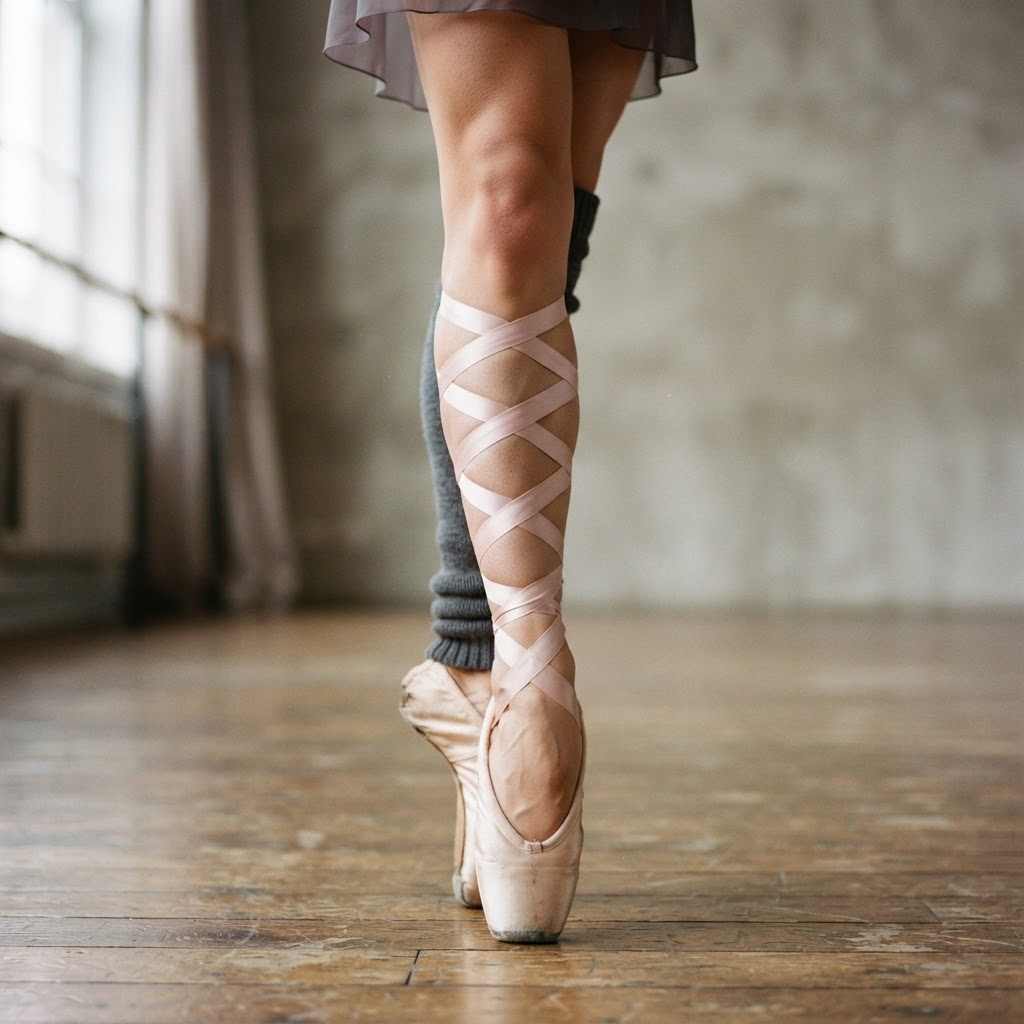
There is a reason stylists love pointe shoes: the ribbons are gorgeous. But in fashion shoots and on runways, pointe shoes are routinely laced like Roman sandals, with ribbons crisscrossing high up the calf in long, dramatic lines. It reads as "ballet" to a camera, even though no working dancer would tie a shoe that way.
The fashion version prioritizes the silhouette of the leg. The ballet version prioritizes the security of the foot. They are opposite goals, and they produce opposite knots.
Correct (low ankle wrap):
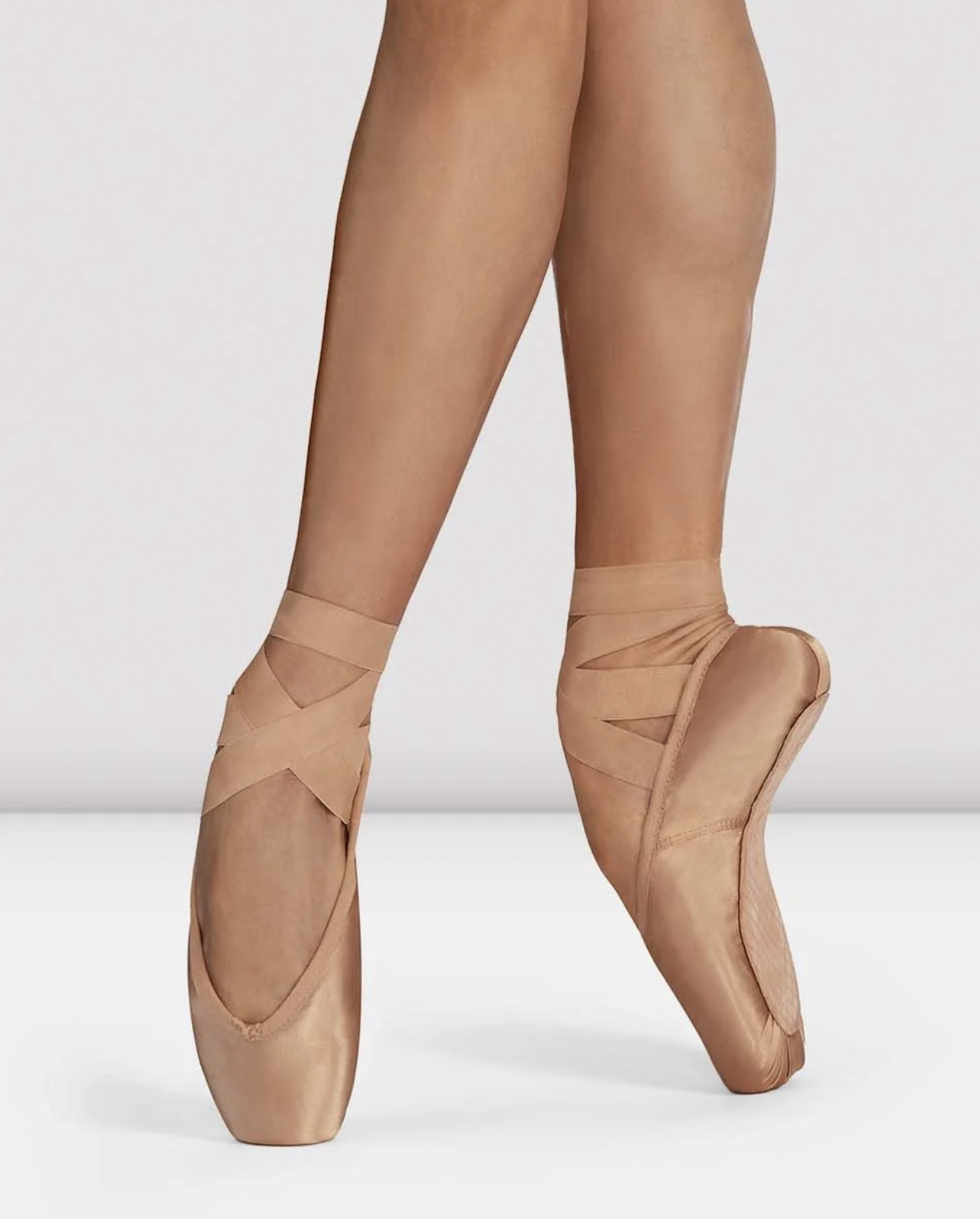
Bloch Heritage pointe shoes, part of the Tonal Pointe Shoe Range.
Fashion version:
Beautiful for the camera. Wrong for ballet.
What Movies Get Wrong About Pointe Shoes
Films tend to treat pointe shoes as costume. The ribbons are tied for the shot, not for the dancing. You will see bows, high wraps, knots on the outside, ribbons that clearly are not holding anything. None of it would survive a single tendu. It is not worth getting annoyed over, but it is worth knowing the difference between a shoe tied to dance in and a shoe tied to look right for two seconds of film.
Further Reading
Want to go deeper? Gaynor Minden's Balletopedia is an excellent resource for learning more about pointe shoes, fitting, construction, technique, and pointe work.
The Edit's Selection
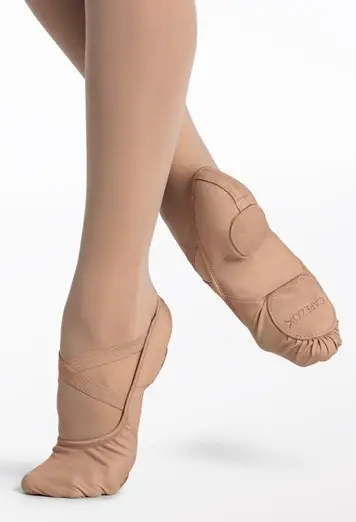
Capezio
Hanami Canvas Split-Sole
A perennial favourite among adult beginners and intermediate dancers for its lightness and beautiful arch profile.
- Lightweight
- Flattering line
- Breathable
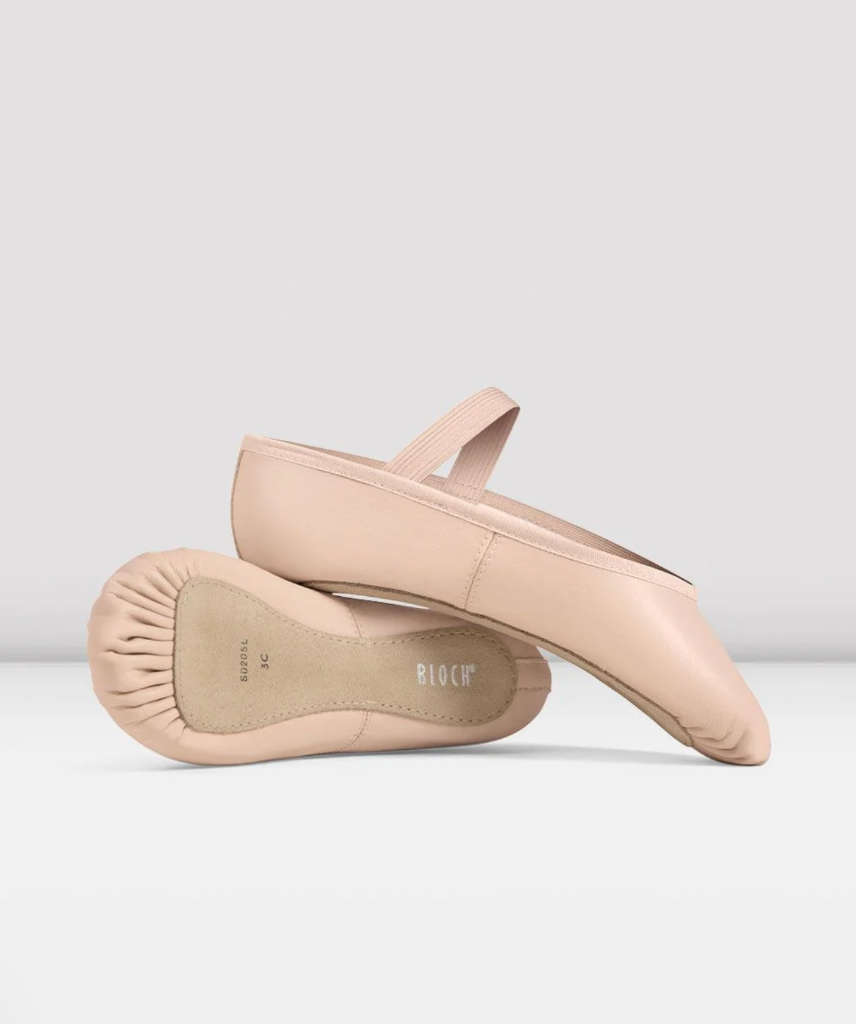
Bloch
Dansoft Full-Sole Ballet Slipper
The go-to recommendation for first-time ballet shoe buyers: forgiving, classic, and built to last a solid first year of classes.
- Supportive full sole
- Molds to the foot
- Classic leather
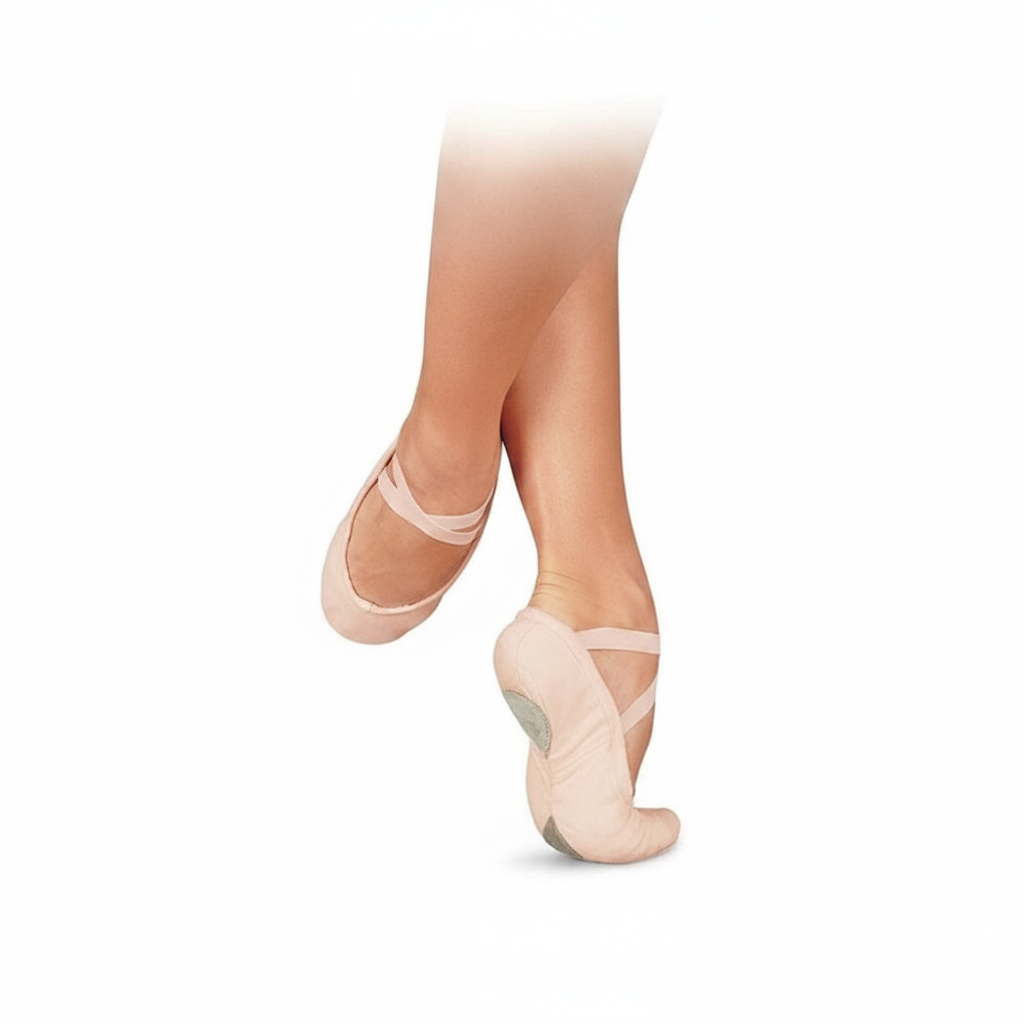
Sansha
Pro 1 Canvas Split-Sole
Quality at an honest price. Sansha's Pro 1 is a reliable first slipper that won't punish you for not yet knowing your preferences.
- Excellent value
- Durable
- Wide size range
Frequently Asked Questions
Why do you tie pointe shoe ribbons on a flat foot?
Because when you come down from pointe, your ankle flexes and the ribbons need slack. Tying on a pointed foot makes them too tight the moment you descend.
Should I tie a bow or a knot?
A knot. A bow will come undone during dancing; a flat knot, tucked against the inner ankle, stays put.
How high up the leg should the ribbons go?
Only once around the ankle, at about ankle-bone height. Wrapping up the calf is a fashion convention, not a working technique.
One of my ribbons is shorter than the other. Did I do it wrong?
No. Because you wrap the inside ribbon first and the outside second, they naturally end at different lengths. The asymmetry means you wrapped in the correct direction.
Do I still need elastic if I tie the ribbons well?
Usually yes. Elastic keeps the heel from slipping; ribbons secure the shoe overall. They do different jobs.
Ad Space
About
The Ballet Edit
The Ballet Edit is a publication dedicated to ballet culture, adult beginner dance education, movement, alignment, and the enduring style of the ballet world.
Written and edited by practitioners with professional dance experience on stage, film, and television, The Ballet Edit exists to inform, inspire, and welcome adults into the art form at every stage of their journey.