Ballet Glossary: Essential Terms Every Dancer Should Know
Ballet has its own language, a vocabulary of French terms that describe every movement, position, and step. Whether you're an adult beginner or a seasoned dancer, understanding these terms will deepen your practice and help you communicate more effectively with teachers and fellow dancers.
Basic Positions
The Five Positions of the Feet
First Position: Heels together, toes turned out to form a straight line. The foundation of all ballet movement.
Second Position: Feet in first position, but separated by about hip-width distance.
Third Position: One foot in front of the other, with the heel of the front foot touching the arch of the back foot. (Mostly used as a pass-through position.)
Fourth Position: One foot in front of the other, separated by about one foot's length. Can be crossed (foot in front of the other) or uncrossed (foot to the side).
Fifth Position: One foot in front of the other, with the heel of the front foot touching the toe of the back foot. The most advanced and closed position.
Barre Exercises
Plié (plee-AY): To bend. A bending of the knees while maintaining turnout. Can be demi-plié (half bend) or grand plié (full bend).
Tendu (tahn-DOO): To stretch. The foot brushes along the floor to a pointed position, then returns. Teaches foot articulation and leg extension.
Dégagé (day-gah-ZHAY): Disengaged. Similar to tendu but the foot brushes off the floor slightly. Builds speed and precision.
Rond de Jambe (ron duh ZHAMB): Circle of the leg. The working leg draws a semicircle on the floor or in the air. Develops hip rotation and control.
Fondu (fon-DOO): To sink. A melting movement where both legs bend simultaneously, then extend. Builds strength and coordination.
Frappé (frah-PAY): Struck. The working foot strikes the floor and extends. Develops quick, sharp movement.
Adagio (ah-DAH-zhoh): Slow, sustained movements. Focuses on control, balance, and line.
Grand Battement (grahn bat-MAHN): Large beating. The leg throws high into the air with control. Develops flexibility and dynamic strength.
Center Work
Turns
Pirouette (peer-OO-et): A turn on one leg. Can be en dehors (turning outward) or en dedans (turning inward).
Chaîné (sheh-NAY): Chain of turns. A series of rapid turns traveling in a straight line or circle.
Piqué Turn (pee-KAY): A turn stepping directly onto a straight leg. Sharp and precise.
Soutenu Turn (soo-tuh-NOO): A turn where the legs are drawn together tightly. Smooth and controlled.
Jumps (Allegro)
Temps Levé (tahn luh-VAY): A hop on one leg. The working leg is held in any position.
Sauté (soh-TAY): Jumped. A jump from two feet landing on two feet. Can be done in any position.
Échappé (ay-shah-PAY): Escaped. A jump from closed position to open position, or vice versa.
Assemblé (ah-sahn-BLAY): Assembled. Jump from one foot, landing on two feet with the legs assembled together.
Jeté (zhuh-TAY): Thrown. Jump from one foot to the other, with the working leg thrown into the air.
Glissade (glee-SAH): Glide. A traveling step that glides along the floor. Often used as a connector between steps.
Grand Jeté (grahn zhuh-TAY): Large leap. A dramatic leap where the legs split in the air.
Arm Positions (Port de Bras)
Bras Bas (brah bah): Arms low. Rounded arms held low in front of the body. The preparatory position.
First Position: Arms rounded and held in front of the body, slightly below shoulder height.
Second Position: Arms opened to the sides, slightly below shoulder height, with a slight curve.
Third Position: One arm in first position, the other in second. Or both arms raised overhead in fifth position.
Fifth Position (en haut): Both arms rounded overhead, framing the face.
Directional Terms
En Avant (ahn ah-VAHN): Forward. Movement traveling forward.
En Arrière (ahn ah-RYEHR): Backward. Movement traveling backward.
De Côté (duh coh-TAY): To the side. Movement traveling sideways.
En Face (ahn fahss): Facing front. The body faces the audience directly.
Croisé (kwah-ZAY): Crossed. The body is at an angle with legs crossed.
Effacé (eff-ah-SAY): Effaced or shaded. The body is at an angle with legs open.
Écarté (ay-kar-TAY): Separated. One leg extended to the side while the body faces diagonally.
Quality and Style Terms
Ballon (bah-LAWN): The quality of lightness and elasticity in jumping. The ability to seem suspended in the air.
Élévation (ay-leh-vah-SYOHN): The height achieved in jumps. Combined with ballon, creates the illusion of flight.
Turnout: The external rotation of the legs from the hip sockets. The foundation of classical ballet technique.
Spotting: The technique of focusing the eyes on a fixed point while turning, then whipping the head around. Prevents dizziness and maintains balance.
Counterpoint: The use of contrasting dynamics or timing in movement. Adds musicality and interest.
Common Class Instructions
"Pull Up": Engage the core and lift through the spine. Creates length and stability.
"Square Your Hips": Keep both hip bones facing forward, avoiding hip hiking or twisting.
"Soft Knees": Maintain a slight bend in the knees to avoid locking and protect the joints.
"Point Through the Foot": Extend through the entire foot, not just curling the toes.
"Reach Beyond": Extend the energy through and beyond the fingertips or toes. Creates length and line.
"Shoulders Down": Release tension from the shoulders and keep them away from the ears.
"Core Engaged": Activate the deep abdominal muscles to support the spine and maintain balance.
Performance Terms
Variation: A solo dance within a larger ballet. Showcases individual technique and artistry.
Pas de Deux (pah duh duh): Step for two. A duet, typically featuring a male and female dancer. Includes an adagio, individual variations, and a coda.
Coda (KOH-dah): The finale or concluding section of a piece. Often fast and virtuosic.
Corps de Ballet (kor duh bah-LAY): The ensemble of dancers who perform as a group. The foundation of any ballet company.
Principal Dancer: The highest-ranking dancer in a company. Performs leading roles.
Soloist: A dancer who performs solo roles but ranks below principal.
Répétiteur (ray-pay-tee-TUHR): A coach who teaches and stages ballets on companies. Preserves choreographic tradition.
Historical and Stylistic Terms
Classical Ballet: The traditional style codified in the 19th century. Emphasizes turnout, line, and virtuosic technique. Examples: Swan Lake, The Sleeping Beauty.
Neoclassical Ballet: A 20th-century style that retains classical technique but explores more contemporary themes and movement. Balanchine is the most famous neoclassical choreographer.
Contemporary Ballet: Blends classical ballet with modern dance techniques. More grounded, with greater use of floor work and expressive movement.
Character Dance: Stylized folk dances incorporated into ballets. Adds cultural flavor and narrative context. Examples: the Mazurka in Swan Lake, the Tarantella in The Nutcracker.
Tips for Learning Ballet Terminology
-
Practice pronunciation: Say the terms out loud in class. French pronunciation becomes easier with practice.
-
Associate with movement: Connect each term to the physical sensation of doing it. Muscle memory helps vocabulary stick.
-
Use flashcards: Create cards with the term on one side and definition on the other.
-
Watch ballet: Observe how professional dancers execute the steps you're learning. Context reinforces understanding.
-
Ask questions: If you're unsure about a term, ask your teacher. Most are happy to clarify.
-
Keep a dance journal: Write down new terms after each class with your own notes about how they feel.
Final Thoughts
Ballet terminology may seem daunting at first, but it becomes second nature with consistent practice. These terms are not just vocabulary, they are the keys to understanding the art form's rich history and precise technique.
As you progress in your ballet journey, this language will become your own, a way to communicate with dancers around the world and connect with centuries of tradition.
Keep dancing, keep learning, and let the language of ballet become your second nature.
The Edit's Selection
ORZA
Orza Pro® 2.0 Ballet Shoe
The Orza Pro® 2.0 is one of the few genuinely modern redesigns of the traditional ballet slipper. Created by former New York City Ballet dancer Seth Orza after recovering from a serious foot injury, it retains the classic look while incorporating substantially more cushioning and support than conventional ballet shoes. For adult beginners dealing with sensitive feet, plantar discomfort, or long class days, it's one of the most interesting premium options currently available.
- Designed by an NYCB dancer after a career-threatening injury
- Looks traditional, performs differently
- Free returns
Bloch
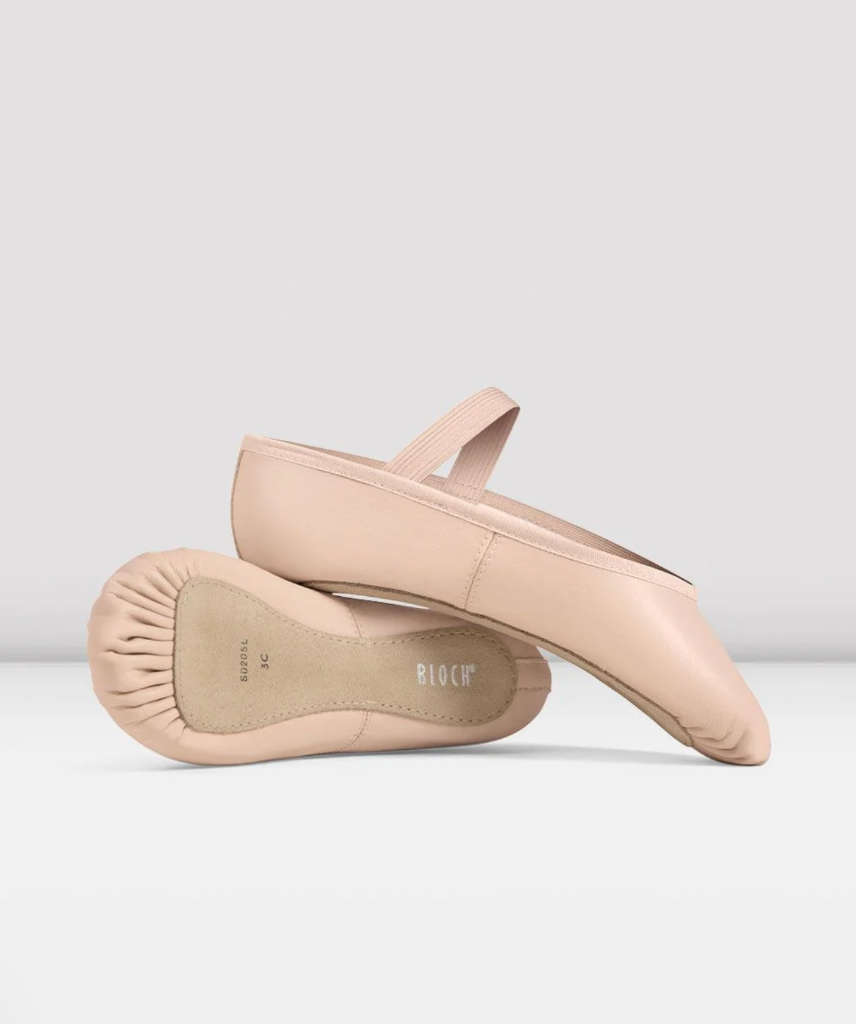
Dansoft Full-Sole Ballet Slipper
A studio classic. The Dansoft's leather upper and full sole offer a forgiving fit and reliable support, ideal for the dancer still building foot strength.
- Soft leather molds quickly
- Full sole for honest feedback
- Classic aesthetic
Capezio
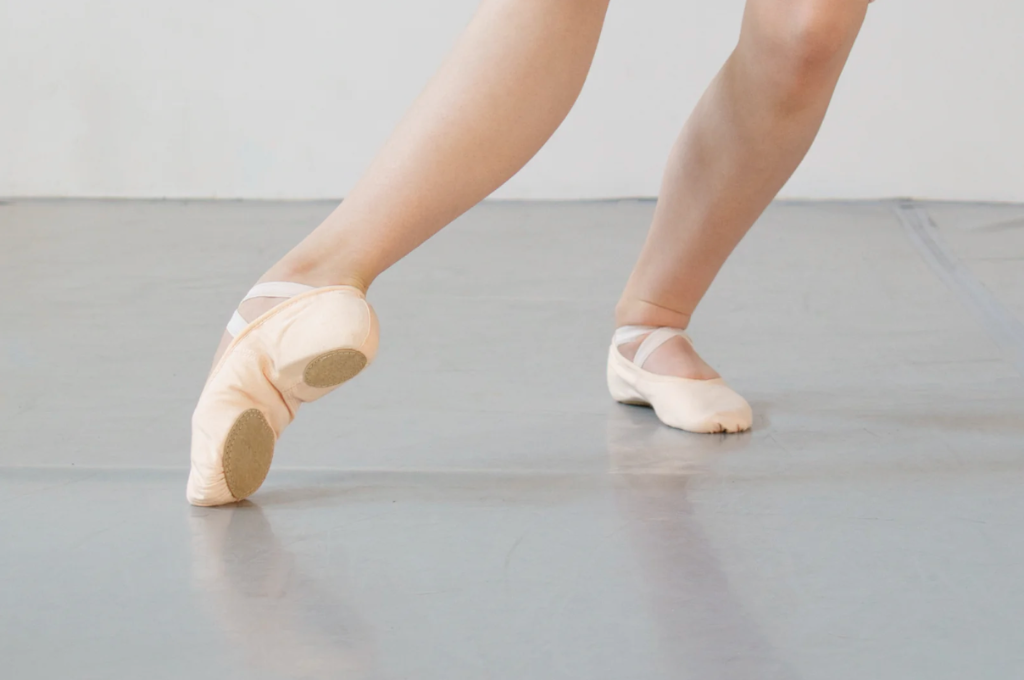
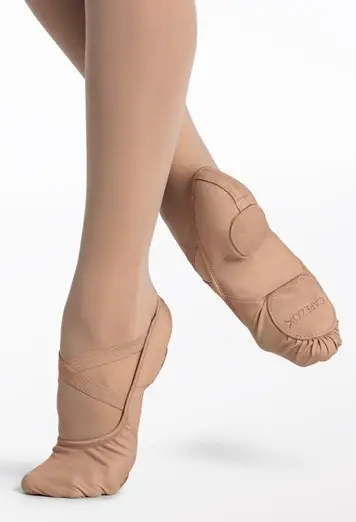
Hanami Canvas Split-Sole
Lightweight and beautifully constructed, the Hanami is the split-sole shoe that consistently earns praise from adult beginners and their teachers alike.
- Feather-light canvas
- Flattering pointed arch
- Breathable for long classes
Sansha
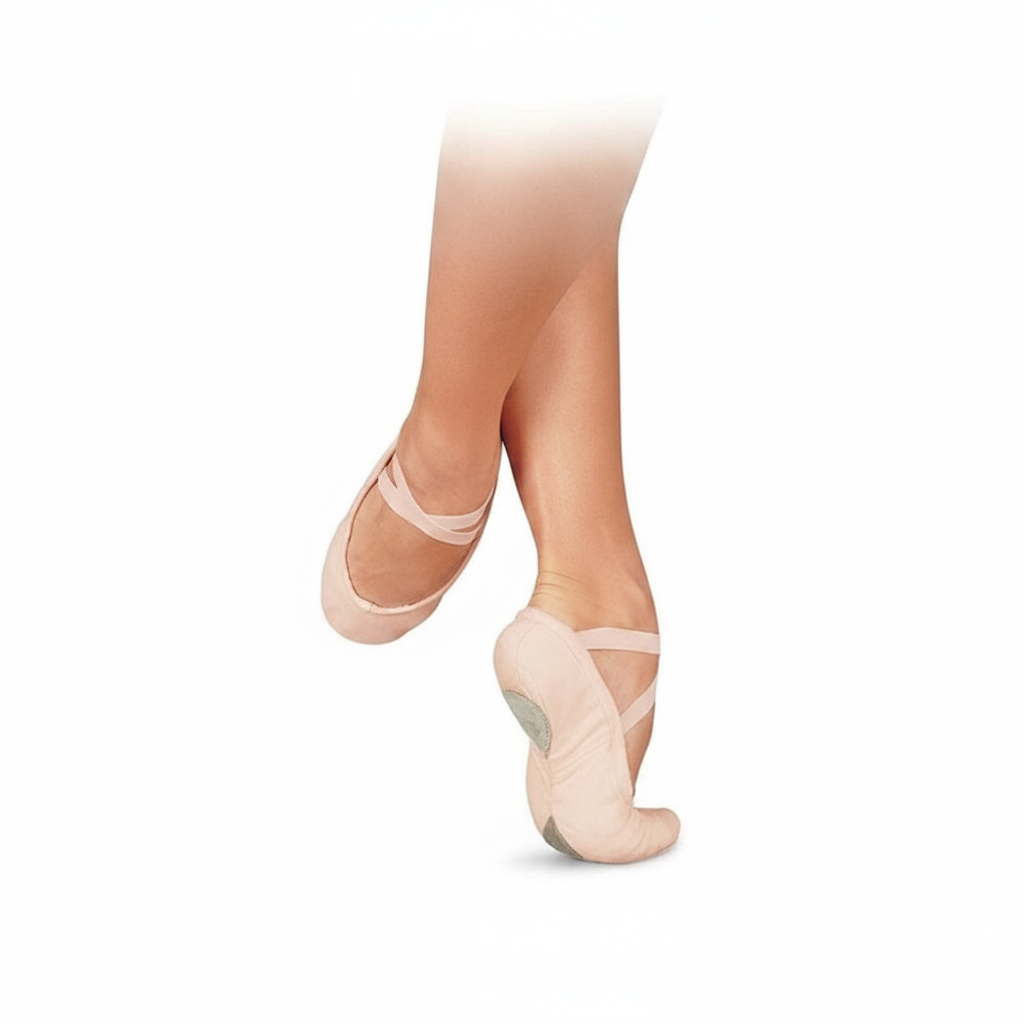
Pro 1 Canvas Split-Sole
Sansha's entry-level slipper punches well above its price. Consistently recommended for beginners who want quality without the premium outlay.
- Exceptional value
- Durable canvas construction
- Available in multiple widths
Bloch
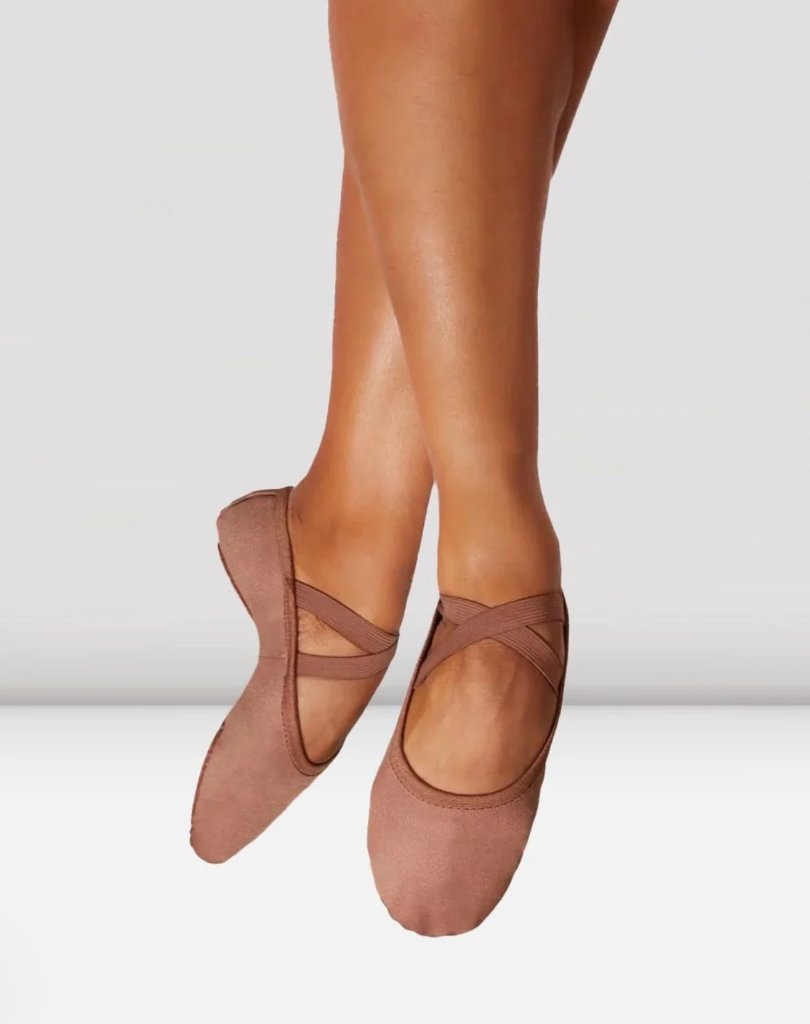
Ladies Performa Stretch Canvas Ballet Shoes
Bloch's answer to the canvas split-sole market. The Arise features a microfiber insole and a particularly secure heel that stays put through barre work.
- Secure heel fit
- Microfiber insole
- Great arch definition
Capezio
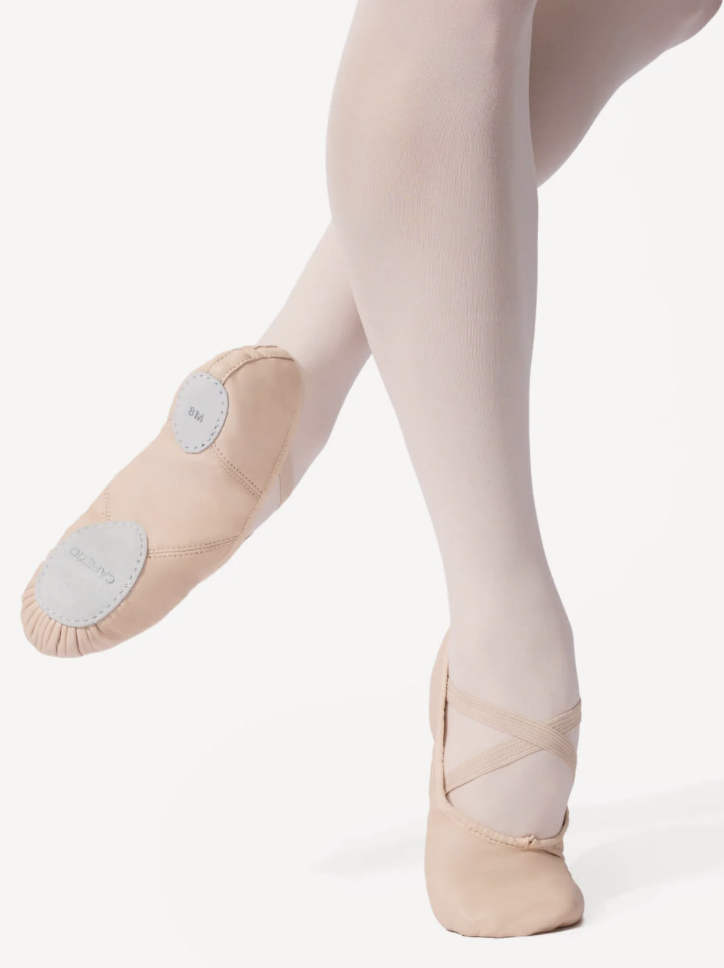
Leather Juliet Ballet Shoe
A first-rate choice for dancers with narrow feet. The Juliet's sculpted arch improves pointing and flexing with ease, while pre-attached criss-cross elastics deliver a secure, snug fit. Durable leather construction gives extra control on the barre and beyond.
- Sculpted arch for better point
- Pre-attached criss-cross elastics
- Ideal for narrow feet
Ad Space
About
The Ballet Edit
The Ballet Edit is a publication dedicated to ballet culture, adult beginner dance education, movement, alignment, and the enduring style of the ballet world.
Written and edited by practitioners with professional dance experience on stage, film, and television, The Ballet Edit exists to inform, inspire, and welcome adults into the art form at every stage of their journey.