The Original Arabesque
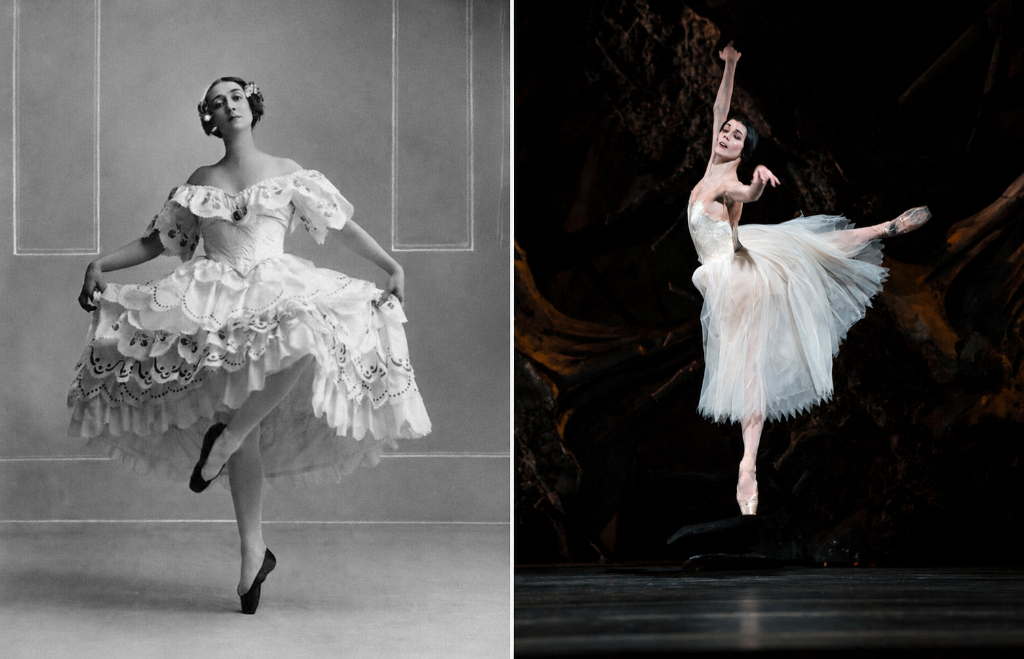
Watch a performance of Giselle from the 1840s - or even a faithful modern production - and you will notice something striking.
The arabesques are low.
The working leg rises to perhaps hip height, sometimes lower. The torso leans forward modestly. The overall effect is lyrical, tender, human, but not extreme.
This was not a limitation of technique. It was the aesthetic of the era.
The Romantic Era: 1830s-1850s
The aesthetic:
The Romantic period in ballet emphasized emotion, storytelling, and the supernatural. Ballerinas portrayed spirits, sylphs, and maidens, beings who were ethereal but still bound to the earth.
The technique:
- Arabesques rose to 45 degrees, rarely higher
- The focus was on port de bras (carriage of the arms) and upper body expression
- The torso remained relatively upright or leaned forward slightly
- Extensions were lyrical, not athletic
Why so low?
-
Costume restrictions: The Romantic tutu (a calf-length bell-shaped skirt) limited leg visibility. High legs would disappear under the skirt anyway.
-
Philosophy: Ballet was about grace, beauty, and expression, not athletic display. Extreme flexibility was considered vulgar.
-
Shoe technology: Pointe shoes were still in their infancy. Dancers had less support and stability, making high extensions risky.
-
Training methods: Systematic flexibility training did not exist. Dancers developed strength through repetition, not targeted stretching.
Marie Taglioni (1804-1884), the greatest ballerina of the Romantic era, was famous for her lightness and delicacy, not her leg height. Contemporary accounts praise her "aerial" quality, but illustrations show modest extensions.
The Classical Era: 1860s-1890s
The shift begins:
As ballet moved from France and Italy to Russia, the aesthetic began to change. The Imperial Ballet Schools (particularly the Vaganova Academy in St. Petersburg) developed more rigorous training methods.
The changes:
- Arabesques rose to 60-70 degrees
- The leg became more visible as costumes evolved
- Technique became more codified and demanding
- The focus shifted toward precision and line
Marius Petipa (1818-1910), the French choreographer who dominated Russian ballet, created works that demanded more from dancers:
- The Sleeping Beauty (1890)
- The Nutcracker (1892)
- Swan Lake (1895, with Lev Ivanov)
These ballets required greater technical facility, but extensions were still modest by modern standards. An arabesque at 90 degrees (parallel to the floor) was considered high.
The Italian influence:
Italian dancers and teachers brought a more athletic approach:
- Enrico Cecchetti (1850-1928) developed a training method that emphasized strength and precision
- Italian dancers were known for their virtuosity and technical brilliance
- Leg height began to increase, particularly in allegro (fast) movements
The 20th Century: The Rise of Height
The 1900s-1920s:
Anna Pavlova (1881-1931) remained rooted in the Classical aesthetic. Her fame came from her artistry and emotional depth, not extreme flexibility. Her arabesques were beautiful but not extreme.
The 1930s-1950s:
George Balanchine (1904-1983) changed everything.
When Balanchine came to America and founded the New York City Ballet, he brought a new aesthetic:
- Higher leg lines
- Faster tempos
- More extreme positions
- Athleticism as artistry
The Balanchine influence:
- Arabesques rose to 100-120 degrees (above horizontal)
- The working leg was placed higher and further back
- The hip was allowed to open more
- The overall line became more dramatic
Balanchine famously told dancers: "Higher. Higher. Always higher."
Why the change?
-
Competition with other forms: Ballet needed to distinguish itself from modern dance and other emerging forms. Extreme technique became a selling point.
-
Training advances: Dancers began training younger and more intensively. Flexibility training became systematic.
-
Costume evolution: The classical tutu (the short, stiff "platter" tutu) exposed the entire leg. High lines were now visible and could be appreciated.
-
Photography and film: Ballet was increasingly documented. Extreme positions photographed dramatically and helped sell tickets.
The Modern Era: 1960s-Present
The 1960s-1980s:
Leg height continued to climb. Dancers like:
- Natalia Makarova (b. 1940)
- Mikhail Baryshnikov (b. 1948)
- Sylvie Guillem (b. 1965)
...became famous for their extreme flexibility and high extensions.
Sylvie Guillem, nicknamed "Mademoiselle Non," was particularly known for her extraordinary range. Her arabesques seemed to defy anatomy.
The 1990s-2000s:
The standard for professional dancers became:
- Arabesque: 120+ degrees (well above horizontal)
- Grand battement (front, side, back): To the head or beyond
- Penché (arabesque with leaning torso): Working leg above the head
- Developpé: Full extension held with control
Interesting fact: By the 1990s, a dancer who could not achieve 180-degree splits (front and side) would struggle to find work in major companies. This was unthinkable in the Romantic era.
The Present Day: "To the Ear"
The current standard:
Today's principal dancers at major companies routinely achieve:
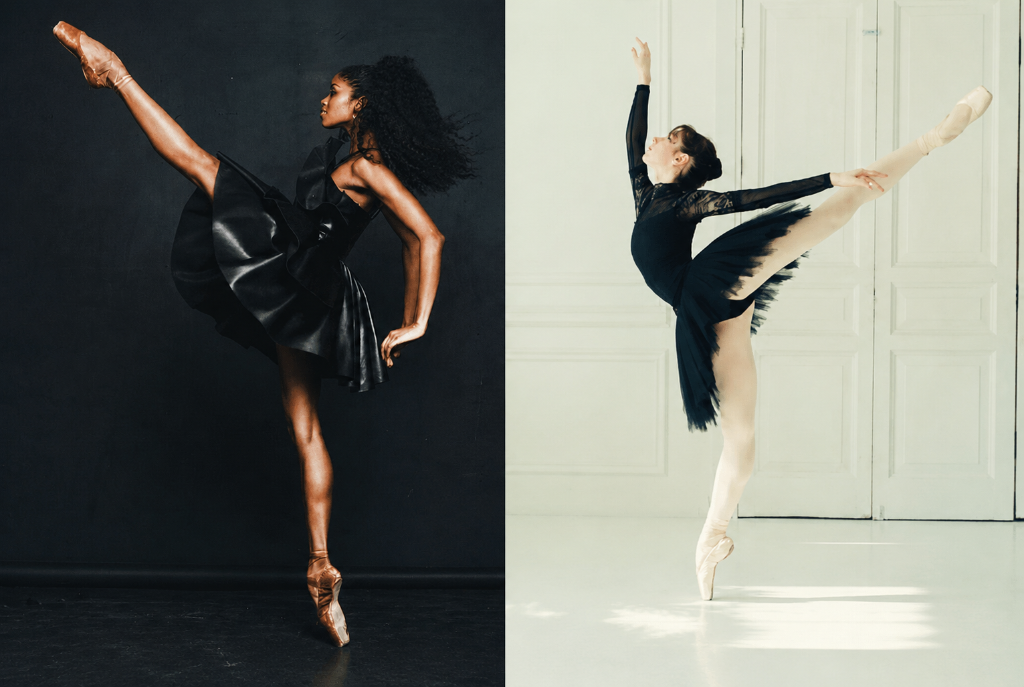
- Arabesque with the foot at or above head level
- Developpé à la seconde (to the side) with the leg parallel to the floor or higher
- Penché with the torso folded completely forward and the working leg vertical
- Multiple turns in these extreme positions
Notable contemporary examples:
- Daniela Cardini (American Ballet Theatre): Known for her extraordinarily high and stable arabesques
- Vishnevskaya (Bolshoi): Famous for her penchés that seem to defy gravity
- Natalia Osipova (formerly Bolshoi, now freelance): Combines extreme height with explosive power
The phrase "to the ear":
When teachers say "bring your leg to your ear," they mean:
- The working leg should rise so high that the foot is near the dancer's head
- The hip must open completely
- The torso remains stable (in most positions)
- The line should appear effortless, even though it requires extraordinary strength and flexibility
How Did This Happen?
Training evolution:
-
Earlier specialization: Dancers now begin serious training at ages 6-8, not 10-12 as in the past. Young bodies are more adaptable.
-
Systematic flexibility training: Stretching is no longer incidental. Dancers follow detailed flexibility programs:
- Daily stretching routines
- Partner-assisted stretching
- Use of props (blocks, bands, walls)
- Cross-training (yoga, Pilates, gymnastics)
-
Strength training: Modern dancers cross-train to build the strength needed to hold extreme positions:
- Core work for stability
- Hip flexor and glute strengthening
- Back and shoulder conditioning
-
Better nutrition and recovery: Dancers now understand the importance of:
- Proper nutrition for muscle development
- Rest and recovery
- Injury prevention and treatment
Cultural factors:
-
Competition: International ballet competitions (Varna, Moscow, Jackson, Helsinki) reward extreme technique. Dancers train to win.
-
Social media: Instagram and YouTube have created a "highlight reel" culture. Extreme tricks go viral. Dancers feel pressure to match what they see online.
-
Choreographic demands: Contemporary choreographers often demand extreme flexibility. Dancers who cannot meet these demands are less employable.
-
Globalization: Training methods have spread worldwide. A dancer in Japan trains similarly to a dancer in America or Russia. The standard has become universal.
What Was Lost?
The critique:
Not everyone celebrates the rise of leg height.
Arguments against extreme height:
-
Artistic sacrifice: When the focus is on how high the leg goes, other qualities suffer:
- Musicality
- Expression
- Port de bras (arm carriage)
- épaulement (shoulder and head positioning)
-
Injury risk: Extreme flexibility without adequate strength leads to:
- Hip injuries
- Lower back problems
- Knee strain
- Career-shortening damage
-
Unrealistic standards: Young dancers compare themselves to professionals and push too hard, too fast:
- Forced stretching
- Training through pain
- Body image issues
-
Historical inaccuracy: When companies revive old ballets, the extreme modern aesthetic can clash with the original choreographic intent:
- Giselle looks different when the arabesques are at the ear
- The Romantic style is compromised
Notable voices:
- Tamara Rojo (former English National Ballet director): Has spoken about the need to balance technique with artistry
- Alexei Ratmansky (choreographer): Known for researching and reviving historical versions of ballets with more modest leg lines
- Wendy Whelan (former NYCB principal): Has advocated for sustainable training and career longevity
What Was Gained?
The defense:
Others argue that the evolution of leg height represents progress.
Arguments for extreme technique:
-
Athletic achievement: Ballet has joined gymnastics and figure skating as a sport-art that celebrates human physical potential.
-
Visual impact: High extensions are undeniably dramatic. They create moments of awe that draw audiences.
-
Technical foundation: The training that produces high legs also produces:
- Better overall technique
- Greater strength
- More versatile dancers
-
Evolution, not betrayal: Ballet has always evolved. The Romantic era differed from the Classical era, which differed from the Balanchine era. Change is not corruption - it is adaptation.
The Truth About Flexibility
Natural vs. trained:
Some dancers are naturally flexible. Others must work for years to achieve the same range.
The reality:
- Natural flexibility is largely determined by bone structure and ligament laxity
- Training can improve flexibility, but only within anatomical limits
- Forcing beyond these limits causes injury
- The "best" dancers are not always the most flexible - they are the most musical, expressive, and intelligent
The danger zone:
When leg height becomes the primary measure of a dancer's worth:
- Young dancers push too hard
- Injuries increase
- Careers end prematurely
- Artistry suffers
The Future
Where is ballet going?
The trajectory suggests:
-
Continued emphasis on extreme technique: Competitions and social media will keep pushing the standard higher.
-
Counter-movement: Some choreographers and companies are deliberately returning to more modest aesthetics:
- Historical reconstructions
- Focus on artistry over athletics
- Sustainable training methods
-
Balanced approach: The best dancers and teachers recognize that:
- Flexibility is one tool among many
- Strength must match range
- Artistry matters more than tricks
- Longevity requires wisdom
What to Notice Next Time
When you watch ballet now, look at the legs - but also look beyond them:
- How high does the dancer lift? Is it controlled or forced?
- What else is happening? Is the port de bras beautiful? Is the musicality alive?
- Does the extension serve the choreography, or is it just a trick?
- How does the dancer come down from the extension? Is it controlled or collapsing?
The leg that rises to the ear is a marvel. But the leg that rises with meaning - that is art.
A Brief Timeline
1830s-1850s (Romantic Era):
- Arabesque: 45 degrees
- Focus: Expression, lightness
- Key figure: Marie Taglioni
1860s-1890s (Classical Era):
- Arabesque: 60-90 degrees
- Focus: Precision, line
- Key figure: Marius Petipa
1900s-1930s:
- Arabesque: 90-100 degrees
- Focus: Virtuosity
- Key figure: Anna Pavlova
1940s-1970s (Balanchine Era):
- Arabesque: 100-120 degrees
- Focus: Speed, athleticism
- Key figure: George Balanchine
1980s-2000s:
- Arabesque: 120+ degrees
- Focus: Extreme flexibility
- Key figures: Sylvie Guillem, Natalia Makarova
2010s-Present:
- Arabesque: To the ear (140+ degrees)
- Focus: Maximum range with control
- Key figures: Contemporary principals at major companies
The Lesson
The story of leg height in ballet is not just about flexibility. It is about:
- How art forms evolve
- What cultures value at different moments
- The tension between tradition and innovation
- The price of progress
When Giselle rose onto her toes in 1841, her arabesque was modest. But it moved audiences to tears.
When a principal dancer today extends to her ear, the audience gasps.
Both are ballet. Both are beautiful. Both are valid.
The leg rose. The art remains.
The Edit's Selection
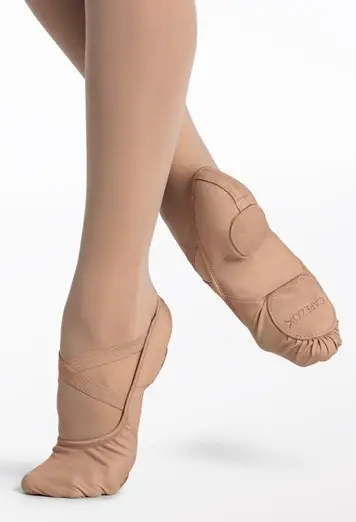
Capezio
Hanami Canvas Split-Sole
A perennial favourite among adult beginners and intermediate dancers for its lightness and beautiful arch profile.
- Lightweight
- Flattering line
- Breathable
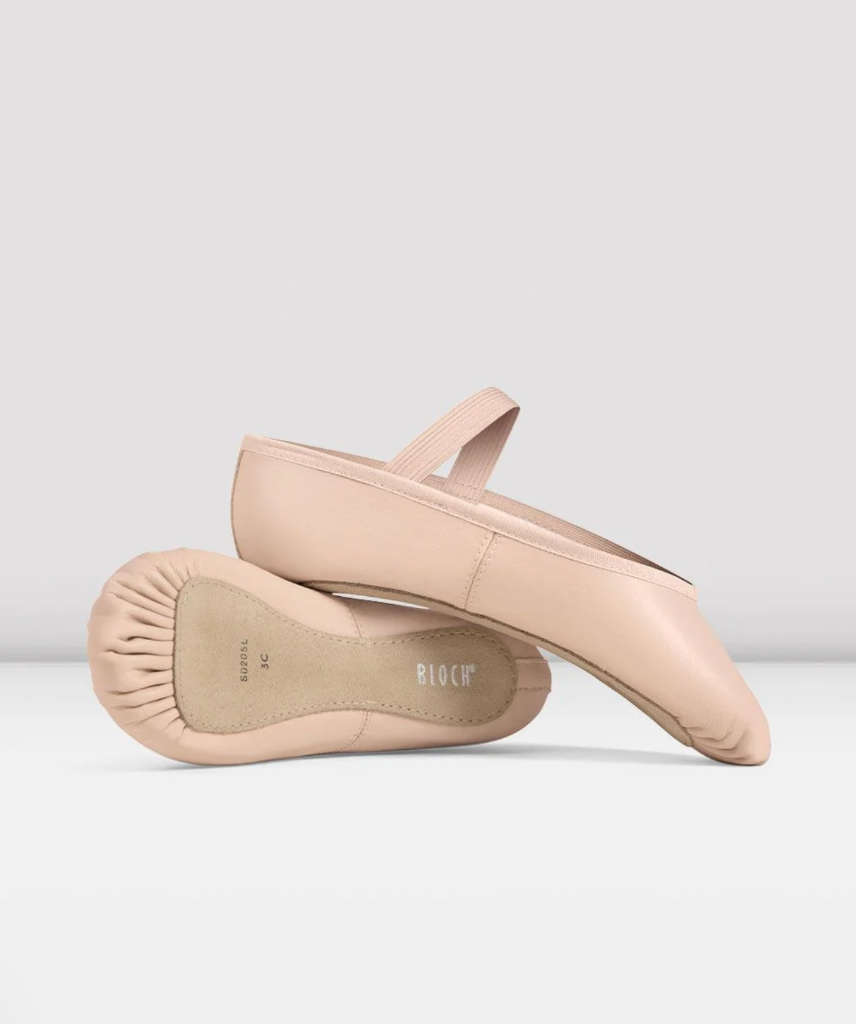
Bloch
Dansoft Full-Sole Ballet Slipper
The go-to recommendation for first-time ballet shoe buyers: forgiving, classic, and built to last a solid first year of classes.
- Supportive full sole
- Molds to the foot
- Classic leather
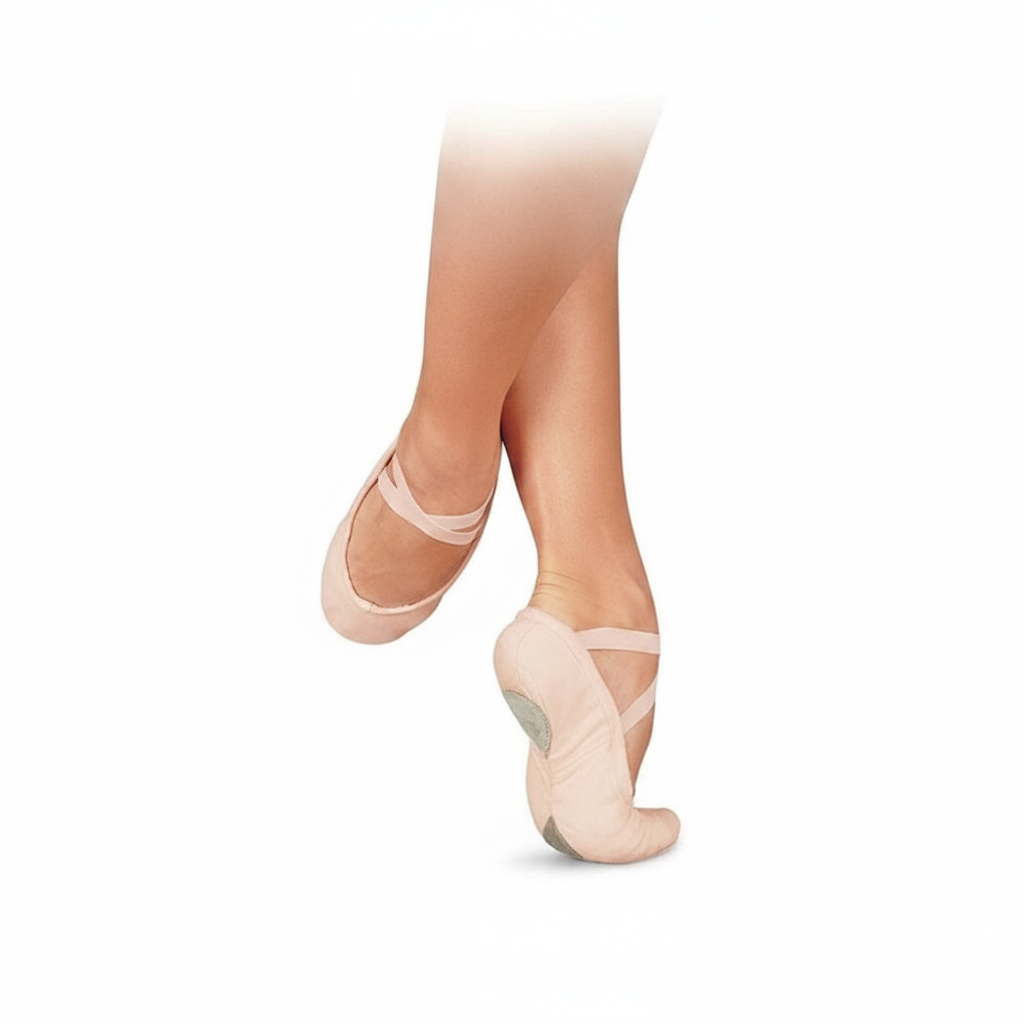
Sansha
Pro 1 Canvas Split-Sole
Quality at an honest price. Sansha's Pro 1 is a reliable first slipper that won't punish you for not yet knowing your preferences.
- Excellent value
- Durable
- Wide size range
Ad Space
About
The Ballet Edit
The Ballet Edit is a publication dedicated to ballet culture, adult beginner dance education, movement, alignment, and the enduring style of the ballet world.
Written and edited by practitioners with professional dance experience on stage, film, and television, The Ballet Edit exists to inform, inspire, and welcome adults into the art form at every stage of their journey.