Your First Pair Matters More Than You Think
Walking into a dancewear shop for the first time can feel surprisingly overwhelming. Rows of ballet slippers, unfamiliar sizing systems, and more choices than you expected.
Let's simplify it.
Your first ballet shoes don't have to be perfect, but choosing the right pair will make class more comfortable and help you develop good habits from the beginning.
The first decision is usually between canvas and leather.
Canvas or Leather?
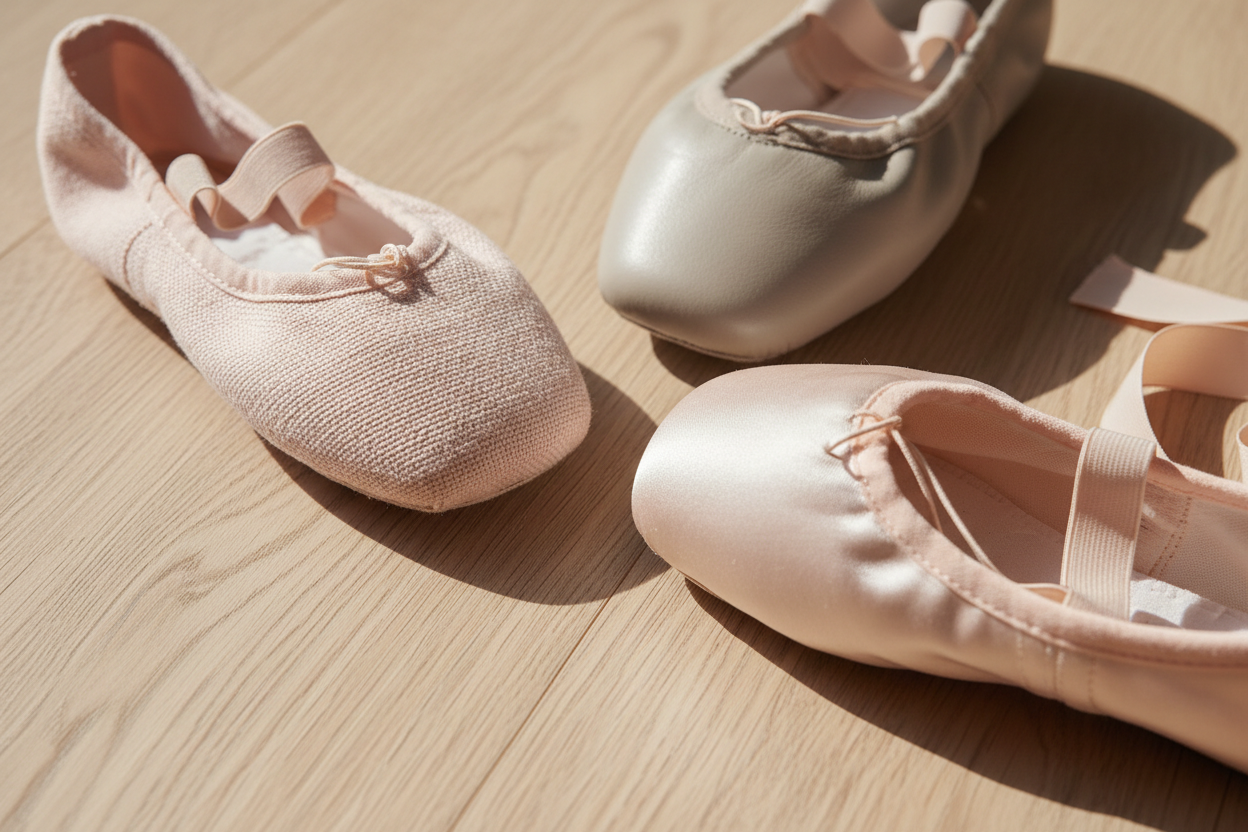
Canvas shoes are lighter, more breathable, and tend to mold to your foot quickly. Many adult beginners appreciate how soft they feel after only a few classes.
Leather shoes are more structured, slightly more supportive, and often last longer. If you like feeling a little more connected and stable while learning, leather can be reassuring.
Neither is objectively better.
Canvas generally feels more modern.
Leather feels more traditional.
Split Sole vs. Full Sole
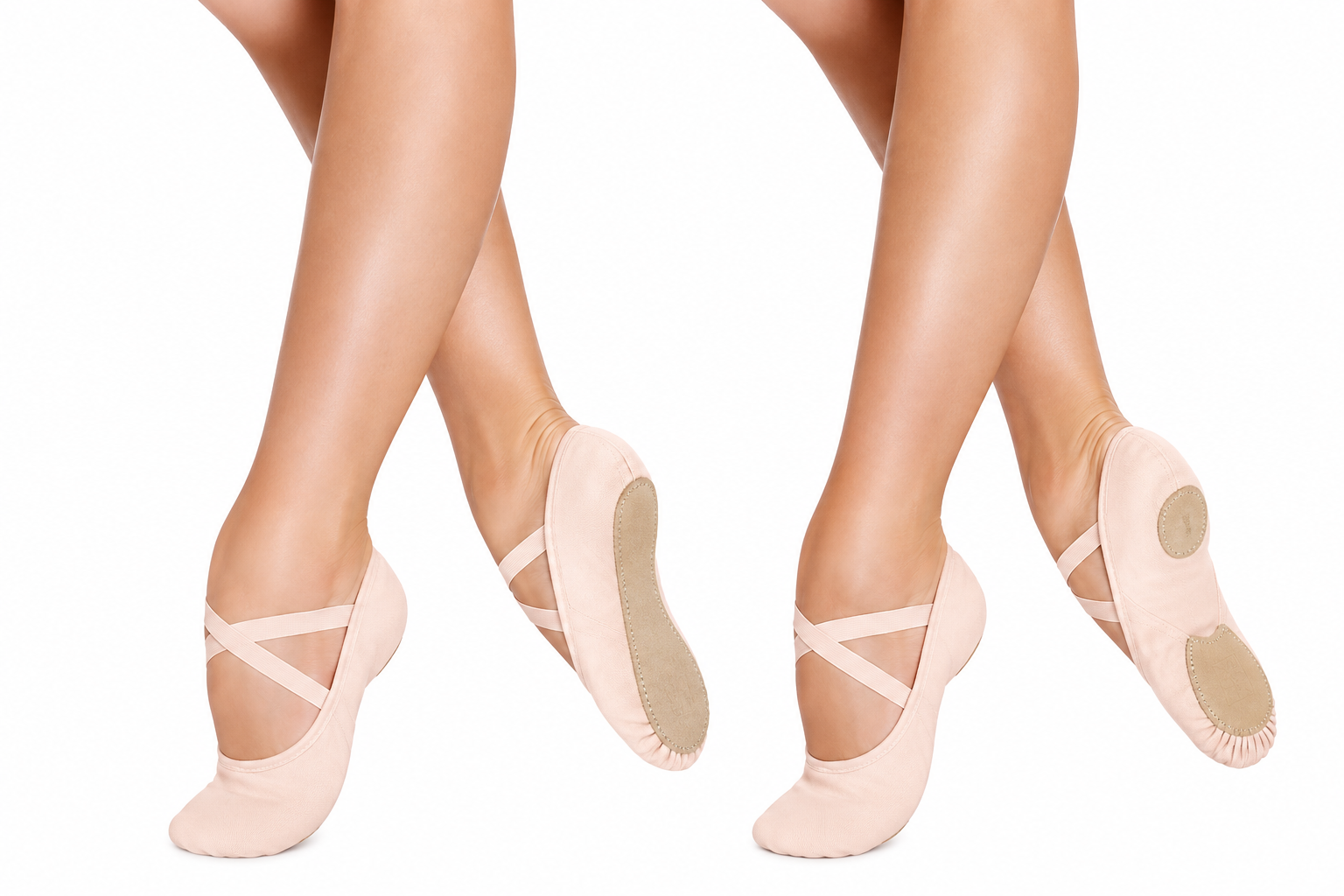
Full-sole shoes provide more support and a clearer sense of the floor beneath your feet. For complete beginners, that extra feedback can help you understand where your weight belongs.
Split-sole shoes are more flexible and allow the arch of the foot to articulate more naturally. As your strength develops, many dancers appreciate the cleaner line they create when pointing the foot.
Many adult beginners start successfully in either style. If you're unsure, ask your teacher, or choose based on whether you value support (full sole) or flexibility (split sole).
Getting the Right Fit
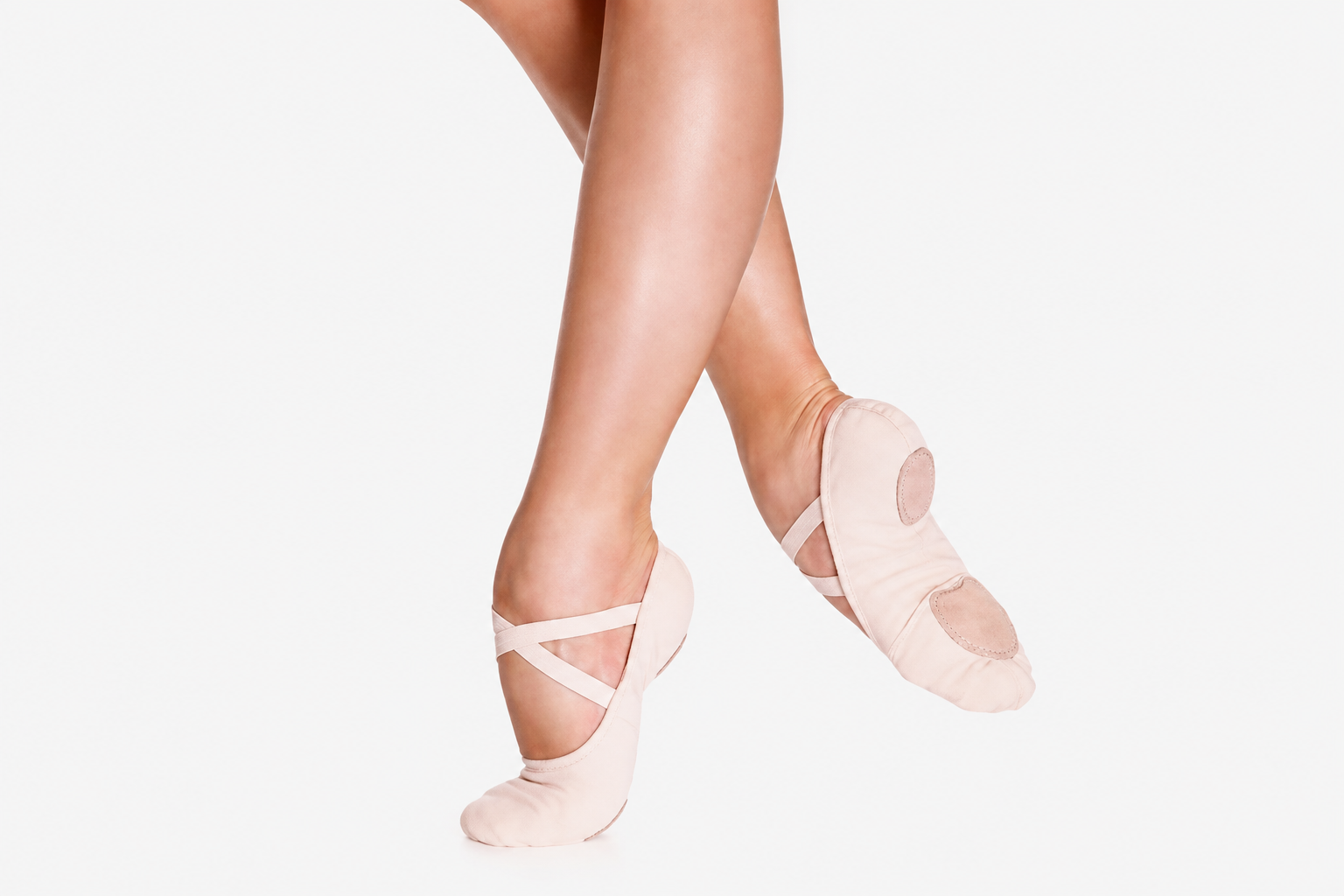
A ballet shoe should fit almost like a second skin.
Your toes should reach the end of the shoe without curling. There shouldn't be excess fabric bunching across the toes or gaping around the heel.
When you point your foot, the shoe should move with your foot rather than lagging behind it.
A ballet slipper may feel snug at first, but it shouldn't be painful.
If you're between sizes, remember that ballet sizing is different from street shoes. Always check the manufacturer's sizing guide rather than assuming your usual shoe size.
Signs of a Well-Made Ballet Slipper
The shoe should lie smoothly against the sole of your foot.
There shouldn't be excess material bunching beneath the ball of the foot. Extra fabric can make balancing and turning less stable, and it's often a sign of a poorly designed fit or construction.
The heel should stay in place during relevés.
The drawstring should refine the fit, not compensate for a shoe that's too large.
Understanding Your Feet
Every foot is different, and the "best" ballet shoe is often the one that suits your anatomy.
Wide feet often benefit from stretch canvas and brands offering multiple widths. Narrow feet may prefer more sculpted leather shoes that hug the arch. High arches often look beautiful in split-sole shoes that flex easily. Lower arches sometimes appreciate the structure of a full sole while building strength.
Don't worry about achieving the "perfect ballet foot." Good technique matters far more than naturally high arches.
Buying Ballet Shoes Online
Many adult beginners buy their first pair online, and that's perfectly fine.
Choose retailers with generous return policies, read the sizing charts carefully, and don't panic if your ballet shoe size differs from your everyday shoe size.
If you're deciding between two sizes, it's often worth ordering both and returning the pair that doesn't fit.
A properly fitted ballet shoe should feel secure without pinching.
What Your Teacher Actually Expects
One of the biggest concerns adult beginners have is whether they'll show up wearing the "wrong" shoes.
The good news?
Most teachers simply want you to arrive ready to learn.
Some studios specify pink canvas shoes, others prefer leather, and some allow black shoes for adults regardless of gender.
If your studio has a dress code, follow it. Otherwise, don't overthink your first purchase. A comfortable, properly fitted ballet shoe is far more important than choosing the "perfect" brand.
Color: The Classic Choice
Color matters more than most beginners expect because the goal of a ballet shoe is to extend the line of the leg rather than interrupt it.
Pink or skin-tone ballet shoes remain the traditional choice for women and girls. When the shoe matches your tights, or your skin tone, the leg appears longer and the lines cleaner.
Black or white ballet slippers are traditionally worn by men and boys, although many adult recreational classes are flexible.
When in doubt, choose the shade closest to your skin tone. It's versatile, elegant, and increasingly available from brands including Bloch, Capezio, and Freed of London.
Our Recommendations
For the cautious beginner: Bloch Dansoft Full-Sole Leather
Supportive, forgiving, and an excellent place to begin.
For the eager beginner: Capezio Hanami Canvas Split-Sole
Lightweight, breathable, and one of the easiest shoes to recommend to new adult dancers.
For the budget-conscious: Sansha Pro 1 Canvas
Outstanding value without sacrificing quality.
Also worth knowing: The Edit also loves Gaynor Minden and Freed of London, two names you'll encounter again and again as you get deeper into the ballet world.
Keep Them in the Studio
Ballet slippers are made for one surface: the marley or sprung wood of a studio floor. Wearing them outside, even for the short walk from the car to the front door, grinds dirt into the sole, wears down the delicate suede patch, and tracks grit back onto the studio floor where it can cause slips and injuries.
Put your slippers on once you're inside, and take them off before you leave. Most dancers carry them in their bag and change at the studio. It keeps the shoes cleaner, lasts longer, and respects the shared floor you and your classmates are dancing on.
Wear Them In, Wear Them Out
Once you've found your pair, resist the urge to keep them pristine.
Let them soften.
Let the canvas collect a little rosin.
Let the leather crease where your foot bends.
Every class leaves its mark, and every mark reflects time spent learning.
When the day finally comes to replace them, don't be surprised if you hesitate before throwing them away.
For many dancers, a first pair of ballet shoes becomes a quiet reminder of where the journey began.
Once you've found the right shoe, you'll also want to prepare it correctly before your first class. That includes adjusting the drawstring, checking the elastics, and making sure the slipper sits smoothly against your foot. For a full walkthrough, see our guide on How to Prepare Ballet Slippers for Class.
Updated: August 18, 2026
The Edit's Selection
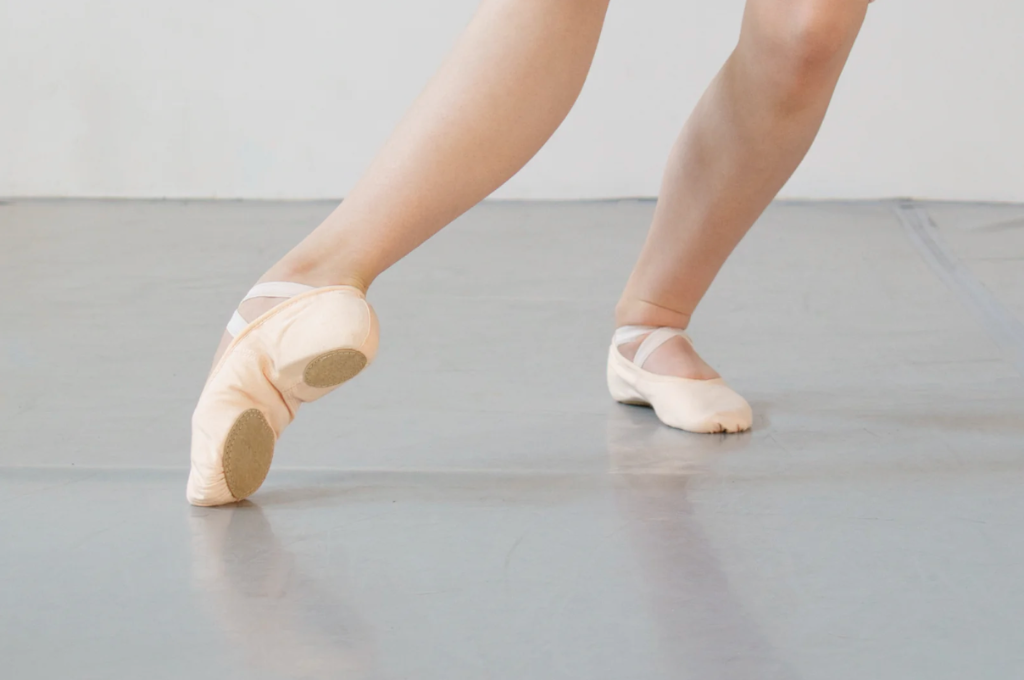
ORZA
Orza Pro® 2.0 Ballet Shoe
The Orza Pro® 2.0 is one of the few genuinely modern redesigns of the traditional ballet slipper. Created by former New York City Ballet dancer Seth Orza after recovering from a serious foot injury, it retains the classic look while incorporating substantially more cushioning and support than conventional ballet shoes. For adult beginners dealing with sensitive feet, plantar discomfort, or long class days, it's one of the most interesting premium options currently available.
- Designed by an NYCB dancer after a career-threatening injury
- Looks traditional, performs differently
- Free returns
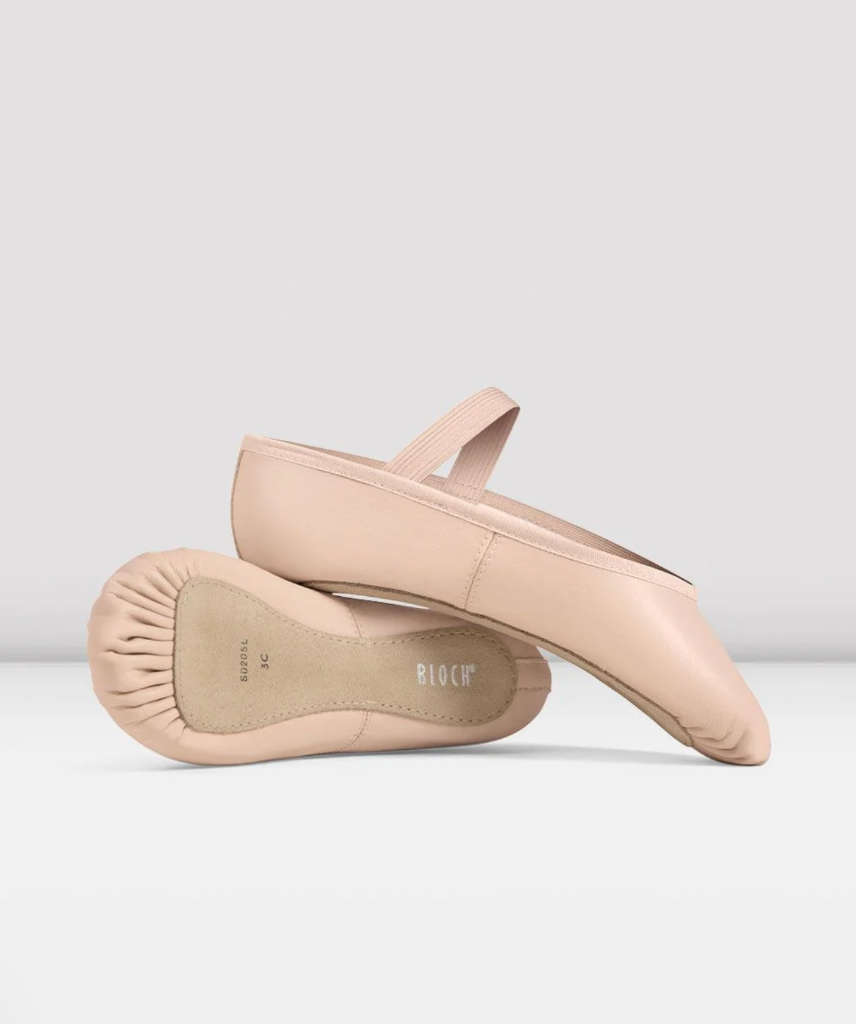
Bloch
Dansoft Full-Sole Ballet Slipper
A studio classic. The Dansoft's leather upper and full sole offer a forgiving fit and reliable support, ideal for the dancer still building foot strength.
- Soft leather molds quickly
- Full sole for honest feedback
- Classic aesthetic
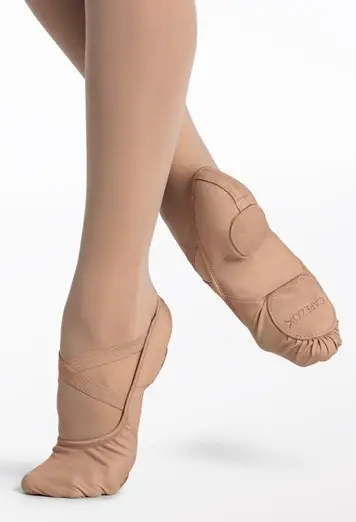
Capezio
Hanami Canvas Split-Sole
Lightweight and beautifully constructed, the Hanami is the split-sole shoe that consistently earns praise from adult beginners and their teachers alike.
- Feather-light canvas
- Flattering pointed arch
- Breathable for long classes
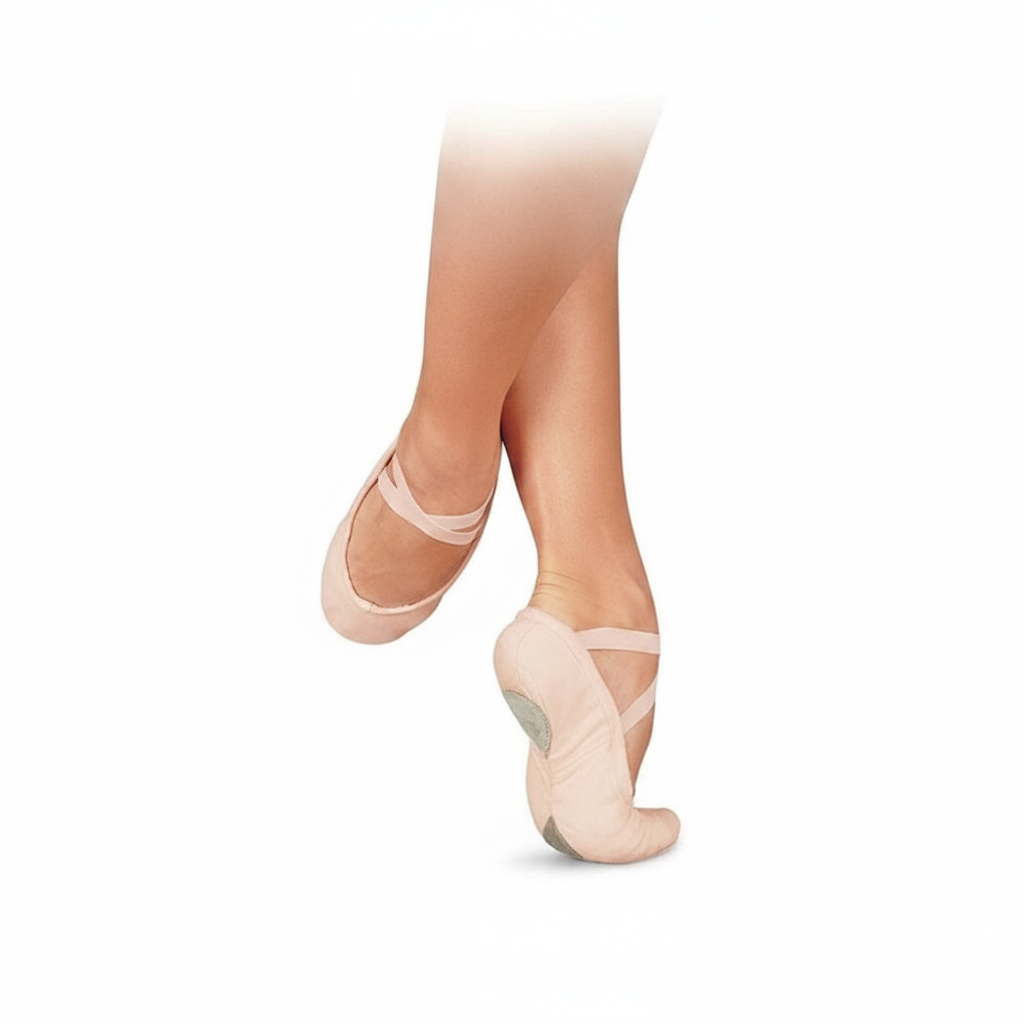
Sansha
Pro 1 Canvas Split-Sole
Sansha's entry-level slipper punches well above its price. Consistently recommended for beginners who want quality without the premium outlay.
- Exceptional value
- Durable canvas construction
- Available in multiple widths
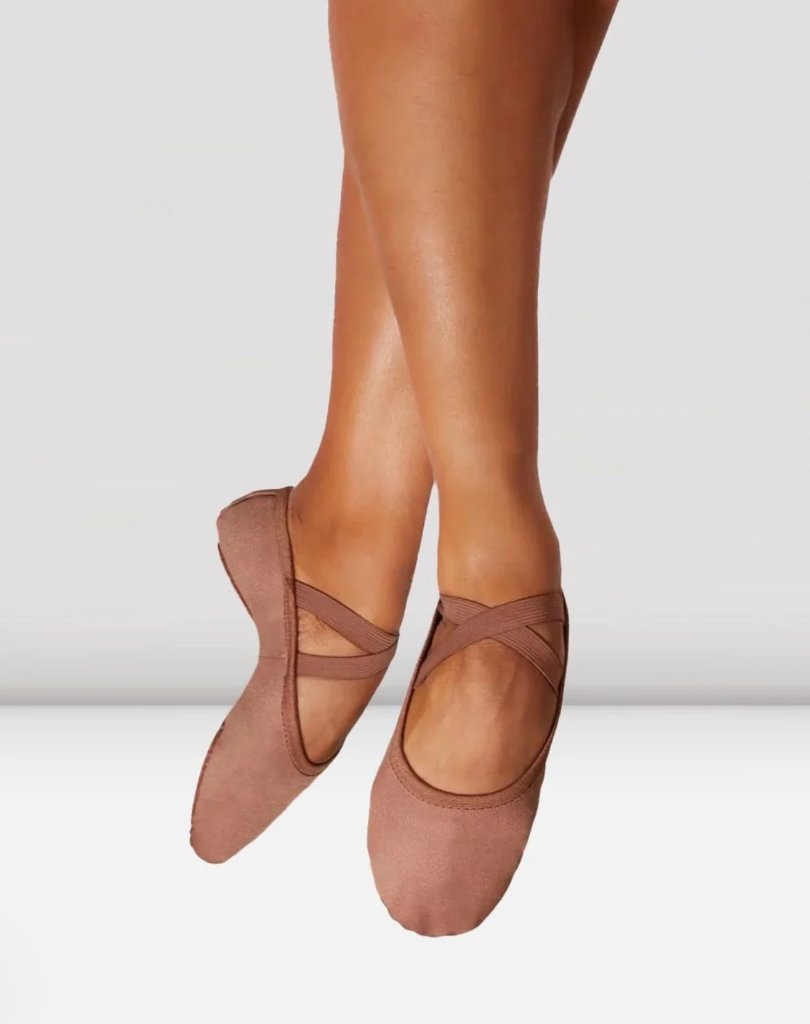
Bloch
Ladies Performa Stretch Canvas Ballet Shoes
Bloch's answer to the canvas split-sole market. The Arise features a microfiber insole and a particularly secure heel that stays put through barre work.
- Secure heel fit
- Microfiber insole
- Great arch definition
Capezio
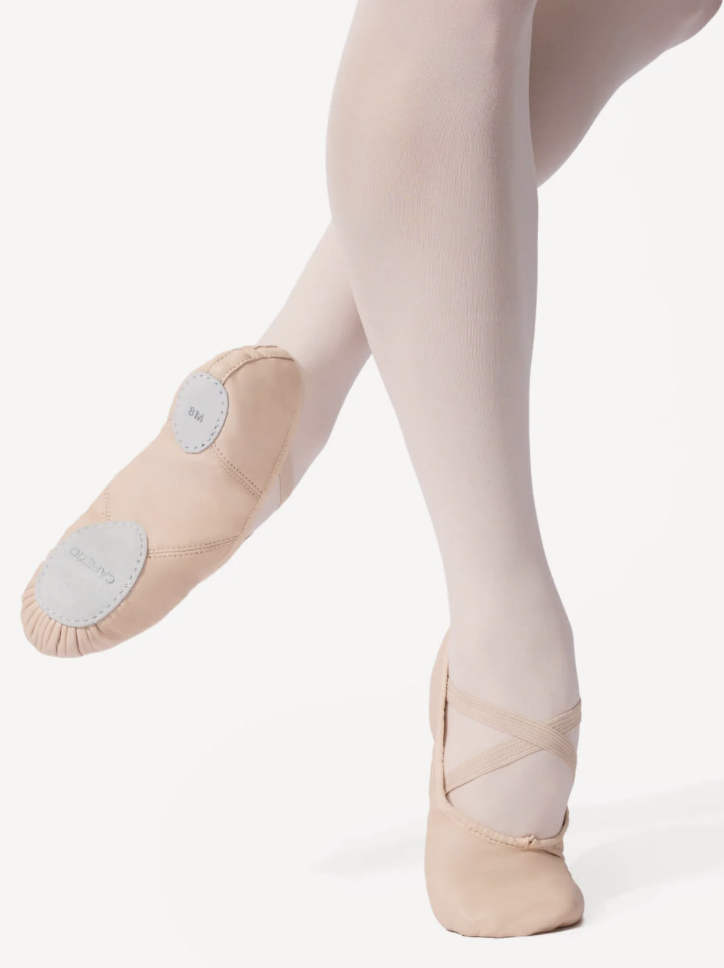
Leather Juliet Ballet Shoe
A first-rate choice for dancers with narrow feet. The Juliet's sculpted arch improves pointing and flexing with ease, while pre-attached criss-cross elastics deliver a secure, snug fit. Durable leather construction gives extra control on the barre and beyond.
- Sculpted arch for better point
- Pre-attached criss-cross elastics
- Ideal for narrow feet
Frequently Asked Questions
Should adult beginners wear split sole ballet shoes?
Most teachers recommend starting with a full-sole shoe and transitioning to split-sole once your foot strength develops. Full-sole shoes provide more support and give you honest feedback about your weight distribution. That said, if you have strong feet from other athletic backgrounds, a split-sole is perfectly fine from the start. The Capezio Hanami split-sole is our Editor's Pick for most beginners, but if you're unsure, the Bloch Dansoft full-sole is the safer starting point.
How long do ballet shoes last?
For an adult beginner taking one or two classes per week, a pair of ballet shoes typically lasts six to twelve months. Canvas shoes tend to wear out faster than leather, particularly at the toes and the ball of the foot. Signs it's time to replace them: holes in the canvas, a sole that's peeling away from the upper, or a shoe that's stretched to the point where it no longer fits snugly. If you're taking class three or more times per week, expect to replace them every three to four months.
Can beginners wear pointe shoes?
No. Pointe shoes require years of training, sufficient ankle strength, and proper technique to wear safely. Dancing on pointe without adequate preparation can cause serious injury. Most teachers will not allow a student to go on pointe until they've been training consistently for at least two to three years, and only when they've demonstrated the necessary strength and alignment. If you're an adult beginner, focus on flat shoes for now — pointe work will come when your body is ready for it.
Are leather ballet shoes better?
Not better — different. Leather shoes are more durable, offer more support, and have a structured feel that some beginners prefer. Canvas shoes are lighter, more breathable, and tend to mold to the foot faster. Neither is objectively superior; the right choice depends on your foot shape, your preferences, and how your feet feel in class. Many dancers own both and switch depending on the season or the type of class.
Can ballet slippers go in the washing machine?
Canvas shoes can be hand-washed in cool water with a mild detergent and air-dried. Do not put them in the washing machine — the agitation can distort the shape and damage the elastic. Leather shoes should never be submerged in water; wipe them with a damp cloth and let them air dry. Never put ballet shoes in the dryer; the heat will shrink and damage the material.
Should ballet shoes be tight?
Yes — snug, but not painful. Ballet shoes should fit like a second skin: close to the foot, with no bunching at the toes or gaping at the heel. Your toes should lie flat and reach the end of the shoe without curling. If the shoe is so tight that your toes curl or you feel pinching, it's too small. If there's excess material or the heel slips, it's too big. The goal is a shoe that moves with your foot as if it isn't there.
Ad Space
About
The Ballet Edit
The Ballet Edit is a publication dedicated to ballet culture, adult beginner dance education, movement, alignment, and the enduring style of the ballet world.
Written and edited by practitioners with professional dance experience on stage, film, and television, The Ballet Edit exists to inform, inspire, and welcome adults into the art form at every stage of their journey.