The Season Is Here. Are You Going?
One of the great pleasures of living near a city is that ballet comes to you. Major companies tour. Smaller regional troupes perform year-round. And for the adult beginner who has just discovered the art form, seeing it live - in a real theatre, with an orchestra in the pit - is transformative in a way that no YouTube clip can replicate.
This is your guide to the ballets most likely to appear in your city, what each one is about, and how to prepare for an evening at the theatre.
The Classics You’ll See Again and Again
Giselle
Adolphe Adam · Choreography by Jean Coralli, Jules Perrot, and Marius Petipa
The Story
Giselle is a peasant girl with a weak heart who falls in love with Albrecht - a nobleman disguised as a commoner. When his deception is revealed, and she discovers he is already engaged to another, the heartbreak kills her. In Act II, she rises as a Wili - one of the vengeful spirits of betrayed brides - but ultimately chooses mercy over vengeance, saving Albrecht from the Wilis’ fatal dancing curse.
What Makes It Special
Giselle is the romantic ballet. Act I is warm, earthy, and heartbreaking; Act II is ethereal, white, and strange. If you only see one 19th-century ballet in your life, this should be a serious contender. The role of Giselle is considered one of the most demanding in the classical repertoire - watch the ballerina’s hands as much as her feet.
What To Expect
Two acts, approximately 2 hours with one interval. Emotionally intense, poetic, and quietly devastating. Suitable for older children and adults. It will make you cry if you let it.
Swan Lake
Tchaikovsky · Choreography by Marius Petipa and Lev Ivanov
The Story
Prince Siegfried falls in love with Odette, a princess transformed into a swan by the sorcerer Rothbart. She can only become human again if a man loves her faithfully and swears an eternal vow. At the royal ball, Rothbart presents his daughter Odile disguised as Odette - and Siegfried, deceived, swears his love to the wrong woman. The consequences are devastating.
What Makes It Special
Swan Lake is the pinnacle. The corps de ballet - 16 or more dancers moving as a single creature - is one of the most astonishing things you will ever see in a theatre. The lead ballerina dances both Odette (the white swan, tender and tragic) and Odile (the black swan, seductive and triumphant) - often in the same evening. Watch for the 32 fouettés in Act III.
What To Expect
Four acts, approximately 3 hours with two intervals. Every major company has its own production, and the ending varies - some tragic, some redemptive. Check your programme. Suitable for all ages; an essential evening in the theatre.
Sleeping Beauty
Tchaikovsky · Choreography by Marius Petipa
The Story
At Princess Aurora’s christening, the wicked fairy Carabosse curses her to die on her sixteenth birthday by a spindle’s prick. The Lilac Fairy softens the curse to a century-long sleep, from which only a prince’s kiss can wake her. The ballet spans Aurora’s birth, her enchanted slumber, and her eventual awakening and wedding - a sweeping pageant of light, magic, and triumph.
What Makes It Special
Sleeping Beauty is the grandest of the grand classics. Petipa and Tchaikovsky were at the height of their powers, and it shows in every bar. The Rose Adagio in Act I - where Aurora balances en pointe while four suitors each take her hand in turn - is one of the most technically demanding and visually breathtaking sequences in all of ballet.
What To Expect
Three acts with a prologue, approximately 3 hours. Opulent in design, regal in pace. Excellent for families and first-time balletgoers. A magnificent evening with some of the most beautiful music Tchaikovsky ever wrote.
Romeo and Juliet
Sergei Prokofiev · Choreography varies by company
The Story
You know this one. What you may not know is how completely ballet transforms it. The feud, the balcony, the wedding, the death of Mercutio, the tomb - all of it told without a word, through movement and Prokofiev’s extraordinary score. The most celebrated productions are by Kenneth MacMillan (Royal Ballet) and John Cranko (Stuttgart Ballet), though many companies have their own versions.
What Makes It Special
Romeo and Juliet is the gateway drug for people who think they don’t like ballet. The story is familiar enough to follow easily, Prokofiev’s music is one of the great ballet scores of the 20th century, and the dramatic dancing in the fight scenes - Mercutio’s death in particular - can leave an audience gasping. The balcony pas de deux is among the most romantic things ever staged.
What To Expect
Three acts, approximately 3 hours. Emotionally exhausting in the best possible way. Suitable for all ages; an excellent first ballet for anyone who responds to story and drama. You will leave thinking about it.
Don Quixote
Ludwig Minkus · Choreography by Marius Petipa
The Story
Loosely based on Cervantes, but really just a glorious excuse for dancing. The story follows Kitri - a spirited innkeeper’s daughter - and her lover Basilio, as they outwit her father and the wealthy nobleman he’d rather she marry. Don Quixote himself wanders through as a comic, quixotic presence, chasing his dream of Dulcinea.
What Makes It Special
Don Quixote is the party. Where Giselle asks for your heart and Swan Lake asks for your reverence, Don Quixote just wants you to have an extraordinary time. It is fast, funny, Spanish, and relentlessly virtuosic. The pas de deux in Act III is a showstopper - the ballerina and her partner are essentially competing to see who can dazzle the audience more. They usually both win.
What To Expect
Three acts, approximately 2.5 hours. High energy, comedic, and exuberantly theatrical. Ideal for first-time balletgoers and families. Applause mid-scene is not just acceptable - it’s expected and enthusiastically encouraged.
La Bayadère
Ludwig Minkus · Choreography by Marius Petipa
The Story
Nikiya is a temple dancer - a bayadère - in ancient India. She loves the warrior Solor, but he is betrothed to Gamzatti, the daughter of the High Brahmin. Through jealousy, treachery, and a basket of flowers concealing a deadly snake, Nikiya is killed. In the otherworldly Kingdom of the Shades, Solor reunites with her spirit - but their peace is not to last.
What Makes It Special
La Bayadère contains the “Kingdom of the Shades” scene - arguably the single most famous piece of corps de ballet choreography in existence. Twenty-four ballerinas descend a ramp one by one, each performing the same slow arabesque penché phrase in an unbroken chain of movement. It is hypnotic, mathematical, and profoundly moving. Even if you never see another ballet, find a recording of this scene.
What To Expect
Three acts, approximately 2.5–3 hours. Richly exotic in production design, intense in drama. Best suited to adults and older teens. The Shades scene alone is worth the ticket.
Cinderella
Sergei Prokofiev · Choreography varies by company
The Story
The fairy tale, faithfully told. Cinderella, the stepsisters, the fairy godmother, the ball, the glass slipper, midnight - all of it is here, with Prokofiev’s warm, witty score giving the story new dimension. Ashton’s Royal Ballet production is the definitive version; many companies have their own, some traditional, some wildly reimagined.
What Makes It Special
Cinderella is the accessible one. It’s the ballet to bring someone who’s nervous about ballet - the story requires no preparation, the music is beautiful and immediately engaging, and the comedy of the stepsisters (traditionally danced by men, with extraordinary comic effect) usually brings even reluctant audience members onside. The grand pas de deux at the ball is everything you’d hope for.
What To Expect
Three acts, approximately 2.5 hours. Warm, funny, and genuinely moving at the end. Excellent for families, first-timers, and anyone who wants the romance of ballet without the tragedy.
Coppélia
Léo Delibes · Choreography by Arthur Saint-Léon
The Story
Franz, a young villager, becomes infatuated with Coppélia - the beautiful girl he sees reading in the window of the mysterious toymaker Dr. Coppélius. But Coppélia is not a girl at all: she is a life-sized doll, one of many mechanical creations in the doctor’s workshop. Franz’s girlfriend Swanilda discovers the truth, and in an extended scene of disguise and slapstick, the situation resolves into love, laughter, and a village festival.
What Makes It Special
Coppélia is ballet’s great comedy. Delibes’ score is irresistibly charming, the character work is rich, and the role of Swanilda - who must convincingly impersonate a mechanical doll - is one of the great comic-dramatic roles in the repertoire. It is genuinely funny in a way that surprises people who think of ballet as purely serious.
What To Expect
Three acts, approximately 2 hours. Light, warm, and consistently delightful. An excellent choice for families, young audiences, and anyone who wants to enjoy themselves without tragedy.
The Nutcracker
Tchaikovsky · Choreography originally by Petipa and Ivanov
The Story
On Christmas Eve, young Clara receives a nutcracker as a gift. That night, she dreams of a battle between the Nutcracker and the Mouse King, a journey through the Land of Snow, and a visit to the Kingdom of Sweets - where the Sugar Plum Fairy and her Cavalier reign. It is a dream sequence more than a narrative, and the magic is entirely in the music and the dancing.
What Makes It Special
The Nutcracker is how most of us first encounter ballet. If you grew up going, it lives in your body like a holiday memory. If you’re coming to it for the first time as an adult, don’t underestimate it - Tchaikovsky’s score is one of the most sophisticated ever written for the stage, and the second act, in the right production, can be genuinely breathtaking. It also belongs to December in a way nothing else does.
What To Expect
Two acts, approximately 2 hours. Magical, festive, and ideal for all ages. Every company does it differently - some lavish and traditional, others wildly reimagined. Check whether your city’s version hews classic or contemporary.
Also Worth Watching: Modern and Contemporary Ballet
The classical repertoire is extraordinary, but it isn’t the whole story. Contemporary ballet companies - and the contemporary wings of classical companies - are doing some of the most exciting work in live performance today.
Works by choreographers like Christopher Wheeldon, Wayne McGregor, Alexei Ratmansky, and Crystal Pite regularly tour and have been performed by companies worldwide. These ballets often have no narrative - they exist as pure movement, music, and light. They can be disorienting at first if you’re expecting a story, but give them three minutes and they usually pull you in completely.
Contemporary programmes also tend to be shorter - often three shorter works rather than one full-length ballet - which makes them an excellent entry point if you’re not yet sure about committing to a three-hour Swan Lake.
Support Your Local Companies
The major touring productions get the press, but some of the most rewarding ballet you’ll see happens in smaller venues with companies you’ve probably never heard of.
Regional ballet companies - the ones that perform in your city’s mid-sized theatre, the ones whose principal dancers teach at the studio where you take class - are doing essential work. They keep the art form alive at the community level. They train the next generation. They take creative risks that larger companies can’t afford. And they need your ticket money to keep going.
Go. Take a friend who’s never seen ballet. Go again. The production values may not match the Royal Ballet, but the dancing is often extraordinary, the tickets are a fraction of the price, and the connection between performer and audience - in a theatre where you can actually see faces - is something the major houses rarely achieve.
What to Wear
The honest answer is: whatever makes you feel like you’re stepping into something special.
There is no dress code for the ballet, and the audiences at most productions range from people in jeans to people in evening gowns. But ballet is a beautiful art form that rewards a certain kind of attention - the kind you bring to something when you’ve made a small effort to dress for it.
- Smart casual is always appropriate and never wrong
- Avoid anything noisy (crinkling fabrics, dangling jewellery that catches on armrests)
- Layers are sensible - theatres are unpredictable
- Heels are lovely if you’re comfortable; flats are equally elegant
- If you’re going to a gala or opening night, dress up - the occasion invites it
The ballet itself will be the most beautiful thing in the room. You’re not trying to compete. You’re showing up as a guest who cares.
What to Expect at the Theatre
Arrive early. The programme notes are worth reading - they contain the story synopsis, cast list, and often short essays on the work. You will enjoy the ballet more if you know what’s about to happen.
The orchestra tunes. This happens in the pit before the performance begins and is one of the most underrated sensory experiences in live performance - a controlled chaos that resolves, at the conductor’s downbeat, into silence.
Applause mid-act is appropriate. When a dancer completes a particularly remarkable piece of virtuosity - a series of turns, a sustained balance, a spectacular jump - the audience will often applaud before the music has moved on. This is not rude. It is how ballet audiences participate. Follow the room.
The interval is part of the evening. Get a drink. Talk about what you’ve seen. Read ahead in the programme. Some of the best conversations about art happen in theatre foyers at intervals.
You will feel something. Maybe not at the first ballet, but eventually. Ballet is one of the few art forms that communicates directly, body to body, without words. Something in it reaches a place that language doesn’t quite access. That’s why people have been going for four hundred years, and why once you start, it’s very hard to stop.
The Edit's Selection
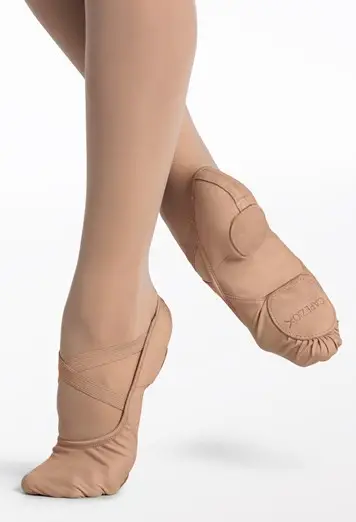
Capezio
Hanami Canvas Split-Sole
A perennial favourite among adult beginners and intermediate dancers for its lightness and beautiful arch profile.
- Lightweight
- Flattering line
- Breathable
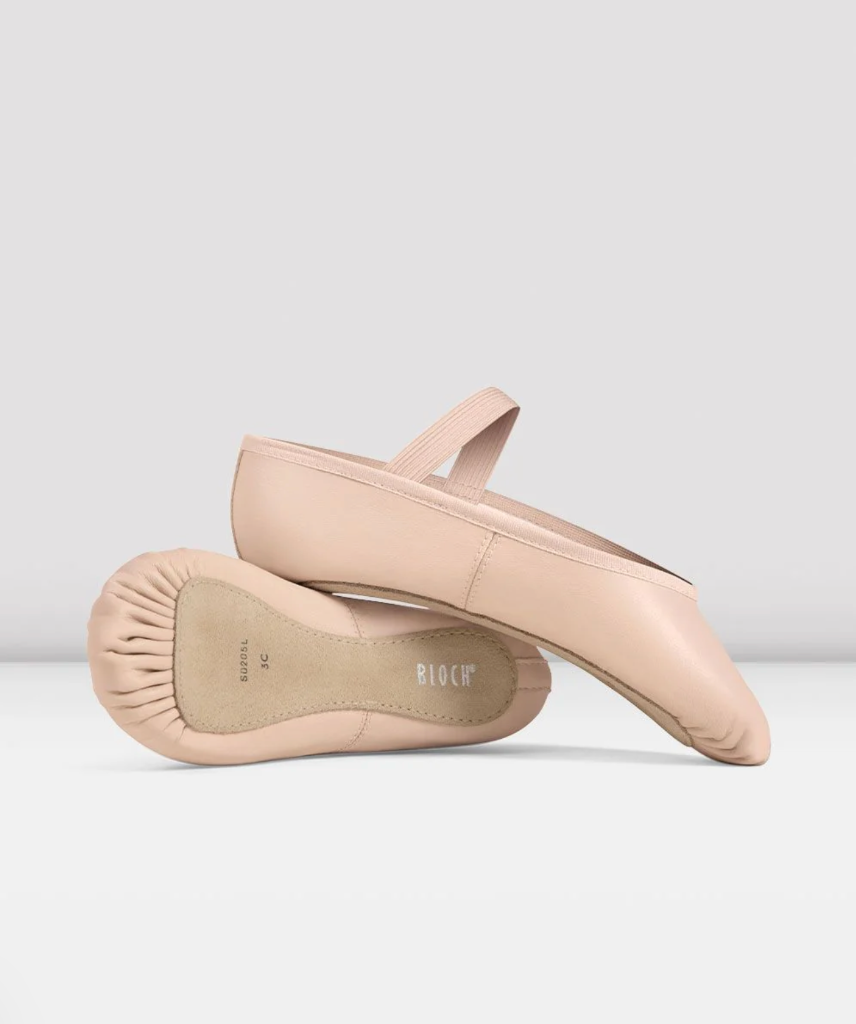
Bloch
Dansoft Full-Sole Ballet Slipper
The go-to recommendation for first-time ballet shoe buyers: forgiving, classic, and built to last a solid first year of classes.
- Supportive full sole
- Molds to the foot
- Classic leather
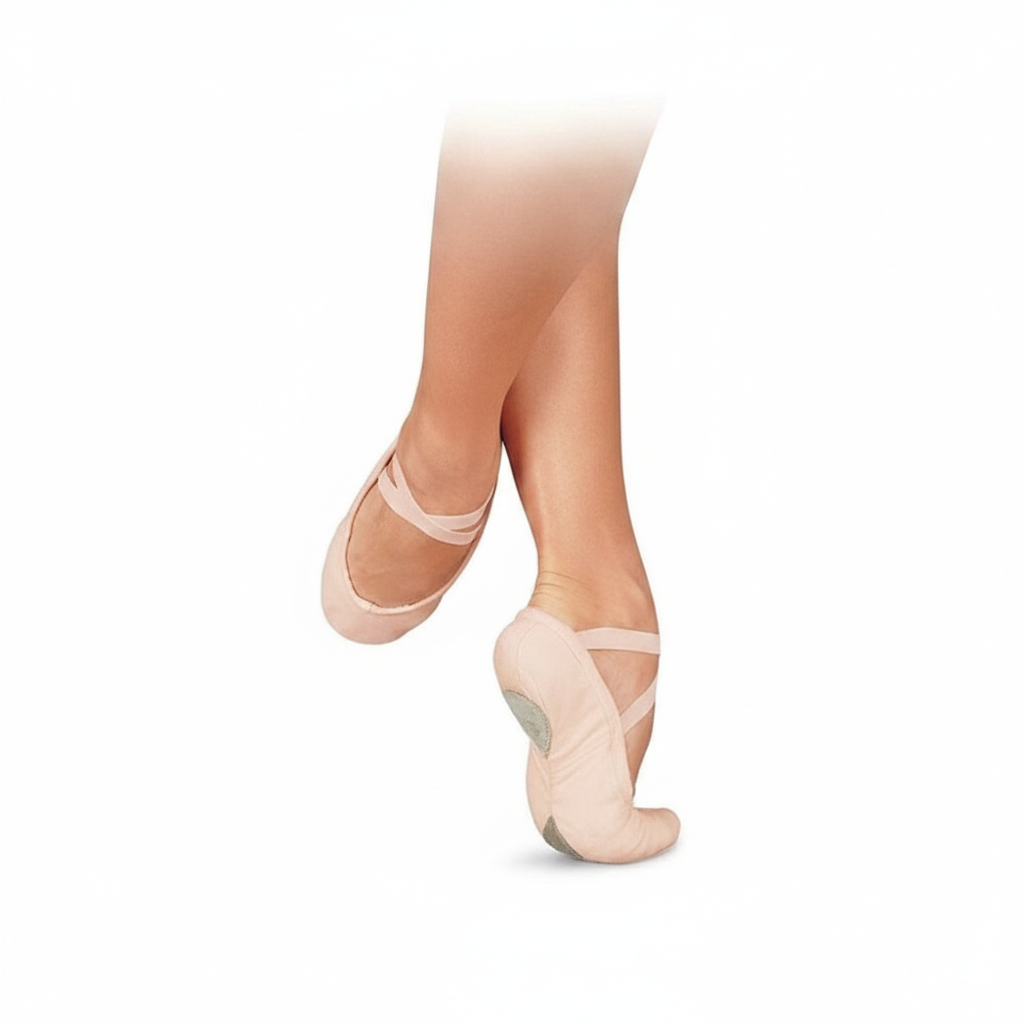
Sansha
Pro 1 Canvas Split-Sole
Quality at an honest price. Sansha's Pro 1 is a reliable first slipper that won't punish you for not yet knowing your preferences.
- Excellent value
- Durable
- Wide size range
Ad Space
About
The Ballet Edit
The Ballet Edit is a publication dedicated to ballet culture, adult beginner dance education, movement, alignment, and the enduring style of the ballet world.
Written and edited by practitioners with professional dance experience on stage, film, and television, The Ballet Edit exists to inform, inspire, and welcome adults into the art form at every stage of their journey.